When the Philippine government signed onto the US-backed Pax Silica initiative in April 2026, officials sold it as a massive leap forward. The plan promised to drop a 4,000-acre AI and advanced manufacturing hub inside New Clark City in Tarlac, tying the nation straight into global supply chains for microchips, server hardware, and high-tech manufacturing.
That pitch fell flat for a lot of locals.
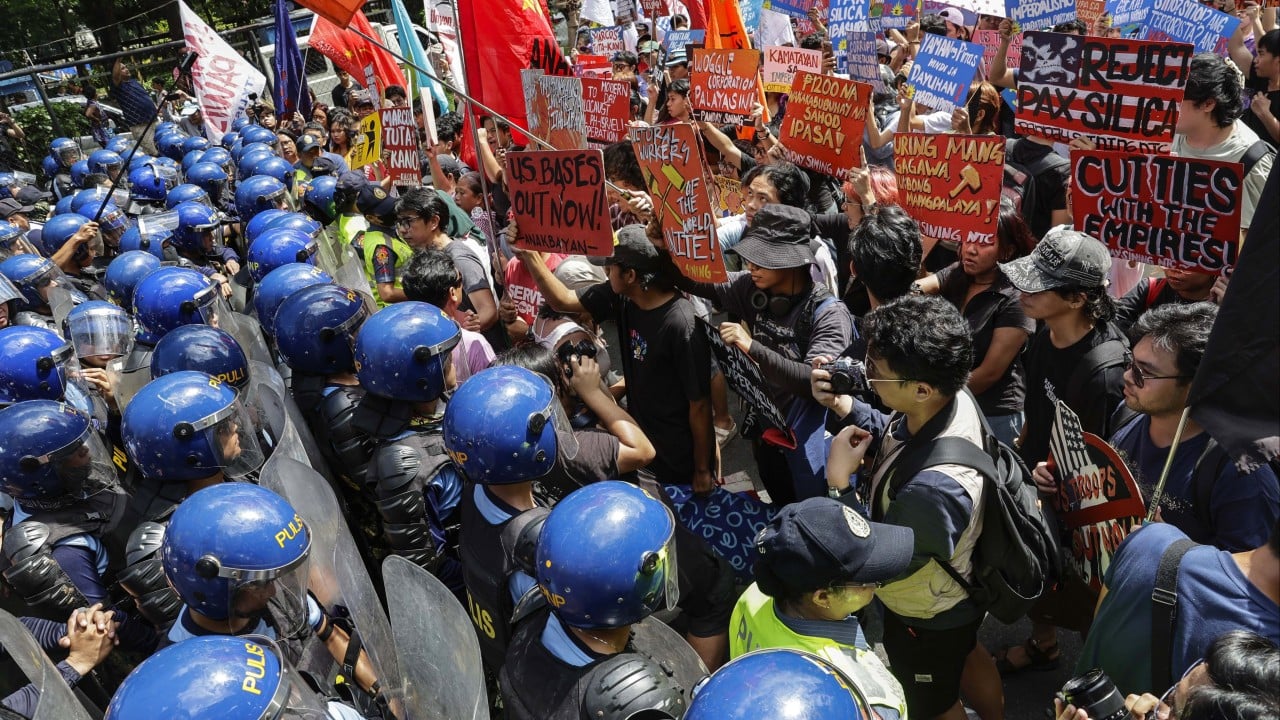
Protests erupted in Manila and rural provinces almost immediately. Civil society groups, farmer organizations, and environmental watchdogs started shouting from the rooftops, accusing the state of handing over indigenous lands and mineral wealth to foreign powers for pennies on the dollar. They call it greenwashed colonialism. The government calls it economic survival.
The clash isn't just local noise. It highlights a massive dilemma facing developing nations during the global artificial intelligence boom.
The 4,000 Acre Tech Enclave That Divided a Nation
The center of this storm sits in the Luzon Economic Corridor. The Bases Conversion and Development Authority allocated a huge parcel of land in New Clark City to build an AI-native industrial acceleration hub. On paper, it looks like a tech dream. You get semiconductor testing facilities, high-capacity data centers, and advanced manufacturing operations all clustered together.
The U.S. Department of State launched Pax Silica in late 2025 alongside allies like Japan, South Korea, Singapore, and the United Kingdom. The goal was simple. Build an international web of trusted suppliers to safeguard the materials, chips, and compute infrastructure powering artificial intelligence.
When the Philippines became the 13th nation to sign the agreement, Manila officials saw an opportunity to leapfrog into high-tech manufacturing. The promise of thousands of jobs and billions in foreign investment sounds great in a press release.
On the ground in Tarlac and Zambales, people see something very different. Farmers associated with the Kilusang Magbubukid ng Pilipinas (KMP) immediately labeled the project a land grab. They point out that clearing thousands of acres of land strips local agricultural communities of their livelihoods. Converting fertile soil and ancestral domains into fenced-off industrial zones leaves rural families with zero security.
The controversy got even hotter when news broke about potential legal exemptions within the enclave. Whispers about U.S. personnel receiving diplomatic immunity or the zone operating under separate legal frameworks ignited debates over national sovereignty. While government ministers rushed to clarify that Philippine law still applies, the damage to public trust was already done.
Nickel Copper and the Race to Power Next Generation AI
You can't build AI hardware without raw materials. AI servers need high-performance processors, massive energy distribution systems, and complex battery storage backup. That requires ridiculous amounts of nickel, copper, cobalt, and chromite.
The Philippines happens to sit on an estimated trillion dollars worth of untapped mineral resources. It's one of the top nickel producers on the planet.
For decades, foreign companies dug up raw Philippine earth, dumped it on cargo ships, and sent it elsewhere for processing. China bought up vast quantities of unrefined ore, captured the high-value processing steps, and sold back finished tech products at a massive markup. Philippine mining communities got hit with toxic runoff, stripped hillsides, and river contamination while seeing almost none of the actual wealth.
Pax Silica was marketed as the fix for that raw deal. Philippine Finance Secretary Frederick Go claimed the initiative would ensure local resources actively build domestic high-tech industries rather than just getting exported as dirt.
Critics aren't buying it. Environmental coalitions like the STOP US War network—which includes groups like AGHAM and the Kalikasan People's Network for the Environment—argue that the initiative simply swaps one foreign buyer for another. They contend that the Philippines will still get stuck doing the dirty, low-value work. Mining open pits in Palawan, Zambales, and Mindoro damages delicate ecosystems, while foreign firms keep the high-value intellectual property, design patents, and top-tier profits overseas.
Why Farmers and Environmentalists Are Raising the Alarm
The criticism goes beyond abstract economics. Open-pit mining wrecks watersheds. When heavy rains hit tropical islands, stripped mountain slopes cause devastating landslides and toxic runoff into nearby rivers and rice paddies.
Agriculture already struggles across Luzon. Converting thousands of hectares into industrial infrastructure and expanding mining zones threatens food security. When you cover arable land with concrete or poison local water tables with heavy metals, local farming collapses. Coconut growers and rice farmers can't just pivot to coding microchips overnight.
Security analysts point out another risk. Positioning critical AI infrastructure and mineral processing hubs as key strategic assets in a geopolitical rivalry puts a target on the country's back. The Pacific region is already tense. Locking national industrial policy directly into foreign defense and technology strategies leaves the country vulnerable if regional conflicts escalate.
Dual-use technology makes things even trickier. The same microprocessors and advanced electronics powering civilian AI models also guide autonomous weapons, military surveillance systems, and missile technology. Opponents argue that turning Philippine soil into an assembly line for military-adjacent hardware puts local populations right on the frontline of global power struggles.
The Tough Choice Between Raw Extraction and Real Value Addition
Dismissing the Pax Silica initiative outright isn't as simple as it sounds either. The Philippines faces a brutal economic reality. Sitting on rich mineral reserves while doing nothing with them hasn't solved rural poverty.
Electronics already make up nearly 60 percent of the nation's total annual exports, employing millions in assembly, packaging, and testing. But the country has been stuck on the lower rungs of that manufacturing ladder for decades. Without massive capital investments, technical training, and modern power infrastructure, the country can't build its own domestic chip foundries or advanced refining plants from scratch.
If Manila completely rejects international tech alliances, the status quo remains unchanged. Raw nickel ore will keep leaving ports in illegal or low-value shipments to foreign smelters. Local communities will still deal with environmental damage, but without getting any advanced industrial technology, power grid upgrades, or high-paying engineering jobs in return.
The real problem isn't necessarily building industrial zones. It's the total lack of transparent binding protections.
The Philippine government rushed to sign the framework without putting clear guardrails in place first. There are no strict laws mandating domestic refining before export. There are no firm commitments forcing foreign tech giants to transfer actual technology and designs to local engineers. There are no legally binding guarantees that local communities around New Clark City will get direct shares of the revenue or protected water supplies.
How the Philippines Can Fix the Deal
If the government wants to avoid turning Pax Silica into another story of foreign resource extraction, it needs to completely rewrite its approach before construction goes any further.
First, mandate local refining and processing. The state must ban the export of raw, unprocessed critical minerals destined for strategic zones. If foreign firms want access to Philippine nickel and cobalt, they should build cleaner, high-tech smelting and processing plants inside the country, operating under strict environmental rules.
Second, legally protect food-producing lands. Industrial enclaves like the one in New Clark City must be strictly limited to non-agricultural, low-ecological-impact zones. Agricultural land and ancestral domains should be explicitly off-limits for industrial conversion.
Third, force technology transfer agreements. Any multinational operating inside the 4,000-acre hub should be legally required to partner with local universities, train Filipino technicians, and share manufacturing processes. Assembly-only operations that offer dead-end jobs shouldn't get tax breaks or free land.
Fourth, set up independent environmental monitoring teams led by local communities and scientists, not government bureaucrats or corporate reps. Give these groups full legal power to halt operations instantly if water tables get contaminated or air safety standards are broken.
The Philippines doesn't have to choose between primitive resource extraction and handing over its land to foreign entities. Demanding actual ownership over the supply chain is the only way to ensure the nation benefits from its own natural wealth.