The air in New York City has a specific weight on a Tuesday night. It is the sound of millions of people exhaling at once, the low hum of the subway vibrating through the soles of sneakers, and the smell of rain hitting warm asphalt. On East 88th Street, near the edge of Carl Schurz Park, that weight usually feels lighter. This is the neighborhood of quiet wealth and historic brick, where the East River lapping against the stone wall is often the loudest thing you hear.
Gracie Mansion sits there like a silent sentinel. It is more than a house; it is a symbol of the city's continuity, a Federal-style piece of history that has housed mayors since the 1940s. But late on a recent evening, that continuity was shattered. The peace wasn't broken by the usual sirens or the shout of a passerby. It was broken by the sharp, terrifying crack of explosives.
Terror is rarely a cinematic spectacle involving grand schemes and high-tech gadgets. In reality, it is often small, jagged, and terrifyingly intimate. When the devices were hurled near the mayoral residence, they didn't just target a building or a politician. They targeted the collective sense of safety that New Yorkers fight so hard to maintain.
The Shadow in the Perimeter
Investigators didn't take long to find the thread. In the aftermath of any explosion, there is a frantic, meticulous dance of forensic experts sifting through debris, looking for the "signature" of the builder. They found more than just charred remains; they found a motive that stretches far beyond the five boroughs.
Federal authorities and the NYPD quickly pivoted the investigation toward a grim reality. This wasn't a random act of vandalism or a localized protest gone wrong. It was being treated as an "inspired" act of terrorism, a phrase that carries a heavy, modern burden. It suggests a ghost in the machine—someone who wasn't necessarily taking direct orders from a battlefield in a distant land, but who had consumed enough digital poison to believe that a quiet street in Manhattan was a legitimate front line.
The Islamic State, or what remains of its ideological shell, doesn't need a standing army to cause chaos. It needs a Wi-Fi connection and a vulnerable mind.
Think of a hypothetical young man sitting in a darkened room, blocks or miles away from the park. He isn't a soldier in the traditional sense. He has no uniform. But as he scrolls through encrypted channels, he sees a world he doesn't recognize and a resentment he can't name. The rhetoric he finds provides a shape for that anger. It tells him that he is a warrior, and that the symbols of the city—the mayor’s home, the police presence, the very bustle of the streets—are his enemies.
When he constructs a device, he isn't just following a tutorial. He is trying to bridge the gap between his insignificance and the world's attention.
The Invisible Stakes of "Inspired" Malice
There is a fundamental difference between a directed attack and an inspired one. A directed attack has a hierarchy, a supply chain, and a paper trail. An inspired attack is a lightning strike. It is unpredictable. It relies on the "lone wolf" or the small cell, individuals who move among us unnoticed until the moment they choose to step into the light.
The stakes at Gracie Mansion weren't just about the physical damage to the property or the safety of Mayor Eric Adams. The real target was the psyche of the city. If a person can throw explosives at the most protected house in New York, where are the rest of us safe? That is the question the attacker wants you to ask. It is a psychological game where the weapon is fear, and the explosive is merely the delivery system.
The NYPD’s Counterterrorism Bureau and the FBI’s Joint Terrorism Task Force are now forced to look backward through a digital lens. They are tracing IP addresses, scouring social media footprints, and trying to understand how a person gets from point A—a citizen of the city—to point B—someone willing to ignite a fuse in a residential neighborhood.
A City Built on Resilience
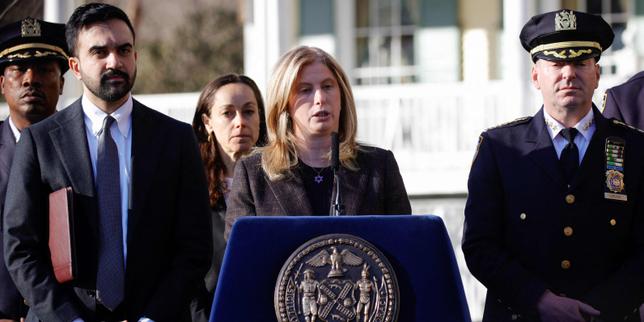
New York has a long memory. It remembers 1993, 2001, and the countless smaller flickers of violence that have attempted to dim its lights. Every time something like this happens, the city undergoes a familiar transformation. The yellow tape goes up. The news vans arrive. The politicians give their briefings with grim faces and folded hands.
But the real story isn't in the briefing. It’s in the neighbor walking their dog the next morning, glancing at the charred patch of pavement and then continuing their route. It’s in the ferry riders looking out at the mansion as they pass on the river, acknowledging the scar but refusing to let it dictate their day.
We often talk about security in terms of bollards, cameras, and armed guards. These are necessary, of course. But the most robust defense against "inspired" terror is a community that refuses to be fragmented by it. When an ideology tries to tell a person that their neighbors are enemies, the most radical act of defiance is to remain a neighbor.
The investigation into the Gracie Mansion explosives will eventually find its culprit. The legal system will take over, and the headlines will fade. Yet, the underlying tension remains. We live in an era where the battlefield is no longer a distant geography; it is the space between our ears, influenced by the screens in our pockets.
The Cost of Vigilance
The investigation has revealed that the tactics used in this incident mirror those suggested in extremist literature—simple, accessible, and designed for maximum psychological impact. This isn't the work of a mastermind; it's the work of a mimic. And in many ways, the mimic is more dangerous because there are so many of them.
Authorities are now grappling with the balance of keeping a city open and free while hardening it against the erratic impulses of the "inspired." It is a delicate, often frustrating task. How do you patrol a thought? How do you intercept a motive before it becomes a gesture?
There is no easy answer. There is only the constant, grinding work of intelligence gathering and the hope that we can reach people before the digital poison takes hold.
As the sun sets over the East River, the lights inside Gracie Mansion flicker on. The mansion remains, a house of wood and stone that has survived fires, storms, and the shifting tides of political fortune. It stands as a reminder that while an individual can throw a flash of violence into the night, they cannot undo the history of a place, nor can they break the will of the people who call it home.
The sirens eventually fade into the background noise of the city. The investigators pack up their kits. The yellow tape is rolled away. New York returns to its restless, beautiful self, slightly more cautious, but entirely unbowed. The explosion was a message of hate, but the silence that followed—the quiet, stubborn resumption of life—was the city's much louder reply.