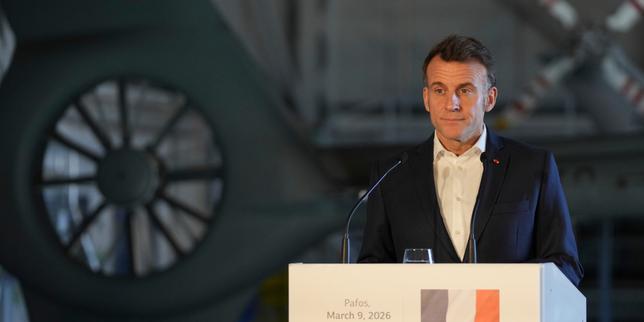
Emmanuel Macron just committed the French Navy to a theater where it has plenty of history but almost zero actual leverage.
The announcement that France will contribute to the security of the Strait of Hormuz is being framed as a bold move for European sovereignty and global maritime stability. It sounds grand in a press release. It looks even better on a map of "strategic interests." But if you peel back the layers of diplomatic polish, you find a strategy built on 20th-century prestige that fails to account for 21st-century asymmetric reality.
France is playing a game of "maritime stabilizer" with a fleet that is stretched thin and a political mandate that is even thinner. By inserting French assets into the world’s most volatile choke point, Paris isn't just protecting oil; it’s inviting a tactical disaster that it isn't prepared to manage.
The Myth of the Independent European Broker
The "lazy consensus" among defense analysts is that France provides a "third way" in the Persian Gulf—an alternative to the heavy-handed American presence or the aggressive posturing of regional powers. This is a fantasy.
In the Strait of Hormuz, there is no such thing as an "independent" middle ground. If a French frigate is forced to engage an Iranian fast-attack craft or intercept a drone, they are not acting in a vacuum. They are operating in a battlespace dominated by U.S. Fifth Fleet infrastructure. To pretend that France can "secure" the Strait while maintaining a distinct, de-escalatory diplomatic path is to ignore the physics of naval warfare.
When the shooting starts, you are either part of the coalition or you are a target. France’s insistence on a "European-led" mission (EMASoH) is a branding exercise designed to appease domestic voters who are allergic to NATO-led initiatives, but it offers zero tactical advantage on the water.
The Mathematics of the Choke Point
Let’s talk about the actual geography. The Strait of Hormuz is 21 miles wide at its narrowest point. The shipping lanes themselves are only two miles wide in each direction.
In this environment, a high-end French FREMM frigate is a massive, expensive target. I have seen planners treat these vessels as if they are invincible bubbles of "security." They aren't. They are vulnerable to the very asymmetric threats Iran has spent three decades perfecting:
- Swarm tactics: Dozens of high-speed boats armed with RPGs and MANPADS.
- Smart mines: Low-cost, high-impact devices that can disable a billion-euro ship in seconds.
- Shore-based batteries: Anti-ship cruise missiles tucked into the jagged coastline of the Musandam Peninsula.
For France to "secure" this area, it would need a persistent, carrier-group-level presence that it simply cannot afford to maintain 3,000 miles from Toulon while also monitoring the Mediterranean and the Atlantic. One or two ships is not a security guarantee; it’s a hostage to fortune.
Energy Security or Moral Posturing?
The argument usually follows that France must protect the flow of oil to ensure global economic stability. This ignores the shift in energy flows.
Most of the crude passing through Hormuz isn't headed for Marseille or Rotterdam; it’s heading for Ningbo and Jamnagar. China, India, and Japan are the primary beneficiaries of a stable Strait of Hormuz. Why is the French taxpayer subsidizing the energy security of the world’s second-largest economy while China sits back and watches?
If the goal is truly "security," the burden should fall on the importers. Instead, France is using its dwindling naval resources to perform a service for nations that aren't even participating in the mission. It is a classic case of strategic overreach fueled by an outdated "Great Power" complex.
The Logistics of Failure
I have seen the internal strain these "show of force" missions put on a navy. Maintenance cycles are pushed back. Crew fatigue sets in. The French Navy is professional, but it is not infinite.
By committing to a permanent or semi-permanent presence in the Gulf, France is cannibalizing its ability to respond to threats closer to home. The Mediterranean is currently a tinderbox of migration crises, Russian naval incursions, and undersea cable vulnerability. Every day a French destroyer spends idling in the Gulf of Oman is a day it isn't protecting the vital infrastructure of the European continent.
The False Premise of De-escalation
The most dangerous misconception is that a French presence is "less provocative" than an American one.
Tehran does not differentiate between a Western frigate flying the Tricolour and one flying the Stars and Stripes when it needs to create leverage in a negotiation. In fact, a lone French vessel is a more attractive target for harassment because the Iranian Revolutionary Guard Corps (IRGC) knows that France’s appetite for a sustained kinetic conflict is significantly lower than Washington’s.
Imagine a scenario where an IRGC drone strikes a French vessel. Paris would be faced with an impossible choice:
- Retaliate alone, triggering a conflict it cannot sustain.
- Run to the Americans for protection, immediately destroying the "strategic autonomy" narrative.
- Do nothing, signaling to every proxy in the region that French "security" is a paper tiger.
Follow the Money (and the Missiles)
The real driver here isn't "global security." It’s defense exports.
France has massive interests in the UAE, Qatar, and Saudi Arabia. From Rafale jets to Naval Group contracts, the presence of the French Navy in the region acts as a floating showroom. It’s a marketing campaign disguised as a humanitarian mission.
There is nothing wrong with supporting national industry, but we should stop pretending this is about the "international rule of law" or "freedom of navigation." It is about maintaining a footprint in the world's biggest arms market. The risk, however, is that France is trading its strategic flexibility for a few billion euros in hardware sales.
The Better Way Forward
If France actually wanted to secure the Strait, it would stop trying to play deputy sheriff and start building a regional maritime coalition that includes the littoral states themselves.
Security in the Gulf cannot be imported from Europe. It must be generated by the actors who actually live there. By providing a perpetual Western safety net, France and the U.S. are preventing regional powers from developing their own collective security frameworks. We are subsidizing a status quo that is inherently unstable.
Stop sending hulls to a theater where they are outmatched by geography and math. Invest that capital into undersea drone capabilities and domestic energy resilience.
The Strait of Hormuz is a 20th-century trap. France is walking into it with its eyes wide shut, clutching a 19th-century playbook.
Move your assets back to the Mediterranean. Shore up the North Atlantic. Stop pretending a single frigate can stop a regional hegemon from closing a two-mile-wide gate whenever it feels like it.
Sell the ships, or use them where they matter. The Gulf isn’t it.