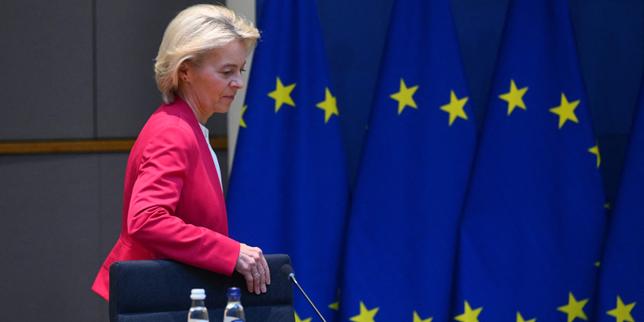
Ursula von der Leyen recently signaled a red alert regarding European citizens trapped in the escalating crossfire of Middle Eastern instability. While the Commission President frames this as a humanitarian crisis where "citizens are caught in a pincer movement," she is carefully omitting the strategic paralysis that put them there. The reality is not just about physical safety. It is about the systemic failure of European leverage in a region where Brussels used to be a primary architect of stability. Now, the European Union finds itself as a secondary observer, watching its diplomatic relevance evaporate while its economic and human interests are held hostage by powers that no longer fear its sanctions or value its statements.
The Geography of Displaced Power
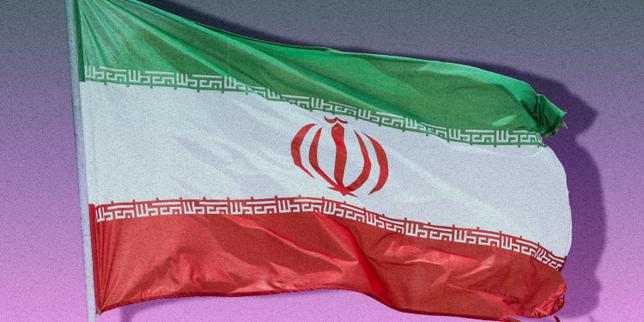
For decades, the European Union operated under the assumption that being the largest provider of development aid to the region granted it a seat at the high table. That assumption has been shattered. The "pincer movement" von der Leyen describes is actually the result of a vacuum. As the United States pivots its focus toward the Pacific and regional actors like Iran, Israel, and the Gulf monarchies assert independent military doctrines, the EU has become a checkbook without a sword. For a different perspective, read: this related article.
The citizens currently stranded or under threat are the face of a much deeper integration. Thousands of dual nationals, NGO workers, and energy consultants represent the physical ties that bind European economies to Middle Eastern stability. When these individuals are threatened, it isn't just a consular headache. It is a sign that the "soft power" Brussels spent billions to cultivate has reached its expiration date.
The crisis is moving faster than the bureaucracy can process. While the Commission issues calls for "de-escalation," the logistical reality on the ground is that European evacuation plans often rely on the permission of non-state actors or the military infrastructure of the very powers they are trying to influence. This dependency creates a feedback loop of impotence. You cannot effectively negotiate for the safety of your people when your primary means of extraction depends on the goodwill of the belligerents. Similar analysis on this trend has been shared by NBC News.
The Energy Trap and the Cost of Moral Posturing
Europe's vulnerability is compounded by its desperate need for non-Russian gas. Following the invasion of Ukraine, the EU rushed to secure long-term supply deals with Qatar, Algeria, and Egypt. This created a massive conflict of interest that is now coming home to roost. Every time a European leader stands at a podium to condemn regional violence, they have to check the daily flow rates of Liquefied Natural Gas (LNG) first.
This is the silent pincer. On one side, the moral imperative to protect citizens and uphold international law; on the other, the cold necessity of keeping the lights on in Berlin and Paris during the winter. The Middle East knows this. The leverage has shifted. When von der Leyen warns about citizens being caught in a vice, she is also acknowledging that the EU’s hands are tied by its own energy insecurity.
The economic fallout of this instability is not limited to the gas pump. The Red Sea shipping lanes, vital for European exports to Asia and imports of critical components, have become a shooting gallery. The European naval mission, Aspides, is a reactive measure—defensive by design and limited in scope. It treats the symptoms of a fever while the infection spreads. A truly "hard-hitting" European policy would require a projection of force and a unified foreign policy that currently does not exist among the 27 member states.
Why the European Street is More Divided than the Capitals
The internal pressure within Europe is perhaps more volatile than the external threats. The "pincer" also refers to the domestic political situation. Every major European city is currently a theater for the Middle Eastern conflict. Public opinion is fractured along deep historical, religious, and ideological lines.
Governments in London, Berlin, and Madrid are terrified of the "spillover effect." They remember the waves of migration in 2015 and the rise of populist movements that followed. When von der Leyen speaks of citizens caught in a pincer, she is subtly referencing the risk of radicalization and the breakdown of social cohesion within the EU's own borders. The fear is that a prolonged conflict will trigger another mass migration event, which would be the final nail in the coffin for the current centrist political order in Europe.
The Myth of the Unified Voice
The most significant barrier to resolving this crisis is the lack of a "Single Telephone Number" for Europe. Despite the creation of the High Representative for Foreign Affairs, individual member states continue to pursue their own agendas.
- France attempts to maintain its historic role as a mediator in Lebanon and North Africa.
- Germany remains constrained by its historical responsibilities, prioritizing its relationship with Israel above almost all other regional considerations.
- Spain and Ireland have moved toward a more critical stance, advocating for immediate recognition of Palestinian statehood.
This cacophony is what makes von der Leyen’s "alert" feel hollow to the rest of the world. To the powers in the Middle East, an alert from Brussels is a press release, not a policy change.
The Technological Blind Spot
While the focus is on boots on the ground and ships in the sea, Europe is losing the technological war for influence in the region. The Middle East has become a testing ground for cheap, effective drone warfare and sophisticated cyber-attacks. Europe’s defense industry is still largely geared toward 20th-century conventional warfare.
European citizens working in the region are not just at risk from kinetic strikes; they are targets for digital surveillance and state-sponsored kidnapping-for-leverage. The EU lacks a coordinated rapid-response unit that can deal with these non-traditional threats. We are seeing a 19th-century diplomatic structure trying to operate in a 21st-century combat zone.
The "why" behind the current paralysis is simple: Europe has outsourced its security to the U.S. and its energy to the very region that is now on fire. You cannot claim strategic autonomy while you are fundamentally dependent on others for your basic survival.
Moving Beyond the Press Release
If Brussels wants to do more than just "alert" the world to a problem everyone can already see, it must undergo a painful transition. This means moving away from the "Peace Project" mindset that has dominated the EU since its inception. Peace is a goal, but it is not a strategy.
The EU must begin to link trade and aid directly to security guarantees. It is nonsensical to provide billions in reconstruction funds or trade preferences to entities that actively endanger European citizens or block critical trade routes. This requires a level of political ruthlessness that is currently absent from the Berlaymont building.
The pincer movement von der Leyen describes is closing. On one side is the reality of a multi-polar world that no longer respects European "values" as a substitute for power. On the other is a domestic population that is increasingly disillusioned with a leadership that provides plenty of warnings but very few solutions.
The time for "monitoring the situation with grave concern" has passed. European citizens are indeed caught in a pincer, but the most dangerous part of that pincer is the indecision of their own leaders. To break the grip, Europe must decide if it is a global power or merely a large, wealthy museum.
Demand that your national representatives support the creation of a permanent European rapid-response force with the mandate to protect citizens abroad, independent of third-party logistics.