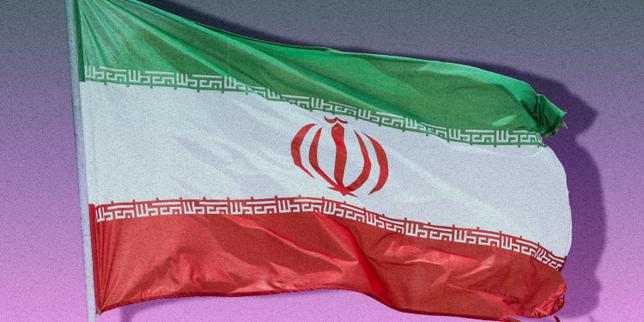
If the current clerical establishment in Tehran were to collapse tomorrow, the most significant force for reconstruction wouldn't come from a Western stabilization fund or a UN mandate. It would arrive on commercial flights from Los Angeles, London, Dubai, and Toronto. This is the Iranian diaspora—a global network of roughly six million people who control an estimated $1.3 trillion to $2.5 trillion in liquid assets and managed capital. They are not just refugees or expatriates; they are the most educated and affluent immigrant group in the Western world. They represent a ready-made shadow government and a venture capital powerhouse waiting for a legal and political opening to strike.
For decades, the conversation around Iran has been trapped in a cycle of sanctions, nuclear enrichment levels, and regional proxy wars. This narrow focus misses the structural reality. While the domestic Iranian economy suffocates under mismanagement and isolation, a "Second Iran" has flourished in the cracks of the global economy. This external population holds the keys to every sector the country desperately needs to modernize: high-tech manufacturing, water management, aviation, and transparent banking.
The Brain Drain That Became a Global Reservoir
The migration of Iranian talent was never a single event. It happened in waves, starting with the 1979 revolution, followed by the "war generation" of the 1980s, and continuing through the Green Movement crackdowns and the current economic strangulation. Each wave exported the country’s most capable minds. In the United States alone, over 50% of Iranian-Americans hold at least a bachelor's degree, and they are significantly overrepresented in the C-suites of Silicon Valley and the faculty lounges of elite medical schools.
This is not a traditional brain drain. In a typical brain drain, the talent is lost forever. In the Iranian context, the cultural and familial ties remain obsessively strong. This is a global reservoir. The expertise is being preserved and upgraded abroad, essentially "stored" in the infrastructure of the West until the cost of returning—measured in political risk—drops below the threshold of patriotic desire.
When you look at the successful modernization of South Korea or the post-1991 economic surge in India, the catalyst was often the return of the diaspora. They didn't just bring money; they brought the "soft infrastructure" of global commerce: professional standards, legal expectations, and technical workflows. Iran’s diaspora is arguably better positioned than India’s was in the 1990s because of the sheer density of their wealth relative to the size of the home population.
The Multi Trillion Dollar Capital Flight
Conservative estimates suggest that the Iranian diaspora’s combined wealth is roughly triple Iran’s current annual GDP. This capital is currently parked in S&P 500 index funds, London real estate, and German engineering firms. It is "passive" capital in the context of their homeland.
However, the moment the political risk profile changes, this capital becomes "active." We aren't talking about charity. We are talking about the massive influx of Foreign Direct Investment (FDI) that is currently blocked by the Office of Foreign Assets Control (OFAC) and the Iranian government's own hostility toward "dual nationals."
The current regime treats the diaspora with a mix of greed and paranoia. They want the remittances—which help keep the rial from a total death spiral—but they fear the secular, liberalizing influence of returning citizens. This tension has led to the high-profile arrests of dual nationals, which serves as a massive "Keep Out" sign for anyone thinking of building a factory or opening a tech hub in Shiraz or Isfahan.
Infrastructure is the First Battlefield
If a transition occurs, the diaspora’s first contribution won't be in politics, but in physical survival. Iran is facing an existential environmental crisis. Decades of poor agricultural planning and the "mining" of groundwater have left the country on the verge of a water bankruptcy.
The Iranian diaspora includes some of the world’s leading experts in desalination, drip irrigation, and renewable energy. These are people currently running projects in the Mojave Desert or managing water grids in the South of France. They possess the specific technical blueprints to reverse the desertification of the Iranian plateau. Unlike a foreign corporation like Veolia or Siemens, which might demand massive sovereign guarantees to enter a post-revolutionary market, a diaspora-led firm often operates with a "homeland premium"—a willingness to accept higher initial risks for the sake of long-term national reconstruction.
The Silicon Valley Connection
The tech sector provides the clearest example of this latent power. Look at the rosters of companies like Google, Uber, and Dropbox. Iranians are everywhere in the foundational layers of these firms. In a post-sanctions environment, the jump-start of an Iranian tech ecosystem wouldn't take decades. It would take months.
The domestic population is young, tech-savvy, and desperate for work that isn't tied to the stagnant oil sector or the military-industrial complex. A "Reverse Brain Drain" would see the establishment of venture capital funds specifically targeted at the Iranian market, managed by people who understand both the Silicon Valley "fail fast" culture and the local Iranian "bazaar" mentality. This bridge is something that no Chinese or Russian investor can replicate. It is a unique cultural-economic synergy that only the diaspora provides.
The Legal and Institutional Hurdle
The biggest mistake analysts make is assuming that the diaspora will simply "show up" because they love their country. They won't. The "New Iran" will have to compete for this talent and capital just like any other emerging market.
To attract the $2 trillion sitting on the sidelines, the country will need to undergo a legal revolution. This means:
- Property Rights: A definitive end to the era of revolutionary confiscations. Investors need to know that their assets cannot be seized by a new religious or military committee.
- The End of the Dual-National Trap: Abolishing the practice of using returnees as political hostages.
- Banking Transparency: Moving from a grey-market economy dominated by the Revolutionary Guard to a system that complies with FATF (Financial Action Task Force) standards.
Without these shifts, the diaspora will remain a sympathetic but distant observer, sending money to elderly relatives but keeping their real "dry powder" in the West.
The Counter-Argument: The Resentment Gap
There is a significant social risk that many ignore. The "Stayers" versus the "Leavers." People who survived forty years of sanctions, war, and inflation inside Iran may not warmly welcome a "Technocratic Elite" flying in from Beverly Hills to tell them how to run the country.
This friction is real. The diaspora is often seen as out of touch, having missed the daily grind of the bread lines and the morality police. If the diaspora returns with an air of superiority, they will face a wall of bureaucratic and social resistance. The successful integration of these two groups is the single most important social challenge of a transition. It requires the diaspora to act as partners and investors, not as "saviors" or "owners."
The Geopolitical Pivot
A reintegrated Iranian diaspora would fundamentally shift the balance of power in the Middle East. Currently, Iran’s primary economic partners are China and Russia—partnerships born of necessity rather than preference. A diaspora-led economic revival would naturally pivot Iran back toward the global West and the emerging markets of the South.
This isn't just about trade; it’s about a cultural re-alignment. The diaspora is the bridge. They are the ones who can translate Western corporate governance into a Persian context. They are the ones who can negotiate trade deals in London and Paris while speaking the language of the Tehran streets.
The Oil Curse and the Tech Cure
For a century, Iran has been a "rentier state," dependent on the extraction of oil. This has historically empowered centralized, authoritarian governments. The diaspora represents the antidote to this "Oil Curse." Their wealth is based on human capital, intellectual property, and services—the very things that require a decentralized, open society to thrive.
By diversifying the economy through diaspora-led investment in tech, tourism, and high-end manufacturing, Iran can finally break the cycle of petro-state volatility. The goal isn't just to replace one regime with another; it's to replace one economic philosophy with another.
The real story of Iran’s future isn't being written in the halls of the UN or in the secret bunkers of the nuclear program. It’s being written in the boardrooms of the Iranian-American Chamber of Commerce and in the WhatsApp groups of Iranian engineers in Berlin. They are the largest "sovereign wealth fund" in the world that doesn't belong to a state.
When the friction of the current political system finally wears through, the speed of the transition will shock the world. It will not be a slow, decades-long crawl toward development. It will be an explosion of pent-up capital and expertise hitting a market that has been starved for it for nearly half a century.
The question isn't whether the diaspora has the power to rebuild Iran. They do. The question is whether the future Iranian state will have the wisdom to get out of their way and let them do it. Start tracking the capital flows of the top 500 Iranian-owned businesses in the West; that is where you will find the blueprint for the next Middle Eastern superpower.
Build the legal framework for protected investment now, or watch this trillion-dollar opportunity evaporate into the coffers of more stable, less sentimental markets.