The mainstream media is currently obsessed with a fairytale. They look at the recent legislative shifts in Colombia and see a country finally "maturing" into a modern social democracy. They see a left-wing coalition gaining ground and call it progress. They are wrong.
What the pundits describe as a historic consolidation of power is actually the frantic gasping of a political system that has lost its internal compass. By framing this as a "leftist victory," analysts miss the structural rot beneath the surface. Colombia isn’t moving left; it is fragmenting. The traditional parties didn't lose because of a sudden ideological epiphany among the masses. They lost because they stopped functioning as coherent entities, leaving a vacuum that populism has merely occupied, not conquered. You might also find this related coverage interesting: The $2 Billion Pause and the High Stakes of Silence.
The Myth of the Mandate
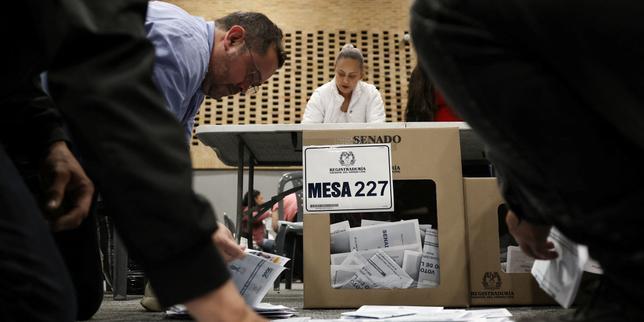
The most dangerous lie in Bogota right now is that the legislative results represent a clear mandate for radical change. If you look at the raw numbers, the "triumph" of the Pacto Histórico is a statistical sleight of hand. While they gained seats, the Colombian Congress remains a fractured mosaic of narrow interests.
In any functioning democracy, a mandate requires a majority that can actually pass a budget without selling its soul to a dozen minor regional bosses. That doesn't exist here. The legislative body is a collection of silos. The left didn't win a mandate; they won a seat at a table where everyone is speaking a different language and holding a knife under the cloth. As discussed in detailed coverage by TIME, the results are significant.
I have spent decades watching Latin American legislative bodies oscillate between paralysis and corruption. This isn't a new dawn. It’s the same old horse-trading, just with different faces at the trough. When you hear the term "progressive coalition," read "unstable alliance held together by temporary convenience and the promise of patronage."
Why the Centrists Are Actually to Blame
The "lazy consensus" blames the right for the rise of the radical left. This is a fundamental misunderstanding of Colombian power dynamics. The real failure lies with the center.
The centrist factions—the so-called technocrats and moderates—became so obsessed with "consensus" that they forgot how to lead. They offered a lukewarm soup of incrementalism to a population that was starving for a vision. In their attempt to be everything to everyone, they became nothing to anyone.
Imagine a scenario where a building is on fire. The right wants to save the furniture; the left wants to rebuild the house from scratch; and the center wants to form a committee to discuss the appropriate water pressure for the hoses. The center didn't get defeated; it evaporated. This leaves the country in a binary tug-of-war that the legislative branch is fundamentally unequipped to handle.
The Ghost of the Peace Accord
Everyone loves to talk about the 2016 Peace Accord as the turning point. The narrative goes: "The war ended, so now we can focus on social issues."
That is a fantasy. The "end" of the conflict merely transformed the nature of the violence. By focusing on the legislative makeup in Bogota, we ignore the fact that in the regions—Nariño, Catatumbo, Chocó—the state is a ghost. It doesn't matter who sits in the Senate if they can't project authority twenty miles outside of a provincial capital.
The legislative "surge" of the left is an urban phenomenon. It’s a middle-class revolt in the cities that has very little to do with the grim reality of the rural peripheries where armed groups—dissidents, cartels, and paramilitaries—still hold the only vote that counts. The disconnect between the halls of Congress and the muddy tracks of the countryside has never been wider.
Economic Gravity Always Wins
The new legislative bloc is promising a total overhaul of the pension system, the healthcare system, and the energy sector. It sounds noble on a campaign poster. It’s a math-defying disaster in practice.
Colombia is not Norway. It does not have a trillion-dollar sovereign wealth fund to cushion the blow of ideological experimentation. The country’s fiscal rule isn't just a suggestion; it’s the only thing keeping the currency from a freefall.
When the new legislative power brokers talk about halting oil exploration, they aren't just "protecting the environment." They are cutting the throat of the national budget. Oil and coal represent roughly 50% of Colombia's exports. You cannot fund a Swedish-style welfare state while nuking your primary source of foreign exchange.
The market doesn't care about "social justice." It cares about $\text{Debt} / \text{GDP}$ ratios. If the legislative branch forces through spending bills that the economy cannot support, the resulting inflation will hurt the poor—the very people the left claims to represent—far more than any right-wing policy ever could.
The Danger of the "Great Reformer" Complex
We are seeing the rise of a dangerous cult of personality that bypasses institutional checks. The legislative elections were treated as a referendum on individuals, not platforms. This is the first step toward institutional erosion.
When a legislative body becomes a rubber stamp for a "charismatic leader," or conversely, a brick wall designed solely to obstruct them, the concept of governance dies. We are entering a period of "hyper-polarization" where the goal isn't to pass laws, but to destroy the "enemy" in the next news cycle.
I’ve seen this movie before in Caracas and Quito. It starts with high hopes and "historic" election nights. It ends with empty shelves and millions of people crossing borders with their lives in a suitcase.
Stop Asking if the Left Won
The question isn't whether the left won or the right lost. That’s the wrong metric. The real question is whether the Colombian state is still capable of reform without rupture.
The current legislative configuration suggests the answer is no. We are looking at a stalemate masquerading as a movement. The executive branch will try to bypass a fractured Congress; the Congress will use its power to paralyze the executive; and the citizens will continue to see their purchasing power erode while the elites argue about 19th-century ideologies.
If you are betting on a "Colombian Spring," prepare to lose your shirt. This isn't a transition to a new era. It’s the final collapse of the old one, and there is nothing substantial waiting to take its place.
The legislative surge isn't a sign of health. It’s a fever. And fevers usually break in one of two ways: the patient recovers, or the body gives out. Looking at the current state of play in Bogota, the latter is looking increasingly likely.
Burn your spreadsheets and ignore the "experts" talking about social democratic evolution. Colombia is heading into a storm with a broken rudder and a crew that’s fighting over the map. The legislative results didn't fix the problem; they just ensured that nobody is actually steering the ship.
Stop looking for progress in the ballot box when the foundations of the house are made of sand.