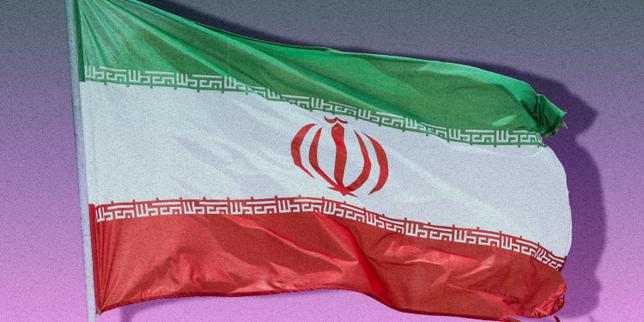
Europe is playing a high-stakes game of selective memory. We’ve spent decades positioning the European Union as the moral compass of the world, a bastion of the "rules-based order" and the primary defender of international law. Yet, when it comes to the escalating threat of war in Iran and the continuous erosion of legal norms in the Middle East, that compass seems to be spinning aimlessly. This isn't just about a lack of diplomatic backbone. It’s a systemic failure to uphold the very laws that were designed to prevent global catastrophe.
If you're watching the news, you see the headlines about drone strikes, enrichment levels, and regional proxies. But the underlying legal reality is often buried. International law isn't a menu where you can pick and choose the dishes you like while ignoring the ones that are too spicy or inconvenient. When European leaders remain silent about violations of sovereignty or the preemptive use of force, they aren't just "being pragmatic." They're dismantling the foundation of global security.
The Myth of Neutrality in the Face of Aggression
Staying neutral sounds safe. In reality, it’s a choice that carries heavy consequences. When a state’s sovereignty is threatened or when extrajudicial actions become the norm, silence acts as a green light. The United Nations Charter is pretty clear about the use of force. Article 2(4) prohibits the threat or use of force against the territorial integrity or political independence of any state. There are no footnotes that say, "unless that state is really difficult to deal with."
Europe’s hesitation to call out violations—whether they come from regional powers, the United States, or Iran itself—weakens the entire structure of the UN. We saw this during the lead-up to previous conflicts in the region. History repeats itself because we let the legal guardrails rust. When we don't demand accountability for targeted killings or unauthorized incursions, we're basically saying that might makes right. That’s a 19th-century mindset that has no place in 2026.
The irony is thick. European capitals often lecture developing nations on the importance of the "Acquis Communautaire" and international standards. But when the drums of war beat near the Persian Gulf, the rhetoric shifts to "de-escalation" without ever mentioning who is actually breaking the law. De-escalation is a tactic, not a legal principle. You can’t de-escalate your way out of a fundamental breach of international treaties.
Why the JCPOA Collapse was a Legal Warning Shot
Remember the Joint Comprehensive Plan of Action? It wasn't just a political handshake. It was a landmark of multilateral diplomacy, backed by UN Security Council Resolution 2231. When the U.S. walked away in 2018, Europe tried to keep it on life support with mechanisms like INSTEX. It failed. Not because of a lack of technical skill, but because of a lack of political will to challenge the extraterritorial application of domestic laws.
By allowing secondary sanctions to dictate European trade policy, the EU essentially admitted that its own laws—and international law—take a backseat to the financial reach of Washington. This created a legal vacuum. Iran responded by scaling back its commitments, which was entirely predictable. Now, we're in a cycle where both sides claim the other started it, while the legal framework that was supposed to prevent a nuclear-armed Iran lies in tatters.
Honest talk: Europe’s inability to protect its own companies from foreign sanctions showed the world that European sovereignty is conditional. If you can’t protect your own legal space, how can you expect to be a credible mediator for international law in a war zone?
Human Rights and the Double Standard Trap
We can't talk about Iran without talking about human rights. The crackdown on protests and the restriction of basic freedoms are clear violations of international covenants. Europe is usually quick to condemn these. That’s good. But the credibility of those condemnations evaporates when they're paired with silence on other legal issues, like the humanitarian impact of broad-based sanctions or the legality of "maximum pressure" campaigns.
International law covers both the behavior of a state toward its citizens and the behavior of states toward each other. You don't get to choose one and ignore the other. By focusing solely on internal human rights while ignoring the external legal pressures that exacerbate the crisis, Europe looks hypocritical to much of the Global South. This double standard is a gift to hardliners in Tehran. It allows them to frame every legal critique as a tool of Western imperialism rather than a universal standard.
The Real Cost of Legal Erosion
- Loss of Mediation Power: Who goes to a referee who won't blow the whistle?
- Regional Instability: When law is ignored, proxy wars flourish.
- Economic Blowback: Energy markets hate legal uncertainty.
- Precedent Setting: If it’s okay to bypass the UN now, it’s okay for everyone later.
The Specter of Preemptive Strike and Sovereignty
The chatter about "preemptive" strikes against Iranian nuclear facilities is growing louder. Let's be blunt: under international law, the doctrine of "preemptive self-defense" is extremely narrow. It requires an "imminent" threat—not a potential threat that might materialize years down the line. The Caroline Test, a staple of legal history, requires that the necessity of self-defense be "instant, overwhelming, leaving no choice of means, and no moment for deliberation."
If Europe doesn't draw a hard line here, it’s effectively consenting to a world where any country can attack another based on a "feeling" about future intentions. That is a recipe for global anarchy. We’ve seen where this leads. The 2003 invasion of Iraq was sold on similar legal gymnastics. The result was a destroyed country and a destabilized region. Europe’s silence today feels like a haunting echo of that era’s failures.
Practical Steps to Reclaim the Legal High Ground
Europe needs to stop acting like a junior partner and start acting like a legal superpower. This isn't about picking sides in a Middle Eastern rivalry. It’s about protecting the rules that keep us all safe. If we want to avoid a catastrophic war, the focus must shift back to the courtroom and the treaty table, not just the battlefield.
First, the EU needs to revitalize its "Blocking Statute" to actually mean something. If European companies are following international law and UN-approved agreements, they shouldn't be punished by the domestic laws of a third party. This requires a financial backbone—perhaps a truly independent clearing house that doesn't rely on the dollar-dominated SWIFT system. It’s a massive undertaking, but the alternative is total irrelevance.
Second, the discourse needs to change. European diplomats should stop using the vague language of "concerns" and start using the specific language of "obligations." Call out violations of the UN Charter by name, regardless of who commits them. If a strike violates sovereignty, say it. If a detention violates the ICCPR, say it.
Third, push for a regional security framework that is grounded in law, not just balance-of-power politics. The Helsinki Accords worked during the Cold War because they gave everyone a legal stake in the status quo. A similar "Helsinki for the Middle East" could provide a path toward de-escalation that is sustainable because it’s built on recognized borders and mutual non-interference.
The time for quiet "behind-the-scenes" diplomacy has passed. That approach hasn't stopped the enrichment, hasn't stopped the sanctions, and hasn't stopped the slide toward conflict. The only thing left to protect is the law itself. If Europe won't do it, nobody will. Start by demanding a return to the UN Security Council as the sole arbiter of international force. Support the International Atomic Energy Agency (IAEA) not just with words, but by ensuring its legal mandates are respected by all signatories. Reinforce the principle that sanctions must have a clear legal basis and a humanitarian carve-out that actually works.
Europe's role isn't to be a bystander to history. It's to be the architect of a world where rules matter. That starts with breaking the silence on Iran.