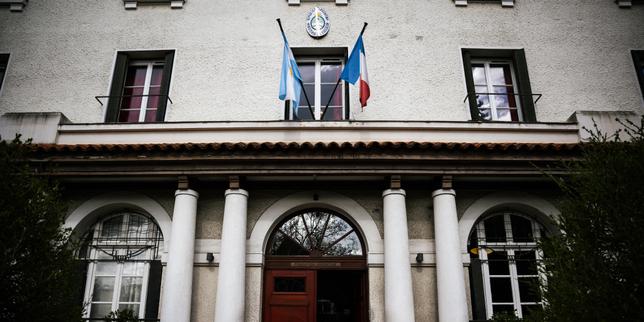
The Cité Internationale Universitaire de Paris (CIUP) was built for peace. After the horrors of World War I, the idea was simple. If you put the world's brightest students in one park, they'll stop wanting to kill each other. It’s a beautiful, leafy campus in the 14th arrondissement. But right now, that dream is under internal siege. Radical far-right groups aren't just visiting; they're moving in and setting up shop.
This isn't some conspiracy theory. It's a documented, tactical infiltration of one of France’s most prestigious academic spaces. While the administration tries to maintain a veneer of "neutrality," student activists and investigative reports suggest the CIUP has become a recruitment hub. Groups like the GUD (Groupe Union Défense) and their various offshoots are using the campus's unique layout to organize, hide, and expand.
Why the Cité Universitaire is the Perfect Target
You might wonder why a bunch of radical nationalists would want to live in a place defined by internationalism. The answer is practical. The CIUP offers cheap housing, relative privacy, and a constant stream of young, politically active minds. It's a goldmine for anyone looking to build a network.
The campus consists of 43 different "houses," most tied to specific nations. This fragmented structure makes it incredibly hard to police. If a group gets kicked out of one house or causes trouble in a specific bar, they just drift to another wing of the park. It’s a decentralized fortress.
Security here is notoriously stretched thin. Guards are trained to check IDs at the gate, not to monitor political radicalization in the common rooms. This "laissez-faire" attitude has allowed small cells of militants to turn their dorm rooms into unofficial headquarters. They aren't just sleeping there. They're printing flyers, planning "actions," and hosting private meetings that fly under the radar of the Fondation Nationale de la Cité Universitaire.
The Evolution of the GUD and its Successors
The name GUD carries a lot of weight in French far-right history. Known for violent clashes in the 60s and 70s, it’s a brand that refuses to die. Recently, we've seen a resurgence of this "black shirt" aesthetic among the student population at the CIUP. They don't always call themselves GUD anymore. Sometimes they're "identity" collectives or "social" student unions.
These groups use a specific playbook. They start by complaining about "insecurity" on campus or the quality of the food. It sounds normal. But quickly, the rhetoric shifts. They move from student grievances to "defending European identity" against the very international students the CIUP was built to house. It’s a classic bait-and-switch.
I've talked to students who’ve seen the stickers appear overnight. "Defend Europe" or "Foreigners Out" plastered on the walls of the Maison du Mexique or the Maison de l'Inde. It’s a deliberate provocation. They want a reaction. When they get one, they play the victim, claiming that "leftist elites" are suppressing their freedom of speech.
How the Administration is Failing
The CIUP administration is in a tough spot, but they're handling it poorly. They're terrified of bad PR. If they admit there's a growing neo-fascist presence on campus, it looks bad for their image as a "haven of peace." So, they often do nothing.
- Lack of background checks: Getting into the CIUP is about grades and nationality, not political affiliation. While we shouldn't have "thought police," there’s a clear line between having an opinion and belonging to a group that openly calls for violence.
- Slow response times: When hate speech is reported, it takes weeks for a formal response. By then, the militants have moved on to a new tactic.
- Poor coordination: Each house has its own director. Some are strict; others are oblivious. This inconsistency allows radicals to play "house hopping" to stay in the system.
The CIUP isn't just a park. It’s a symbol. When the far right "extends its web" here, they're sending a message that nowhere is off-limits. They're targeting the future administrative and political class of the world.
The Ripple Effect Beyond the 14th Arrondissement
This isn't just a local problem. The students at the CIUP today are the diplomats and CEOs of tomorrow. If they're being radicalized—or even just intimidated—during their stay in Paris, the consequences are global.
We're seeing a trend where these militants use the CIUP as a base to launch "raids" into the center of Paris. They participate in rallies, get into brawls in the Latin Quarter, and then retreat back to the safety of the campus. It’s a perfect urban guerrilla setup. The metro Line 4 and the RER B make it easy to strike and vanish.
Don't think these are just "angry kids." Many of these individuals are highly educated. They're lawyers, historians, and political scientists in training. They know exactly how to use the law to protect themselves while they work to undermine the very institutions that house them.
Spotting the Signs of Radicalization on Campus
If you're a student or a staff member at the CIUP, you need to know what to look for. It’s not always a guy in a bomber jacket.
- The "Defense" Narrative: Watch out for groups that obsess over "security" and "defending" the campus from "outsiders."
- Coded Language: They often use terms like "Remigration" or talk about "Roots" and "Tradition" in ways that imply some people don't belong.
- Aggressive Postering: A sudden surge in high-quality, professionally designed stickers and posters with nationalist themes.
- Intimidation Tactics: Small groups of men hanging out in common areas, making international students feel unwelcome through stares or comments.
The reality is that "neutrality" doesn't work against groups that are inherently anti-neutral. By trying to stay out of it, the CIUP administration is effectively giving the far right a free pass to operate.
What Needs to Change Immediately
The "peace" of the Cité is currently a fake peace. It’s a silence born of discomfort. To fix this, the administration has to stop treating this as a minor "dispute between students" and start seeing it as a security threat.
- Centralize security monitoring: Create a campus-wide reporting system for hate speech and intimidation that bypasses individual house directors.
- Strict enforcement of house rules: If a resident is found to be part of an organization that promotes discrimination, their housing contract should be terminated immediately. No exceptions.
- Support for international student unions: Strengthen the groups that actually represent the CIUP's mission. Give them more funding and better spaces to organize so the far right doesn't have a vacuum to fill.
You can't just hope this goes away. The far right is patient. They're building their "web" one dorm room at a time. If you live at the CIUP or work there, pay attention to the common rooms. Don't let the "City of Peace" become a training ground for the opposite.
Check your house's internal bulletin boards. If you see hateful material, don't just walk past it. Report it to the Maison Internationale immediately and demand a written follow-up. Keep a record. The only way to stop this "web" from spreading is to make it impossible for them to operate in the shadows.