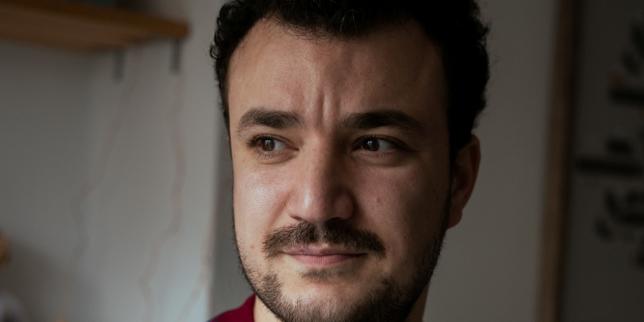
One year ago, federal agents took Mahmoud Khalil into custody. In the time since, his case has morphed from a localized immigration dispute into a definitive case study for how the federal government now handles high-profile dissent. Khalil, a graduate student and vocal pro-Palestinian organizer, became a primary target during a period of intense campus unrest. Today, the administrative pressure on him remains relentless, signaling a shift in how the state uses visa status as a tool for political management.
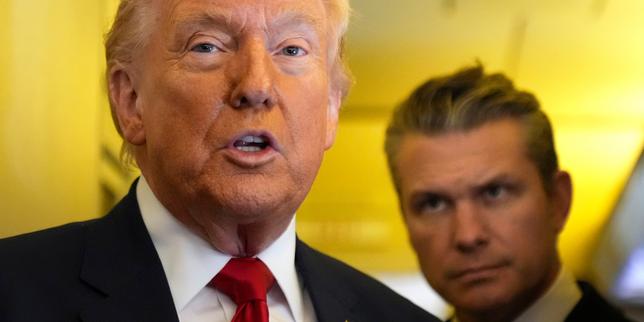
This is not a simple story of paperwork errors or expired stays. It is a calculated application of executive power. For those watching the intersection of civil liberties and immigration law, Khalil represents the first major test of a doctrine that treats political speech as a violation of the "public interest" requirement for residency. The machinery of the Trump administration has not just maintained the case against him; it has expanded the scope of what constitutes a deportable offense for non-citizens engaged in activism.
The Weaponization of Administrative Discretion
The legal foundation for the pursuit of Mahmoud Khalil rests on the broad, often opaque authority granted to the Department of Homeland Security. Under current mandates, the threshold for "conduct that disrupts public order" has been lowered significantly. In Khalil’s case, his leadership in campus protests was not initially met with criminal charges that would stand up in a standard court of law. Instead, the administration pivoted to the immigration system, where the burden of proof is lower and the protections are thinner.
Administrative removal is the preferred weapon because it bypasses the messy optics of a First Amendment trial. If the government can argue that a student’s presence is "prejudicial to the interests of the United States," they can trigger a cascade of revocations without ever having to prove a crime was committed. This creates a chilling effect that extends far beyond one individual. It sends a message to every international student and visa holder: your right to speak is contingent on your silence on sensitive foreign policy issues.
The strategy is effective because it is quiet. While a criminal trial generates headlines and discovery processes, immigration hearings are often closed or restricted. The government can cite "sensitive intelligence" to justify its actions, leaving the defense to shadowbox against allegations they are not fully permitted to see.
The Campus to Courtroom Pipeline
The arrest of Khalil did not happen in a vacuum. It was the result of a coordinated effort between university administrations and federal law enforcement. We are seeing a new level of data sharing where campus disciplinary records—often involving minor infractions like "unauthorized use of a megaphone"—are being funneled directly to federal databases.
The Mechanics of the Crackdown
- Information Sharing Transfers: Universities, fearing the loss of federal funding, have become more proactive in reporting student activists to Immigration and Customs Enforcement (ICE).
- Visa Re-categorization: The administration has looked into re-evaluating F-1 student visas based on "ideological compatibility," a move that would have been unthinkable a decade ago.
- The 24-Hour Surveillance Loop: Activists like Khalil are subjected to constant monitoring, where any deviation from a strict daily routine is used as a pretext for a "status check" or detention.
This pipeline ensures that the moment a student steps out of line on campus, they are flagged at a federal level. For Khalil, his role as a spokesperson for the Gaza Solidarity Encampment made him an immediate priority. The administration’s focus on him one year later proves this wasn't a temporary measure to clear a lawn; it is a long-term strategy to remove the intellectual leaders of the movement from the country entirely.
Beyond the Individual
Critics of the administration’s focus on Khalil argue that it ignores the fundamental principle of equal protection. However, supporters of the move claim that non-citizens do not enjoy the same broad political protections as residents. This legal gray area is where the Khalil case lives. By focusing on a high-profile figure, the administration is testing the fences of the law. If they can successfully deport a grad student for legal, albeit disruptive, protest, the precedent is set for anyone on a work visa or green card.
The financial and psychological toll on Khalil is part of the process. Being stuck in a state of "permanent temporary" status, where every knock on the door could be the final one, is a form of extrajudicial punishment. It drains the resources of legal defense funds and distracts the movement from its core message.
The Failure of the Judicial Backstop
Many expected the courts to intervene and provide a check on this executive overreach. That hasn't happened. The judiciary has shown an increasing reluctance to interfere in matters of "national security" and "border integrity," even when those terms are applied to a student in a library.
The courts have largely deferred to the executive branch's interpretation of what constitutes a threat. This deference has turned the immigration court system into a rubber stamp for political targeting. When Khalil’s lawyers argue that his speech is protected, the government counters that his presence is the issue, not his speech. It is a distinction that effectively nullifies the First Amendment for millions of people living in the U.S. on visas.
The reality is that the legal system is not designed to protect people like Mahmoud Khalil once they have been marked as a political liability. The law is being used as a scalpel to remove specific voices while leaving the broader framework of "free speech" seemingly intact for the majority.
The Precedent for the Next Decade
We are witnessing the birth of a new era of domestic policy where immigration law is the primary tool for social control. It is cleaner than mass arrests and more permanent than a jail sentence. A deported activist cannot easily return to testify, organize, or influence the American public.
Mahmoud Khalil remains in the crosshairs because he is the proof of concept. If the administration successfully completes his removal, it will have a clear, battle-tested roadmap for silencing any foreign national who dares to challenge U.S. foreign policy on American soil. This is the new architecture of the American administrative state. It is a system that identifies dissent, flags the visa, and waits for the clock to run out.
The case against Khalil is not about one man’s paperwork. It is about whether the United States will continue to allow the executive branch to use deportation as a punishment for political thought. Every international student, researcher, and worker in this country is currently living under the shadow of the Khalil precedent.
The next time a protest erupts, watch the visa status of the leaders, not just the charges on the docket. That is where the real war is being fought.
Stop looking for a compromise that isn't coming. The administration has made its stance clear: if you are not a citizen, your political participation is a privilege that can be revoked at any moment, for any reason, without a trial. You should be asking who is next on the list.