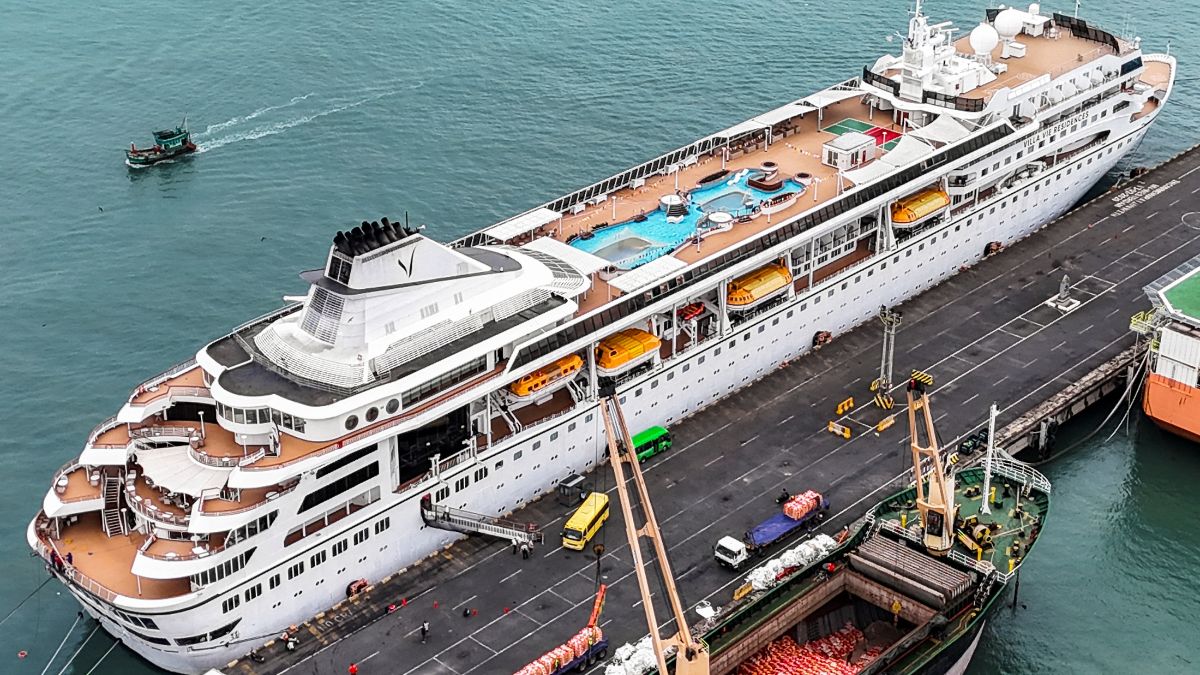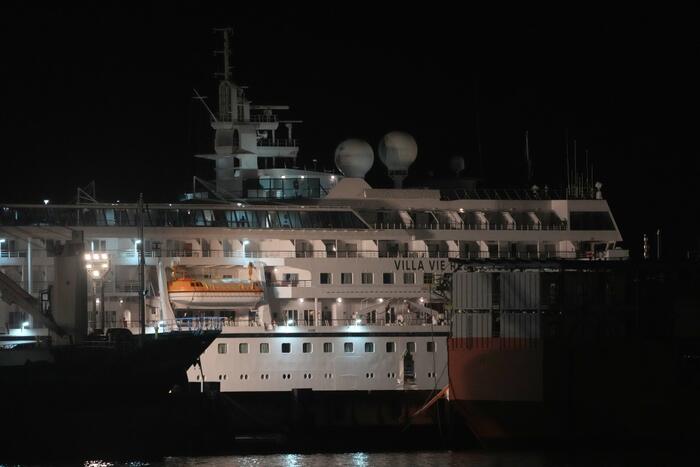
When an American cruise line abruptly halts a multi-month global voyage mid-route in Asia, leaving roughly 200 passengers stranded thousands of miles from home, the official press release almost always points to a sudden, uncontrollable spike in marine fuel costs. That explanation is rarely the whole truth. In the capital-intensive world of ocean cruising, a vessel does not simply drop anchor and cancel an itinerary because oil prices ticked upward over a few weeks. A mid-voyage suspension is the final, visible symptom of a much deeper structural failure involving unhedged bunker exposure, thin working capital reserves, and a business model that relies on tomorrow’s ticket deposits to pay for today’s fuel bill.
Passengers who buy into around-the-world itineraries are purchasing the ultimate discretionary luxury. They pay tens of thousands of dollars upfront, often a year or more before embarkation, expecting a floating hotel that operates with clockwork precision. Yet when a smaller or heavily leveraged operator hits a liquidity wall, those travelers quickly discover that maritime law, corporate shell structures, and international aviation logistics offer far fewer protections than a standard domestic vacation.
The Anatomy of a Mid-Voyage Fuel Crunch
To understand how a ship gets stuck in an Asian port, you have to look at the mechanics of bunker fuel procurement. Large passenger vessels do not pull up to a marina and swipe a corporate credit card. Marine gas oil and very low sulfur fuel oil are bought on global commodities markets, often arranged weeks in advance through specialized bunker brokers and physical suppliers in major hubs like Singapore, Fujairah, or Busan.
Major cruise conglomerates—the massive publicly traded corporations that dominate the industry—survive energy shocks because they run sophisticated hedging desks. They lock in fuel prices months or years ahead using financial derivatives, absorbing short-term volatility without altering a single port call. Smaller boutique lines, startup operators, and vessels sailing under thin charter agreements rarely have the balance sheet required to post collateral for those hedges. They buy on the spot market.
When geopolitical friction, refinery bottlenecks, or regional supply squeezes push spot prices up in Asian waters, an unhedged operator feels the pain immediately. Consider a hypothetical example of how fast the math breaks down. Suppose a mid-sized expedition or classic cruise vessel burns 40 metric tons of marine fuel per day while transiting between Southeast Asian ports. If spot prices jump by $250 per ton over a single quarter, that ship’s daily operating cost increases by $10,000 overnight. Over a 30-day leg across the South China Sea and the Indian Ocean, that single line item eats $300,000 in unbudgeted cash.
Suppliers in major Asian bunkering ports do not extend generous lines of credit to undercapitalized cruise lines. If an operator falls behind on an invoice from a previous port, the next physical supplier demands cash in advance before a single hose is connected to the ship's manifold. Without fuel, the vessel cannot legally or safely clear port. The voyage stops dead.
Why Cash Reserves Vanish Before the Engines Stop
Blaming fuel prices makes for a convenient, sympathetic headline. It frames the company as a victim of macroeconomic forces rather than poor financial engineering. Seasoned maritime analysts know better. Fuel is seldom the sole culprit; it is simply the final weight that snaps an already strained rope.
World cruises and extended grand voyages carry unique financial vulnerabilities compared to standard seven-day Caribbean or Mediterranean loops.
- Front-loaded cash burn: Operators collect passenger fares months in advance. If a company uses that customer cash to pay off prior debts, refit an aging vessel, or cover corporate overhead before the ship ever leaves its home port, the voyage begins with a structural deficit.
- Diminishing onboard revenue: On short cruises, passengers spend aggressively at bars, casinos, and specialty restaurants. On a 120-day global itinerary, travelers pace themselves. Onboard spending per passenger per day drops sharply after the third week, starving the operator of the high-margin cash flow it needs to buy provisions and fuel along the route.
- Port and canal fees: Transit fees for major waterways and docking charges in marquee Asian ports like Hong Kong, Singapore, or Yokohama require hard currency disbursements right as the ship arrives.
When fuel costs rise simultaneously with soft forward bookings for the next season, the liquidity trap closes. The company cannot use new deposits to fund the current ship's operations, and local vendors refuse to deliver supplies on credit. Calling off the cruise in Asia isn't a strategic choice to save money; it is an admission that the bank account can no longer clear a wire transfer.
The Reality of Being Stranded in a Foreign Port
For the 200 passengers caught in the middle of a suspended itinerary, the corporate balance sheet ceases to be an abstract concept the moment the captain makes the announcement over the public address system. Being stranded in a foreign port during an extended voyage creates a cascade of logistical headaches that standard travel insurance policies are notoriously slow to untangle.
First comes the repatriation bottleneck. Getting two hundred people—many of whom are retirees traveling with multiple suitcases accumulated for a multi-month trip—from a secondary port in Asia back to North America is a massive aviation puzzle. Commercial flights out of regional hubs often lack the last-minute seat capacity to absorb an entire ship's manifest at once. Ticket prices for same-week long-haul economy and business class seats skyrocket the moment booking algorithms detect a sudden spike in demand from a single city.
Second is the murky territory of maritime passenger rights. When an American-branded cruise line operates an international voyage, the fine print in the passenger ticket contract almost universally favors the carrier. Most contracts contain sweeping force majeure or operational discretion clauses that allow the line to cancel, alter, or terminate a voyage at any port for virtually any reason, limiting their financial liability to a prorated refund of the unused cruise fare—assuming the company actually has the cash left to pay those refunds.
"A passenger ticket contract is one of the most one-sided legal documents in modern commerce. Until you read the fine print on vessel substitution and voyage termination, you don't realize how little leverage you have once you step off the gangway."
If the cruise line is registered in a foreign jurisdiction—standard practice across the industry via flags of convenience in Panama, the Bahamas, or the Marshall Islands—US consumer protection agencies have limited reach once the ship is sitting in an Asian harbor. Even the Federal Maritime Commission (FMC), which requires cruise operators embarking passengers from US ports to maintain financial responsibility bonds, has strict caps on those coverage amounts. When an operator collapses or suspends operations mid-globe, those bonds often cover only a fraction of total passenger claims, leading to months or years of legal wrangling.
The Structural Flaws in Boutique World Cruising
The suspension of a global voyage by a smaller US-based operator highlights a widening fault line in the modern cruise industry. Over the past decade, a wave of niche operators has entered the market, buying older, mid-sized tonnage discarded by major conglomerates and marketing long-form, destination-intensive itineraries to affluent retirees.
The pitch is seductive. Massive mega-ships carrying 5,000 passengers cannot fit into smaller harbors, nor do they offer the intimate, club-like atmosphere that seasoned travelers crave. Niche lines promise access to off-the-beaten-path Asian ports, overnight stays, and a close-knit community of fellow globetrotters.
Yet the economics of operating older, smaller ships on long-haul routes are brutal.
- Fuel inefficiency: Ships built twenty or thirty years ago lack the hydrodynamic hull designs, waste-heat recovery systems, and modern propulsion plants of newer vessels. They burn substantially more fuel per passenger mile than a modern ship.
- Maintenance surprises: Aging machinery running continuously across oceans requires constant, expensive preventative maintenance. When a major mechanical component fails in Asia, flying specialized engineers and replacement parts from Europe or North America costs a fortune and triggers cascading schedule delays.
- Zero economies of scale: A conglomerate running twenty ships negotiates bulk discounts on everything from marine lubricants and fresh produce to port agency fees and crew airfare. A one- or two-ship operator pays retail prices in every port it visits.
When you combine an fuel-hungry older hull with an unhedged balance sheet and an itinerary spanning half the planet, the margin for error drops to zero.
How Travelers Can Spot a Fragile Operator Before Booking
Luxury travelers often assume that a high ticket price guarantees corporate stability. In the cruise sector, the opposite is frequently true. High-end boutique lines and startup residential ship ventures have a long, well-documented history of financial turbulence, delayed launches, and sudden itinerary cancellations.
Protecting yourself before wiring tens of thousands of dollars for a grand voyage requires looking past the glossy brochures and auditing the operator's operational footprint.
- Check the fleet size and ownership structure: Single-ship operators or brand-new startups chartering an older vessel carry exponentially higher cancellation risk than established lines backed by deep-pocketed parent companies. Find out whether the company actually owns the ship or is merely leasing it on a bareboat charter.
- Verify escrow and bonding protections: Ask explicitly how advance deposits are held. Reputable operators keep customer funds in segregated escrow accounts until the voyage actually sails, rather than using advance ticket sales as working capital.
- Buy third-party "Cancel For Any Reason" and supplier default insurance: Never buy travel insurance directly from the cruise line. In-house policies rarely cover financial default of the cruise operator itself. Secure an independent policy from a reputable underwriter within two weeks of making your initial deposit, and read the policy wording specifically for "financial insolvency" and "trip interruption" coverage.
- Use a credit card with strong chargeback protections: Paying for a long-haul cruise via wire transfer or debit card removes your strongest consumer safety net. If an operator suspends a voyage mid-trip and fails to deliver the paid itinerary, credit card dispute mechanisms remain one of the fastest ways to claw back funds for undelivered services.
The Domino Effect on Asian Cruise Tourism
When a foreign cruise ship aborts a voyage in an Asian port, the fallout extends well beyond the stranded passengers and the embarrassed executives back in the United States. Local port authorities, shore excursion operators, provisioning agents, and maritime pilots are frequently left holding unpaid invoices.
In smaller Asian ports actively trying to build their cruise tourism infrastructure, a high-profile mid-voyage suspension creates immediate skepticism toward independent Western operators. Port agents tighten their credit terms, demanding upfront cash deposits from all smaller lines, which further squeezes the working capital of honest, well-run boutique operators trying to navigate the region.
Meanwhile, the secondary market for used cruise ships takes another hit. When a vessel sits idle in an Asian anchorage following a financial dispute or fuel cutoff, port fees and crew wages continue to tick upward every single day. Under maritime law, unpaid suppliers and crew members can place a maritime lien on the vessel, leading to a formal ship arrest. Once a ship is arrested in a foreign jurisdiction, untangling the legal claims can take months, during which the hull deteriorates in tropical humidity and the brand's reputation evaporates permanently.
The headline will always blame the price of oil. Oil is an easy villain, invisible and beyond the control of any CEO. But ships do not run on crude oil alone; they run on liquidity, disciplined risk management, and honest accounting. When a world cruise grinds to a halt in Asia, the fuel tanks are only empty because the corporate treasury ran dry long before the ship ever left port.