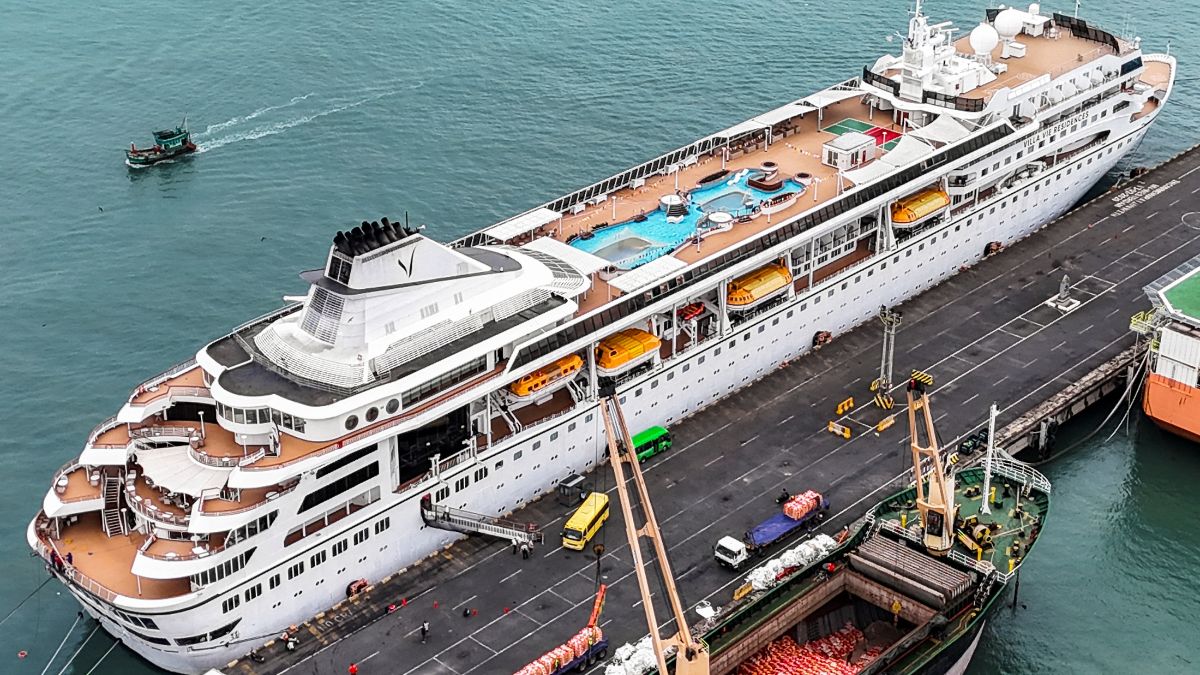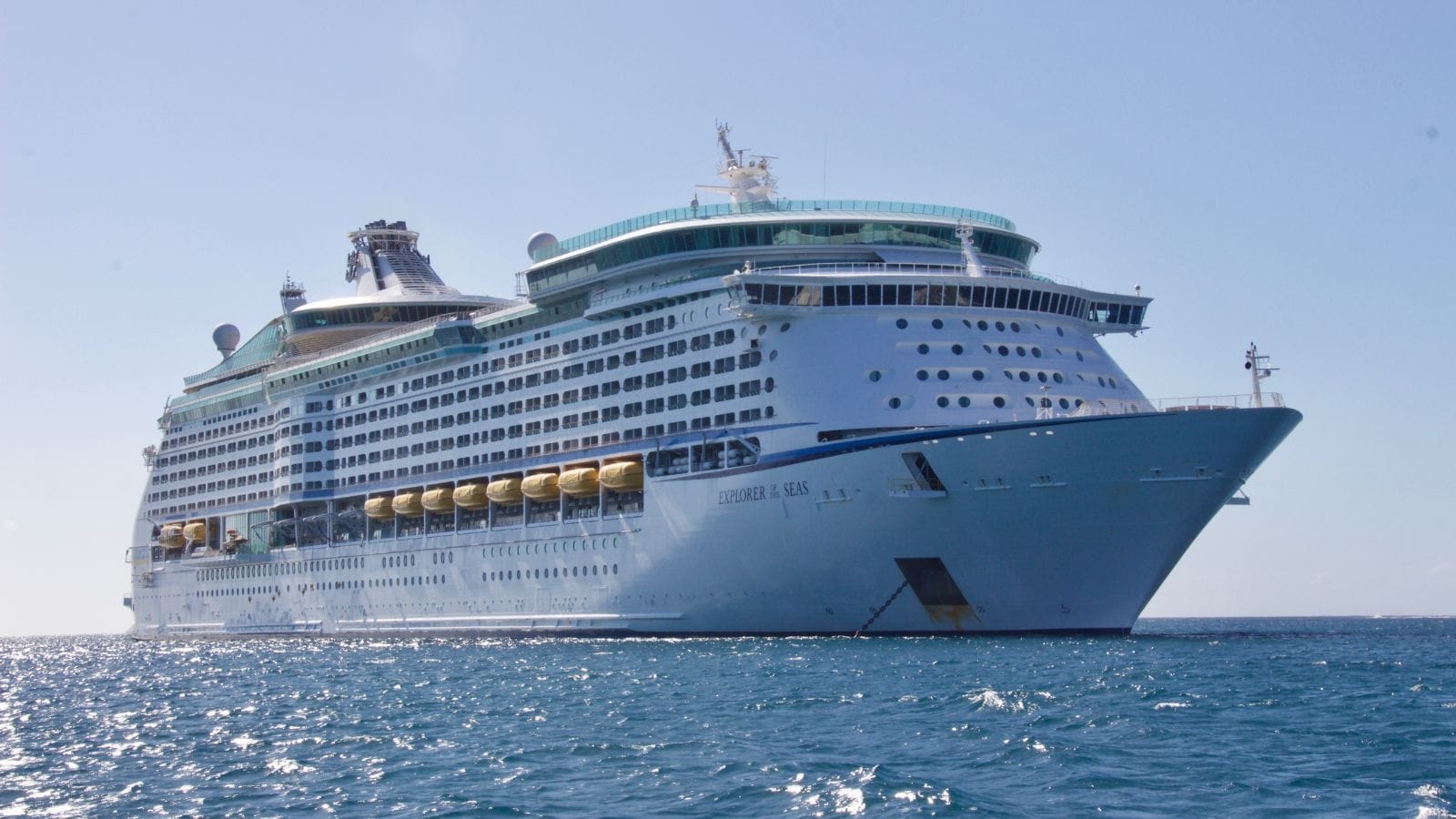
Mainstream travel media loves a simple villain. A cruise ship drops anchor off the coast of Cambodia, hundreds of vacationers are left scrambling for flights home from Sihanoukville, and every headline screams the exact same lazy excuse—a sudden surge in marine fuel prices.
It makes for great clickbait. It paints passengers as innocent victims of geopolitical oil shocks and positions the cruise line as a helpless bystander caught in an economic storm.
It is also completely wrong.
If you actually understand maritime logistics, bunker fuel hedging, and the brutal economics of boutique expedition cruising, you know that a five-percent or even twenty-percent spike in crude oil does not suddenly strand a 500-passenger vessel mid-itinerary. Ships do not run on debit cards. Captains do not pull up to a floating gas station in the Gulf of Thailand, look at the pump price, and tell the guests to pack their bags because the corporate card declined.
When a cruise line pulls the plug mid-voyage and cites fuel surcharges or bunker spikes, fuel is the convenient scapegoat. The real culprit is almost always catastrophic liquidity management, broken charter agreements, or a calculated financial retreat disguised as an act of God.
The Myth of the Sudden Fuel Shock
Let us dismantle the primary lie first. Standard news coverage treats marine fuel—specifically Very Low Sulfur Fuel Oil (VLSFO) and Marine Gas Oil (MGO)—like retail unleaded at your local corner station. They imply that when Brent crude jumps on a Tuesday, a cruise operator is instantly bankrupt by Thursday.
That is not how commercial shipping operates.
Major cruise corporations like Carnival, Royal Caribbean, and Norwegian Cruise Line Holdings hedge a massive percentage of their fuel consumption months, and sometimes years, in advance using financial derivatives. Even mid-tier and smaller boutique operators lock in forward supply contracts with major bunker brokers at primary hubs like Singapore, Rotterdam, or Fujairah.
More importantly, fuel represents roughly 10% to 15% of a cruise line’s total operating expenses. Crew wages, port fees, food and beverage provisioning, dry-dock maintenance, and debt service make up the lion's share of the burn rate. A sudden surge in bunker costs hurts quarterly EBITDA margins. It forces executives to swallow losses or quietly raise ticket prices for the following fiscal year. It does not, under any normal operational circumstance, cause a ship to stop dead in the water in Southeast Asia.
I have sat in maritime restructuring meetings where operators tried to spin insolvency as an "unforeseen fuel crisis." When a vessel gets stranded in a secondary port like Sihanoukville, it is rarely because the fuel got too expensive. It is because the operator ran out of cash to pay the port agent, the local bunker supplier demanded cash-in-advance due to unpaid invoices from three ports ago, and the company’s credit line finally snapped.
Why Cambodia Was the Breaking Point
Look at the geography of the incident. Cambodia is not a major maritime bunkering hub. Sihanoukville is a developing deep-water port, heavily backed by regional infrastructure capital, serving primarily container feeder vessels and regional cargo.
When a cruise ship operating in Southeast Asia needs fuel, it bunkers in Singapore—the largest, most competitive, and most tightly regulated bunkering port on the planet—or occasionally in Port Klang or Laem Chabang. You do not plan to take on primary heavy fuel reserves in Cambodia unless something has already gone terribly wrong with your itinerary planning or your cash flow.
Imagine a scenario where a smaller, undercapitalized cruise operator is running a seasonal Asia-Pacific deployment. Ticket sales were softer than projected. Operating costs crept up across the board. The operator skips a planned refueling in Singapore to conserve immediate cash, hoping to limp to the next port and collect final balance payments from passengers booked on the subsequent leg.
By the time the ship reaches the Gulf of Thailand, the bunker brokers in Singapore have flagged the operator’s account for overdue receivables. Now, nobody will extend credit. To get fuel delivered by barge in Cambodian waters requires an immediate wire transfer at a massive logistical premium, plus local port agency fees paid upfront in US dollars.
If the corporate treasury cannot clear that wire by 4:00 PM local time, the ship does not sail. The PR team immediately drafts a press release blaming "unprecedented global fuel surges," knowing full well that zero mainstream journalists will ever pull the vessel's port state control records or check the bunker supplier's lien filings.
The Fine Print You Never Read
Passengers love to ask: How is it legal for a cruise line to just dump us in another country and cancel the rest of the trip?
Because you signed away your rights the moment you clicked "Accept" on the Passenger Ticket Contract.
Maritime law is entirely distinct from domestic consumer protection law. Under the Carriage of Passengers and their Luggage by Sea conventions—and the specific terms buried in every cruise line's 12,000-word contract—a cruise ticket does not actually guarantee you will visit any specific port, nor does it guarantee you will return to your port of embarkation.
Read the force majeure and itinerary deviation clauses of any major or minor cruise line. They explicitly state that the carrier may, at any time and without prior notice, cancel, advance, postpone, or deviate from any scheduled sailing or port of call due to mechanical issues, weather, hostilities, or economic infeasibility.
If a cruise line decides that completing a voyage will cost more than the revenue generated by the passengers onboard, they have the contractual latitude to terminate the voyage early. They will offer you a pro-rated refund for the unused days—often in the form of a Future Cruise Credit that is worthless if the company goes into administration—and leave you to navigate international airfare out of Phnom Penh on your own dime.
Travel insurance rarely saves you here, either. Standard trip interruption policies cover medical emergencies, severe weather, and carrier mechanical failure. Most explicitly exclude financial default of the travel supplier unless you purchased a specific, expensive waiver at the time of initial deposit—and even then, underwriters will fight tooth and nail if the cruise line claims the cancellation was due to "fuel market volatility" rather than formal bankruptcy.
The Brutal Truth About Cruise Economics
To understand why these strandings happen, you have to look at the structural flaw in how modern cruising is financed.
Cruising is essentially a massive Ponzi-adjacent cash flow machine, even for the legitimate giants. Passengers pay deposits 12 to 24 months in advance. The cruise line uses that unearned customer revenue as working capital to fund current operations, pay interest on billions in shipyard debt, and market future sailings.
When demand is booming, the flywheel spins effortlessly. New bookings pay for today’s fuel and crew.
When a shock hits—whether it is a regional conflict, a sudden drop in consumer confidence, or a spike in operating costs—new bookings slow down. Suddenly, the cash coming in the front door is no longer enough to cover the cash going out the back door for ships currently at sea.
For mega-corporations like Royal Caribbean Group or MSC Cruises, this is a manageable treasury problem. They have revolving credit facilities with Wall Street banks and billions in unencumbered assets to borrow against.
For smaller, single-ship operators, regional charters, and startups trying to disrupt the luxury expedition market, there is no safety net. They operate on razor-thin margins with leased vessels. The moment their advance booking curve flattens, they are technically insolvent. The ship keeps sailing only until the exact moment a critical vendor—like a fuel supplier—refuses to take an IOU.
Answering the Questions Travelers Are Too Naive to Ask
When incidents like the Cambodia stranding hit the news, travelers flood forums with the wrong questions. They ask which cruise lines have the best fuel-efficiency ratings, or what time of year oil prices are lowest. None of that protects you.
If you want to avoid being stranded on a pier thousands of miles from an international airport hub, you need to interrogate the financial health of the operator, not the price of Brent crude.
Who actually owns the hull?
Many niche cruise brands do not own their ships. They charter them from maritime holding companies or private equity firms. If the operator is merely a charterer, they have almost no hard assets to pledge when cash gets tight. A quick search on Equasis or MarineTraffic will tell you who the registered owner and technical manager of the vessel actually are. If the brand name on the funnel does not match the registered owner, your risk profile just tripled.
Is the operator a member of a regulated bonding scheme?
If you book a cruise under UK law (ATOL/ABTA) or specific European Union package travel directives, your repatriation is legally guaranteed and funded by a compulsory industry bond if the operator collapses mid-trip. In the United States, the Federal Maritime Commission (FMC) requires cruise lines embarking from US ports to maintain financial responsibility bonds to cover unearned passenger revenue. However, if you book a regional itinerary starting and ending in Asia, South America, or the Mediterranean through a non-US entity, you have zero FMC protection. You are completely exposed.
How old is the tonnage, and what is its fuel burn?
Older vessels built in the 1990s and early 2000s are fuel hogs. They lack modern hull coatings, air lubrication systems, and high-efficiency marine diesel engines. When bunker prices rise, these older ships become economically unviable almost overnight. If you are booking a budget or mid-tier cruise on a 30-year-old ship, you are sailing on an asset that the operator will happily abandon the second the math stops working.
The Downside of My Own Advice
There is a massive trade-off to protecting yourself this way. If you exclusively sail with heavily capitalized, publicly traded mega-corporations that own their own modern fleets and maintain billion-dollar credit lines, you will never get stranded in Cambodia because of a fuel bill.
You will also end up on floating shopping malls with 6,000 other people, visiting the exact same sanitized, over-touristed ports in the Caribbean and Mediterranean, eating mass-produced food, and paying inflated prices for basic amenities.
The magic of small-ship cruising—the ability to slip into remote coves in Southeast Asia, dock right in the heart of historic towns, and experience genuine exploration—inherently requires sailing with smaller, more specialized operators. And smaller operators will always carry higher counterparty risk. You cannot eliminate that risk without sacrificing the entire point of boutique travel.
How to Bulletproof Your Next Voyage
You do not need to stop taking ambitious cruises. You just need to stop treating a cruise booking like a standard hotel reservation and start treating it like a commercial transaction with a high-risk vendor.
- Always pay with a Tier-1 credit card, never a debit card or wire transfer. Under the Fair Credit Billing Act in the US (and Section 75 in the UK), your credit card issuer is jointly liable if a merchant fails to deliver the services you paid for. If a cruise line strands you in Cambodia, you do not beg their customer service department for a refund. You file a chargeback for services not rendered and let Chase or American Express claw the money back from the merchant processor.
- Book your own flights—or force the cruise line to own the entire chain. If you buy a "fly-cruise" package directly from the operator, they are legally responsible for getting you home if the voyage aborts early. If you book independent airfare, a mid-cruise cancellation means you are buying last-minute one-way international tickets at walk-up rates, which can easily exceed $3,000 per person.
- Buy "Cancel For Any Reason" (CFAR) and Financial Default insurance within 14 days of your initial deposit. Read the policy wording specifically for "Financial Default of a Travel Supplier." Make sure the cruise line is not on the insurer's "Watch List" of excluded companies—insurers know who is about to go bust long before the travel bloggers do.
- Keep a liquid emergency buffer. Never travel to developing maritime regions without at least $5,000 in available credit and a backup routing plan out of the nearest major international hub. In Sihanoukville, that meant knowing how to immediately secure a private car to Phnom Penh International Airport before the other 400 stranded passengers bought out every seat on Singapore Airlines and Cathay Pacific.
Stop believing the press releases. Ships do not run out of gas because oil got expensive; companies run out of money because they were poorly run. Book accordingly, protect your downside, and never let a maritime PR department dictate how you get home.