MTR Corporation’s financial performance for the 2023 fiscal year reveals a fundamental decoupling between Hong Kong’s domestic recovery and the stagnation of its Mainland China property and rail interests. A 6.9% decline in net profit—falling to HK$7.78 billion—cannot be dismissed as a cyclical fluctuation. It represents a structural bottleneck in the "Rail-plus-Property" (R+P) model when exported to jurisdictions with different regulatory and macroeconomic climates. While the Hong Kong transport operations segment has returned to pre-pandemic ridership levels, the drag from Mainland Chinese operations and a high-interest-rate environment has compressed margins.
The Tri-Component Revenue Architecture
To understand the 6.9% contraction, one must deconstruct MTR’s income into three distinct operational pillars. The "Rail-plus-Property" model relies on the synergy between infrastructure and high-density real estate, but these pillars are currently performing at different velocities. Don't forget to check out our previous post on this related article.
1. The Domestic Recovery Pillar
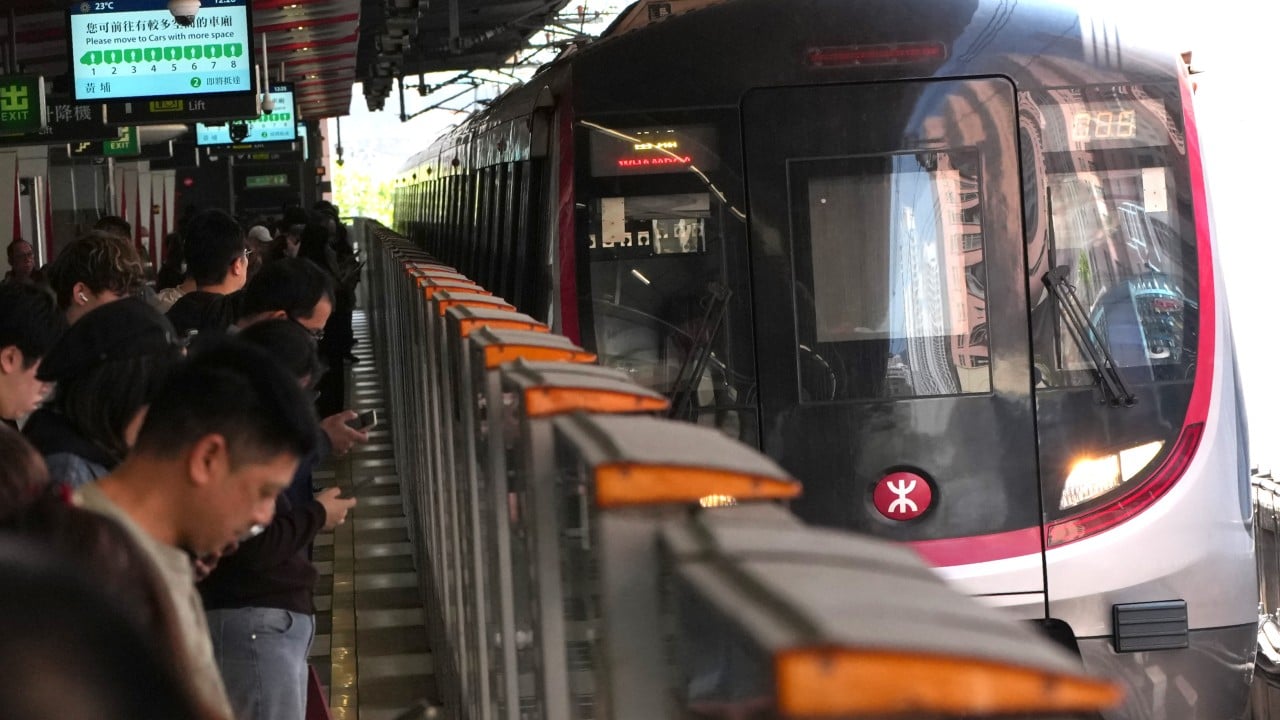
Hong Kong transport operations saw a significant rebound. Total patronage increased by 24.9% year-on-year, reaching 1.89 billion passenger trips. The reopening of the border and the resumption of the High-Speed Rail (HSR) services acted as the primary catalysts. However, the operational cost of maintaining this infrastructure—indexed against rising energy prices and labor shortages—prevented this volume from translating directly into a linear profit increase.
2. The Mainland and International Drag
Revenue from Mainland China and international subsidiaries faced two-pronged pressure. First, the amortization of capital expenditures on new lines in cities like Shenzhen and Beijing coincided with a cooling property market. Second, the absence of one-off fair value gains from previous years created a high-base effect that the 2023 figures could not match. The Mainland property development sector, once a reliable source of high-margin dividends, has transitioned from a growth engine to a maintenance burden. To read more about the context here, The Motley Fool provides an informative breakdown.
3. Property Development and Fair Value Adjustments
This is where the most significant volatility occurs. MTR’s net profit is heavily influenced by the timing of "Profit from Property Development" (primarily the recognition of income from projects like The SOUTHSIDE and Ho Man Tin Station). In 2023, the timing of these completions did not align with the fiscal year as favorably as in 2022. Furthermore, the revaluation of investment properties—malls and office spaces—resulted in a non-cash deficit due to higher cap rates demanded by investors in a high-yield environment.
The Cost Function of Urban Connectivity
Operating a world-class railway requires a massive, fixed-cost base. Unlike a software company that can scale with marginal costs near zero, MTR’s cost function is tied to physical maintenance, electricity, and specialized labor.
- Maintenance Capex: The company spends approximately HK$10 billion annually on maintaining, renewing, and upgrading its existing rail network. This is a non-discretionary expense. Even if profit falls, this expenditure must remain constant or increase to ensure safety standards.
- The Energy Variable: Despite hedges, the volatility in global energy markets affects the "Traction Power" costs. In 2023, these costs remained elevated, eating into the gains made from increased footfall in the stations.
- The Interest Expense Escalator: As a capital-intensive entity, MTR carries significant debt to fund new line extensions (such as the Tung Chung Line Extension and the Tuen Mun South Extension). With the Hong Kong Dollar pegged to the US Dollar, the Federal Reserve’s "higher-for-longer" interest rate policy has directly increased the cost of servicing floating-rate debt and refinancing maturing bonds.
The Mainland China Revenue Bottleneck
The 6.9% profit dip is largely a symptom of the Mainland China revenue reality. The R+P model works in Hong Kong because MTR owns the land rights and the rail. In Mainland China, the relationship is often a Public-Private Partnership (PPP) or a management contract.
In Beijing, Shenzhen, and Hangzhou, MTR operates lines under various concession agreements. These agreements often include "fare adjustment mechanisms" that are less flexible than Hong Kong’s. When inflation rises, MTR cannot always pass costs to the consumer. In 2023, the slow recovery of the Chinese consumer sector meant that retail outlets within Mainland stations saw lower-than-expected rental renewals.
This creates a "yield gap." The capital invested in Mainland rail infrastructure is yielding a lower return than the domestic Hong Kong network. This divergence forces the company to rely even more heavily on its Hong Kong property developments to subsidize international and Mainland growth—a strategy that is currently under pressure from a softening local property market.
Structural Risks in the Property Cycle
The HK$7.78 billion profit includes a "Property Development Profit" of HK$2.08 billion, which is a 50% decrease from the previous year. This volatility highlights the primary risk in the MTR business model: the railway is a utility, but the profit is a real estate play.
The Hong Kong residential market has faced headwinds from high mortgage rates and a surplus of new supply. This affects MTR in three ways:
- Lower Tender Interest: Developers are becoming more cautious when bidding for MTR station-top sites (e.g., the Oyster Bay project's initial tender difficulties).
- Delayed Recognition: If units do not sell or completions are pushed back, the profit cannot be booked on the balance sheet.
- Valuation Compression: The fair value of the 15 investment malls owned by MTR is sensitive to consumer spending patterns and interest rates. While footfall is up, "spend per head" has not kept pace with pre-2019 levels.
Deconstructing the 2024–2026 Strategic Horizon
To reverse the 6.9% decline, MTR is pivoting toward a "Green Finance and Technology" integration. However, the efficacy of this pivot remains unproven. The company is betting on the "Northern Metropolis" development to provide a new generation of R+P opportunities. This is not a short-term fix. The lead time for these projects is 7 to 12 years.
There is a logical disconnect in expecting immediate profit recovery while the company is in a heavy investment phase. MTR is currently committed to over HK$100 billion in new projects over the next decade. This creates a "Capital Overhang" where depreciation and interest expenses will likely rise faster than operational revenue in the medium term.
The Dividend Sustainability Framework
Investors often view MTR as a "bond proxy" due to its consistent dividend policy. Despite the 6.9% profit fall, MTR maintained a final dividend of HK$0.89 per share. This results in a full-year dividend of HK$1.31.
The payout ratio is now significantly higher than historical norms. To maintain this, MTR is essentially borrowing against future property sales. This is a sustainable strategy only if one assumes that the Hong Kong property market will undergo a meaningful recovery in the next 24 months. If the market remains stagnant or declines further, the company faces a choice: cut the dividend or increase leverage to uncomfortable levels.
The core of the issue is the "Social Obligation vs. Shareholder Return" tension. MTR is a listed company, but the Government of Hong Kong is the majority shareholder. The government expects MTR to provide affordable transport and build out the city’s infrastructure, even if the immediate ROI is sub-optimal.
Precise Operational Metrics to Watch
To gauge the true health of MTR moving forward, analysts should ignore the headline net profit and focus on three specific ratios:
- The Farebox Recovery Ratio: This measures the percentage of operating expenses covered by fares. In its prime, MTR was one of the few railways in the world to exceed 100%. Maintaining this in a high-inflation environment is the true test of operational efficiency.
- Net Debt-to-Equity Ratio: Currently around 20-25%. If this creeps toward 40%, the company's credit rating—and thus its ability to fund new lines cheaply—will be at risk.
- Recurrent Profit vs. Development Profit: Recurrent profit (from fares and mall rentals) is the "floor" of the company. In 2023, this actually rose by nearly 80% to HK$4.28 billion. The 6.9% "fall" in total profit is entirely due to the drop in property development gains and revaluations.
This distinction is vital. The "railway" business is actually performing exceptionally well. The "property developer" business is what dragged the numbers down.
Strategic Direction
The 6.9% profit decline is an accounting reality driven by property cycles, not a failure of the rail system. The primary strategic risk is not ridership—it is the geographic concentration of property assets in a market sensitive to US monetary policy.
The company must now accelerate its diversification into "Non-Fare Revenue" streams—data center integration, telecommunications infrastructure within tunnels, and international consultancy—to decouple its bottom line from the volatility of the Hong Kong residential market. Failure to do so will result in a permanent re-rating of MTR from a growth-oriented infrastructure play to a stagnant, yield-sensitive utility.
Immediate attention must be paid to the Mainland China portfolio. Specifically, MTR should look to renegotiate concession agreements to include inflation-linked fare adjustments or risk further margin erosion as the Chinese economy transitions to a lower-growth era.