The sea off the Isle of Skye does not care about summer. When the sun hangs high in the northern sky during a June evening, it casts a deceptive, golden warmth across Broadford Bay. The air might feel like a holiday, but the water behaves like an anchor. It hovers around twelve degrees Celsius. At that temperature, the human body forgets how to breathe.
Most people who look out at the Atlantic from a warm living room see a postcard. Archie Law sees a workspace, a playground, and an unpredictable neighbor.
Archie is fifteen. He spends his weekends working on local fishing boats, his skin used to the salt and his eyes trained to read the slight, telling shifts in the water. On a Saturday evening around nine, while the rest of the country watched the fading light of a record-breaking summer weekend, Archie looked out his window.
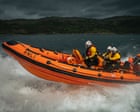
Two miles away, the volunteer crew of the Kyle of Lochalsh Royal National Lifeboat Institution were sitting at home, their pagers quiet. Within minutes, those pagers would scream. A frantic emergency call had reached the UK Coastguard: two men were in the water, drowning in the middle of the bay.
But before the lifeboat could even slip its moorings, Archie had already made his choice.
Through a pair of binoculars, the teenager watched two figures moving in a pattern that made no sense. They were out in the deep water, paddling in frantic, desperate circles. They were drifting further out into the open sea, caught in a tide they could neither see nor fight.
As Archie got closer to his own boat, the absurdity of the scene gave way to cold reality. The men were not in a seafaring vessel. They were clinging to a toy blow-up dinghy, the kind designed for shallow swimming pools, bought for a few pounds and never intended to face the pull of a Scottish loch.
Consider what happens when plastic meets the Atlantic. A light breeze that feels like nothing on the shore becomes a sail against an inflatable toy. It carries the helpless occupants away faster than a human can paddle with plastic oars. Then, the water gets in.
By the time Archie steered his boat alongside them, the toy had capsized. The two men were in the water. It was up to their heads. Their clothes were soaked, heavy, and pulling them down. They had no lifejackets. They had no mobile phones to call for help. They had nothing but the fading energy in their arms and a terrifyingly calm ignorance of how close they were to dying.
Cold water shock is a silent predator. When a person falls into open water of that temperature, the instinct is to panic and gasp. That initial, uncontrollable gasp pulls water into the lungs. The heart rate spikes. The muscles tire in minutes, stiffening until they can no longer hold a human afloat. The RNLI often urges those caught in the grip of the sea to fight the urge to swim, to tilt the head back, and simply try to float until the breathing slows. But when you are miles from the shore and the sun is beginning to drop, floating feels like waiting for the end.
The two men were cold, exhausted, and suddenly aware that the toy boat had betrayed them.
Archie pulled them from the water, one by one, hauling their heavy, wet frames onto his deck. When he spoke to them, he realized they had been completely unaware of the stakes until the bay swallowed them. They were chilled to the bone but quiet, stunned by the speed at which a casual Saturday evening had turned into a fight for survival.
By the time the Kyle lifeboat launched and made best speed toward Broadford Bay, their radios crackled with a new update. The volunteer crew, prepared for a body recovery or a complex rescue operation, learned that a local schoolboy had already beaten them to the scene.
Archie brought the men back to the old pier. Waiting for them were towels, dry clothes, and the solid, unmoving ground of Skye.
The ocean has a way of erasing mistakes completely, covering them over with the next wave as if nothing happened. Had Archie looked away from his window for five minutes, or had he chosen to leave the rescue entirely to the emergency services ten miles away, the morning news would have carried a very different headline.
Instead, a teenager went back to his fishing boat the next morning, his phone vibrating with hundreds of messages he didn't quite know what to do with. The plastic toy was gone, but two families still had their sons, because a fifteen-year-old knew that the sea is never a playground.