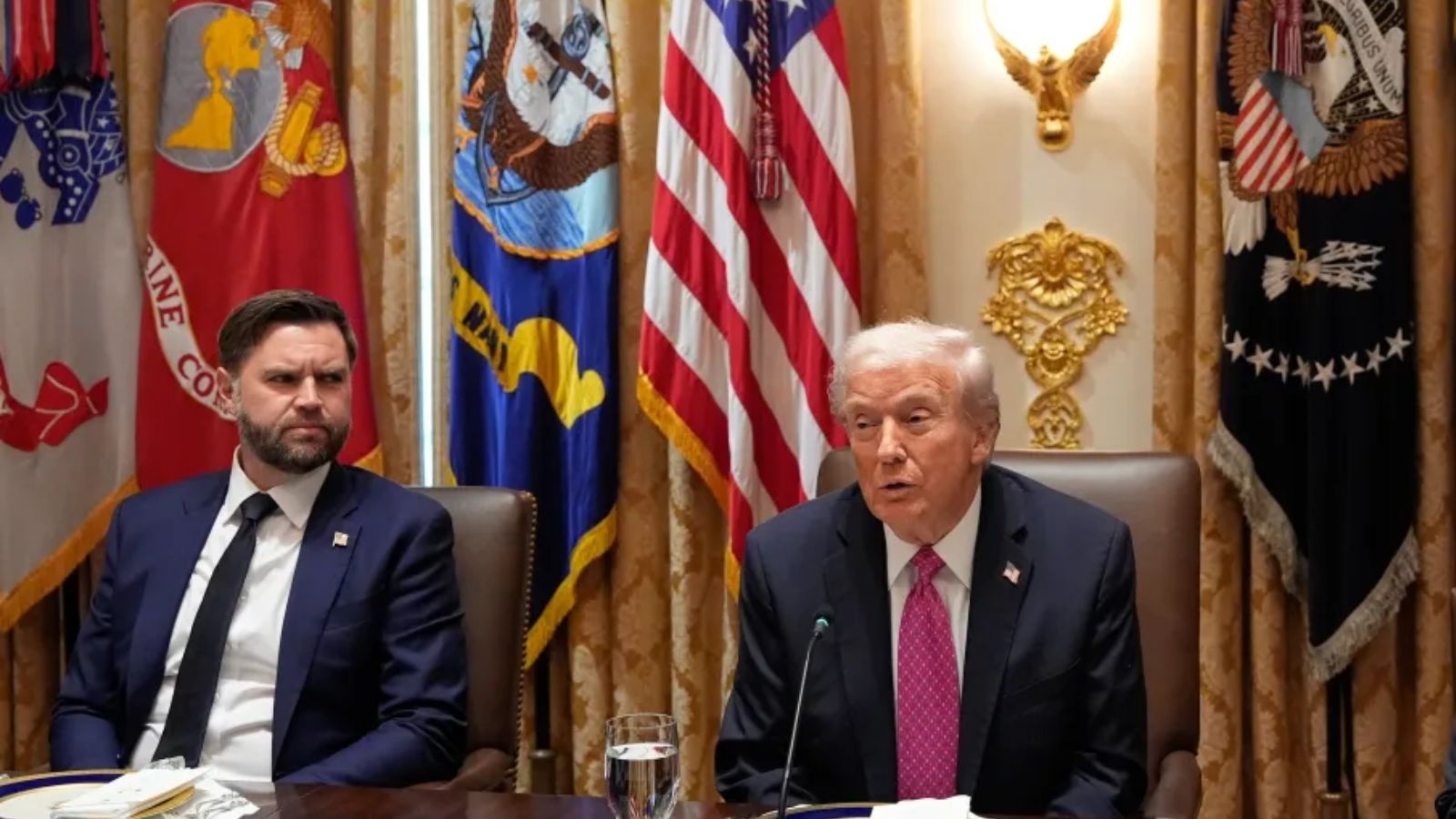
Diplomacy usually happens behind closed doors, but the current American strategy with Iran is playing out like a loud, chaotic reality TV show. Right now, high-level technical negotiations are taking place at the Bürgenstock Resort in Switzerland. Vice President JD Vance is sitting across from Iranian officials, speaking softly about turning over a new leaf and transforming the Middle East permanently through diplomacy.
Then you look at Truth Social or turn on Fox News.
From afar, President Donald Trump is aggressively tearing up the script Vance is trying to read. While Vance talks about regional peace, Trump is firing off all-caps ultimatums, threatening to hit Iran very hard again and even boasting in a telephone interview that he could take over the country if Iranian President Masoud Pezeshkian doesn't watch his mouth.
This isn't an accident, and it isn't just a communication breakdown. It is a deliberate, high-stakes good cop, bad cop routine. But while it might work in a police interrogation room or during a real estate negotiation, applying it to a fragile regional ceasefire involving nuclear ambitions and armed proxies is a massive gamble. Honestly, it might just backfire completely.
The Reality of the Lake Lucerne Summit
To understand why this dual messaging is so volatile, you have to look at what's actually on the table in Switzerland. Just last week, the U.S. and Iran signed a digital memorandum of understanding to halt direct hostilities. This followed a brutal summer of U.S. and Israeli air strikes against Iranian military infrastructure, met by waves of Iranian drones and missiles targeting allied bases.
Now, negotiators are in a frantic 60-day sprint to hammer out the technical details. The stakes are incredibly high.
- The Oil Factor: The interim deal lets Tehran sell oil freely and gives them a path to unlock billions in frozen assets.
- The Nuclear Scale-Back: In exchange, Iran has to dilute its stockpile of highly enriched uranium buried under its underground facilities.
- Waterway Access: The deal hinges on keeping the strategic Strait of Hormuz open to global shipping.
Vance is framing this as a historic moment, noting that never before has American and Iranian leadership met at such a high technical level. He's trying to build trust. He's acknowledging that ceasefires are always a little messy. He's trying to project the image of a steady, reasonable superpower ready to trade sanctions relief for verified compliance.
But that strategy requires the other side to believe the American word is good. And that's exactly what Trump's public outburst is undermining.
How Trump Explodes the Diplomatic Leverage
While Vance is doing the heavy lifting in Switzerland, Trump is playing to the cameras. On Truth Social, Trump explicitly warned that if Iran doesn't immediately stop its highly paid proxies like Hezbollah in Lebanon from causing trouble, the U.S. will resume the bombing campaign.
It sounds tough. It plays great with his political base. But from a strategic standpoint, it creates a massive credibility problem for his own vice president.
When the president explicitly mocks his own negotiating team—like Trump did at the G7 summit in France, joking that if the deal fails he will just blame JD—it signals to Tehran that Vance doesn't actually carry the final authority. If the Iranian delegation believes that a single late-night social media post can obliterate days of technical negotiations, they have very little incentive to make painful concessions on uranium enrichment.
Pezeshkian has already drawn a hard line, stating flatly that Iran will never back down from its right to enrich uranium. Trump's threats don't make the Iranians flinch; they just convince Iranian hardliners that the U.S. is fundamentally untrustworthy and that keeping their nuclear program active is their only real insurance policy.
The Proxy Problem and the Breaking Point
The biggest flaw in the administration's double-edged approach is the assumption that Iran can simply flip a switch and stop the violence in Lebanon.
The ceasefire between Israel and Hezbollah in Beirut is hanging by a thread. Israel is determined to keep its troops on the border as long as necessary, and Hezbollah is highly responsive to local dynamics, not just dictates from Tehran. If a stray rocket or an unsanctioned drone strike violates the truce, Trump's public posture commits him to dropping bombs on Iran, regardless of whether Vance's team is making progress in Switzerland.
By drawing such a rigid line in public, Trump has boxed himself in. He has tied the success of a major international nuclear accord to the chaotic, unpredictable actions of militant groups fighting in the ruins of southern Lebanon.
What Happens Next
The 60-day clock is ticking, and the current strategy of talking peace while threatening total destruction leaves very little room for error. If you want to watch how this actually plays out, ignore the theatrical public statements and watch these specific indicators over the next few weeks.
First, look at the International Atomic Energy Agency reports to see if inspectors are actually getting access to the enriched material sites. Second, track the daily shipping volume through the Strait of Hormuz; if oil tankers keep moving without harassment, the interim deal is surviving the political noise. Finally, watch whether Vance can secure a concrete timeline for sanctions relief before Trump's rhetoric triggers an Iranian walkout.
The administration wants everyone to believe this dual approach is a masterclass in pressure tactics. In reality, they are walking a tightrope over a geopolitical volcano, and the wind is picking up.
For a deeper look into how these diplomatic dynamics play out on the ground, you can watch this Vice Pres. JD Vance Warns Iran To Take Pres. Donald Trump's Threat Seriously which details the administration's early warnings to Tehran and sets the stage for the current high-stakes showdown in Switzerland.