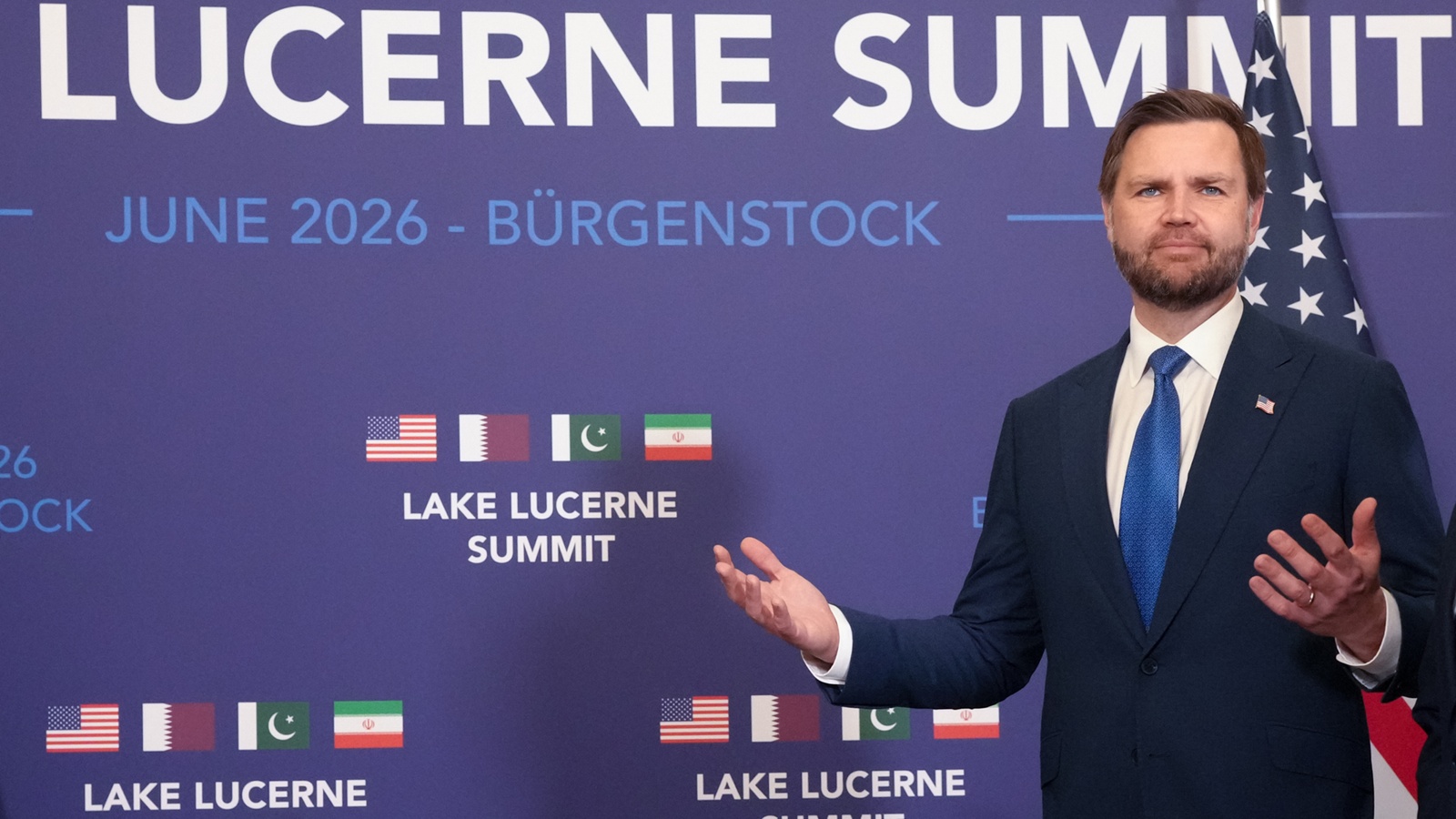
Washington is falling for the diplomatic theater in Switzerland again.
The media is salivating over JD Vance’s statements that the US is ready to "fundamentally transform" its relationship with Tehran. The talking heads are painting a picture of a grand geopolitical pivot, a fresh diplomatic blueprint that will rewrite decades of hostility. They want you to believe that a few rounds of quiet backchannel talks in Geneva can dismantle a regional cold war.
It is a fantasy.
The consensus view—that US-Iran relations are a series of misunderstandings waiting for the right, tough-talking negotiator to fix—is fundamentally broken. It ignores the structural realities of both nations' domestic politics. I have spent years tracking Middle Eastern sanctions evasion and backchannel diplomacy, and if there is one thing the data shows, it is that both Washington and Tehran need each other as enemies far too much to ever become partners.
This is not a story about a breakthrough. It is a story about a permanent status quo dressed up as a paradigm shift.
The Myth of the Foreign Policy Clean Slate
Every new administration arrives in Washington convinced they possess the unique leverage required to solve the Iran problem. The Obama administration thought economic integration and the JCPOA would empower Iranian moderates. The Trump administration thought "maximum pressure" would force a collapse or a total capitulation. Now, we are told a nationalist, transactional approach will achieve a "fundamental transformation."
This assumes foreign policy happens in a vacuum. It does not.
To understand why Vance’s Swiss overtures are dead on arrival, you have to look at the internal mechanics of the Iranian regime. The Islamic Republic’s institutional identity is anchored to its opposition to American hegemony. The Islamic Revolutionary Guard Corps (IRGC) does not just command troops; it controls a massive chunk of the Iranian domestic economy, from construction to telecommunications.
The Reality Check: The IRGC’s economic empire thrives precisely because of isolation and sanctions. They run the black markets. They control the smuggling routes. If you lift the sanctions and normalize relations, you introduce legitimate foreign competition. You destroy their monopoly.
Why would the most powerful military and economic actors in Iran sign up for a deal that bankrupts them? They won't. Any diplomatic rhetoric coming out of Geneva is a stalling tactic to secure minor sanctions relief while keeping the nuclear centrifuge cascades spinning.
Why Washington is Asking the Wrong Questions
The press keeps asking: What concessions will it take to get Iran to stop its regional proxy warfare?
This is a flawed premise. It assumes Iran’s regional network—the Axis of Resistance stretching through Iraq, Syria, Lebanon, and Yemen—is a chip to be bartered away for economic perks.
It isn't. It is their primary defense mechanism.
Iran’s conventional military is severely outdated. Their air force is flying patched-up American jets from the 1970s. They cannot match the military spending of the Gulf States, let alone the United States. Therefore, asymmetric warfare and regional proxies are their deterrence. Asking Iran to abandon Hezbollah or the Houthis in exchange for frozen assets or trade deals is like asking a country to dismantle its standing army before a peace negotiation even begins.
Let's look at the numbers. Even under the tightest sanctions regimes, Iran managed to maintain funding to its regional proxies. According to historical estimates from the State Department and independent security think tanks like the International Institute for Strategic Studies (IISS), Tehran directs hundreds of millions of dollars annually to its external networks. They do this because it works. It keeps the conflict away from Iranian borders. No amount of diplomatic charm from a US Vice President changes that strategic calculus.
The Sanctions Paradox
The popular belief is that sanctions are a dial you can turn up to inflict pain, and turn down to reward good behavior.
In reality, sanctions create a permanent, parallel economic ecosystem. Once a country is locked out of the Western financial system for long enough, it builds alternative infrastructure that becomes incredibly resilient.
- The Ghost Fleet: Iran utilizes a shifting network of foreign-flagged tankers to move crude oil, primarily to refiners in China who operate outside the reach of US jurisdiction.
- Barter Economies: Trade with neighbors like Iraq and Russia has increasingly shifted to local currencies or direct goods exchanges, bypassing the SWIFT banking network entirely.
- The Beijing Backstop: China’s appetite for discounted Iranian crude provides a consistent floor for the Iranian economy, rendering the threat of total economic collapse toothless.
When Washington talks about leveraging sanctions relief for a "fundamental transformation," they are holding a hand of cards that everyone at the table knows is weak. Iran has already paid the structural cost of being sanctioned. The factories are converted, the supply chains are rerouted, and the oligarchs have secured their wealth. The marginal benefit of American normalization is decreasing every single year that Tehran spends integrating into the Eurasian economic orbit.
The Domestic Trap in Washington
Even if we indulge the thought experiment that Iran genuinely wants a total reset, the political architecture of the United States makes it impossible to deliver.
Any significant, permanent shift in US-Iran relations requires legislative permanence. The JCPOA failed because it was an executive agreement, easily shredded by the next guy in the Oval Office. Iran’s leadership knows this. They are not going to make irreversible concessions on their nuclear program or regional posture in exchange for a deal that might expire during the next election cycle.
Furthermore, the domestic political cost in the US for appearing "soft" on Tehran remains incredibly high. The moment any administration offers real structural concessions—like lifting primary sanctions or removing terror designations—they face a wall of bipartisan opposition in Congress.
We are stuck in a loop. Washington promises a transformation that it cannot politically deliver, to a regime that cannot politically accept it, monitored by European intermediaries who have no real skin in the game.
Stop Searching for a Resolution
The obsession with "solving" the Iran dilemma is the fundamental error of modern Western statecraft. Some geopolitical rivalries are not problems to be solved; they are conditions to be managed.
The talks in Switzerland are not the start of a new era. They are a well-choreographed dance designed to manage the escalation ceiling. Washington wants to ensure Iran doesn't cross the 90% weapons-grade uranium enrichment threshold before the next political cycle, and Tehran wants enough financial breathing room to keep inflation from triggering domestic riots. That is the extent of the ambition.
Stop buying the hype of a grand bargain. There is no transformation coming. There is only the continuation of a decades-long siege, managed through Swiss notes and whispered threats, while both sides pretend to the public that a breakthrough is just one more meeting away.
Accept the friction. Build your strategies around the permanence of the hostility. Anything else is just bad analysis.