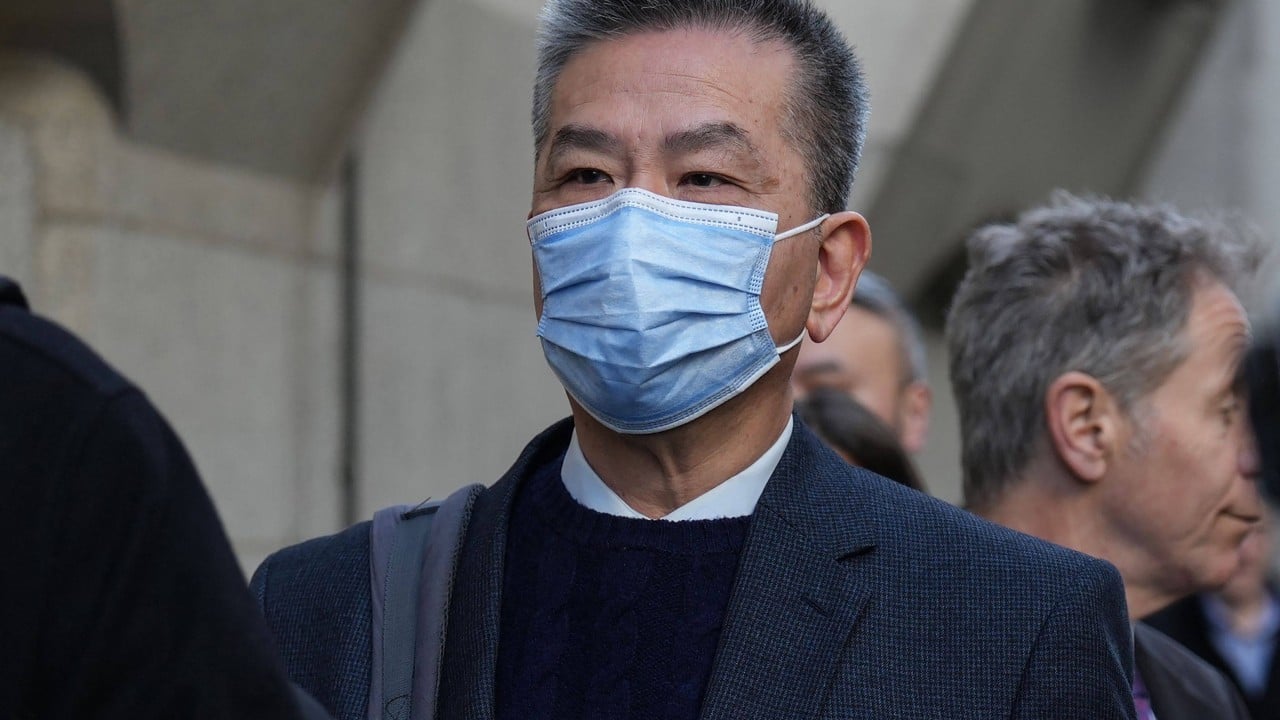
The arrest of Bill Yuen Chung-biu, a high-ranking manager at the Hong Kong Economic and Trade Office (HKETO) in London, shattered the carefully maintained illusion that these outposts are merely centers for cultural exchange and trade promotion. When Yuen stood in a UK court and declared, "I am not dumb," he wasn't just defending his intelligence. He was attempting to decouple his official role from a clandestine operation involving surveillance, forced entry, and the intimidation of political dissidents on British soil.
The case marks a violent shift in the geopolitical reality of the post-2020 era. For decades, the HKETOs operated as "quasi-embassies," enjoying diplomatic privileges that allowed them to facilitate billions in trade without the heavy scrutiny applied to the Chinese embassy. However, the UK's National Security Act prosecution suggests these offices have been repurposed into instruments of transnational repression. The trade mission is no longer the mission. It is the cover.
The Privilege of Immunity Under Fire
The HKETO enjoys a unique legal status in the United Kingdom under the Hong Kong Economic and Trade Office Act 1996. This legislation grants the office and its staff certain immunities and privileges, effectively treating them as if they were a sovereign diplomatic mission despite Hong Kong not being a sovereign state.
These protections include the "inviolability of archives" and immunity from suit and legal process for acts performed in the exercise of official functions.
The British government now faces a dilemma it created thirty years ago. By granting these privileges, the UK gave Hong Kong a back door into the heart of London. When the Hong Kong authorities began using that door to track down activists like Nathan Law and Finn Lau—individuals to whom the UK has granted asylum—the legal framework turned into a security liability. The prosecution argues that Yuen and his co-accused were not performing "official functions" when they allegedly surveilled targets or staged a break-in at a private residence. They were acting as assets for a foreign intelligence service.
How Trade Offices Become Intelligence Hubs
To understand how a trade manager ends up in the dock for espionage, one must look at the shifting requirements of the Hong Kong government. Since the implementation of the National Security Law (NSL) in 2020, the mandate for every overseas official has shifted. Promotion of "Hong Kong stories" now includes the active monitoring of "anti-China" elements.
The mechanics of this transition are often administrative. Budgets previously allocated for tourism or business seminars are redirected toward "security consultancy" and "liaison services." In the London case, the paper trail reveals payments made to private investigators and former British military personnel to conduct the groundwork that official staff couldn't do without blowing their cover.
The Outsourcing of Repression
By hiring third parties—in this case, Peter Wai and Matthew Trickett—the HKETO attempted to create a layer of deniability. This is a classic intelligence tactic. If the contractors are caught, the office can claim they were merely "consultants" hired for general security or market research.
However, the UK authorities tracked the flow of funds directly from the HKETO’s bank accounts to the individuals carrying out the surveillance. This was not a sophisticated operation. It was a blunt-force attempt to project the power of the Hong Kong Police Force into the suburbs of London.
The Economic Cost of the Spy Scandal
The fallout from this case extends far beyond the courtroom. For the business community, the HKETO was the primary point of contact for navigating the Pearl River Delta. It was the friendly face of "One Country, Two Systems." That face has been replaced by a mugshot.
Investors are now forced to weigh the benefits of HKETO assistance against the risk of being associated with an entity under active investigation by MI5. The reputational risk is immense. If an office designed to foster trade is instead preoccupied with tracking dissidents, its ability to facilitate investment is effectively dead.
We are seeing a hard decoupling of Hong Kong's economic identity from its political reality. For years, the city argued that "business is business" and politics shouldn't interfere. The London arrests prove that the Hong Kong government no longer believes this. They have prioritized the pursuit of political enemies over the maintenance of their global financial reputation.
A Global Network Under Review
London is not an isolated incident. There are 14 HKETOs worldwide, including offices in Washington D.C., New York, San Francisco, Berlin, and Tokyo. The London prosecution has provided a roadmap for other intelligence agencies to scrutinize these outposts.
In the United States, the Hong Kong Economic and Trade Office Certification Act is moving through Congress. This legislation would give the President the power to strip HKETOs of their diplomatic status if they are no longer found to operate with a high degree of autonomy from Beijing. The London case provides exactly the kind of evidence proponents of this bill need.
- Washington: Watching the UK proceedings to see if HKETO funds were used for lobbying that violates the Foreign Agents Registration Act (FARA).
- Berlin: Investigating whether similar surveillance tactics are being used against the growing Hong Kong diaspora in Germany.
- Tokyo: Assessing the risk of intellectual property theft through "trade" channels.
The Myth of Autonomy
The defense’s claim that this was a misunderstanding of duties highlights a deeper truth. The lines between the Hong Kong civil service and the Chinese state security apparatus have completely blurred.
When Yuen claims he is "not dumb," he is likely referring to his long career in the Hong Kong police before joining the HKETO. He knows how surveillance works. He knows the legal boundaries. His mistake was assuming that the old rules of diplomatic deference still applied in a Britain that has grown increasingly wary of Chinese influence.
The UK government’s willingness to prosecute a high-ranking official from a "friendly" trade partner signals an end to the "Golden Era" of relations. It is a recognition that the HKETO is no longer a partner, but a proxy.
The Dissident Factor
For the activists living in the UK, the trial is a validation of fears they have voiced for years. They have reported being followed, photographed, and harassed at public events. Until now, these reports were often dismissed by local police as civil matters or low-level harassment.
The National Security Act prosecution changes the stakes. It acknowledges that these acts are part of a coordinated campaign by a foreign power. This has created a paradoxical situation where the very people the HKETO is supposed to be "selling" Hong Kong to—the international community and the diaspora—are the ones most threatened by its presence.
The presence of the HKETO in London has become a focal point for tension. Protests outside the office at 18 Bedford Square are no longer just about policies in Hong Kong; they are about the safety of people in London.
The Administrative Trap
The HKETO's defense hinges on the idea of administrative normalcy. They argue that gathering information on "relevant individuals" is part of understanding the political climate. But there is a distinct difference between reading a public manifesto and hiring a team to break into a person's home to "collect intelligence."
The evidence presented—including photos of activists' homes and detailed logs of their movements—suggests a paramilitary mindset. This isn't trade promotion. This is a manhunt conducted through a spreadsheet.
The death of Matthew Trickett, one of the co-defendants, added a grim layer to the proceedings. While his death was not initially treated as suspicious, it underscored the high stakes of the case. The pressure on those caught in the middle of this geopolitical tug-of-war is immense.
A Choice for the West
Western capitals are now forced to decide if the "Trade Office" model is still viable. If these offices are to remain open, they will likely face a level of transparency that renders their previous "quasi-diplomatic" status moot.
We can expect to see:
- Mandatory registration of all HKETO staff as foreign agents.
- Strict audits of HKETO expenditures, particularly payments to private security firms.
- Removal of diplomatic immunity for any staff member not directly involved in trade or investment.
The Hong Kong government’s reaction has been one of indignant denial, but the evidence in the London courtroom is vocal. By turning their trade missions into surveillance hubs, they have sacrificed their most valuable international assets for the sake of domestic security targets.
The tragedy of the HKETO is that it was once the most effective tool Hong Kong had for maintaining its global status. It was a bridge. Now, it is a wall.
Governments should immediately move to review the 1996 Act and determine if the HKETO still meets the criteria for the privileges it enjoys. Failure to do so ignores the fact that the office has already redefined its own mission through its actions. The bridge hasn't just been burned; it has been booby-trapped.
Ask your local representative why an entity accused of orchestrating surveillance on your soil still enjoys the same legal protections as a legitimate embassy.