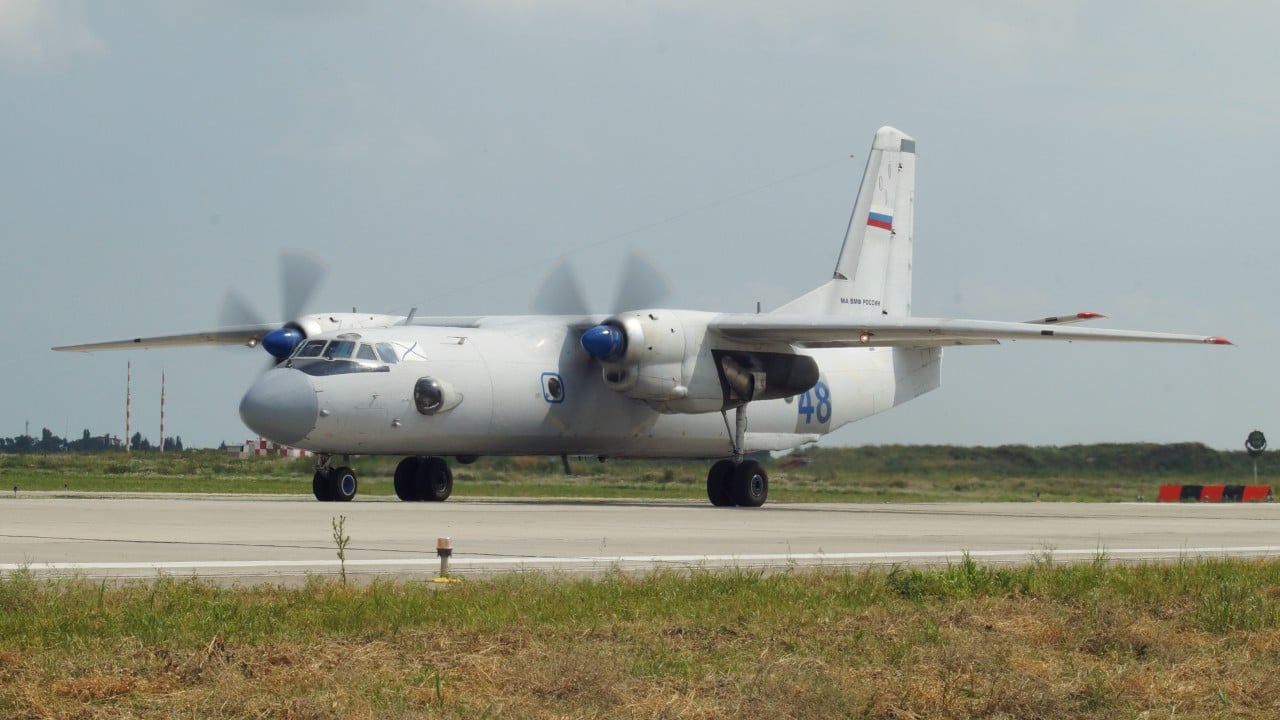
The crash of a Russian military transport into a Crimean cliffside, resulting in the deaths of 29 personnel, represents more than a tragic loss of life. It exposes a widening fracture in the Kremlin’s ability to maintain a secure air bridge to its most contested occupied territory. While early reports point to mechanical failure or pilot error, a deeper investigation into the aging Soviet-era fleet and the increasing density of electronic warfare in the Black Sea region suggests a systemic collapse of flight safety standards. This wasn’t just an accident. It was the predictable outcome of a logistics chain stretched beyond its breaking point.
The Mechanical Cost of a Forever War
The aircraft involved, reportedly an Il-76, is the workhorse of Russian strategic airlift. These planes are designed to be rugged, but they are not immortal. For three years, the airframes assigned to the Southern Military District have been flying double the standard monthly hours. Maintenance cycles that used to take weeks are being compressed into days.
In high-stakes military aviation, parts have a "service life." When a turbine blade or a hydraulic seal reaches its limit, it fails. Under normal circumstances, these parts are replaced preemptively. However, international sanctions have throttled the supply of high-grade bearings and specialized alloys required for engine overhauls. Russian technicians are increasingly forced to engage in "cannibalization," stripping parts from one grounded plane to keep another in the sky. This practice creates a fleet of "Frankenstein" aircraft where the service history of individual components becomes a tangled, unreliable mess.
When a plane hits a cliff in clear weather, you don't look at the clouds. You look at the altimeter and the flight control system. If the pilots were unable to pull up, it suggests a catastrophic loss of hydraulic pressure or a failure of the pitot-static system, which provides airspeed and altitude data. In a combat zone, these mechanical risks are magnified by the need to fly unconventional profiles to avoid detection.
The Invisible Battle for the Crimean Skies
Crimea is currently the most electronically "noisy" environment on earth. Between Russian jamming units trying to protect the Sevastopol naval base and Ukrainian long-range signals intelligence, the electromagnetic spectrum is a chaotic soup. This creates a lethal environment for military transport pilots.
Standard navigation relies on GPS and GLONASS. In the Crimean corridor, these signals are routinely "spoofed" or jammed. Spoofing is far more dangerous than simple jamming; instead of the signal disappearing, it is replaced with a false one that tells the aircraft it is several kilometers away from its actual position. A pilot flying at low altitude to stay under radar coverage might believe they have a clear path when, in reality, they are drifting toward high terrain.
The Terrain Trap
The southern coast of Crimea is defined by the Crimean Mountains, which rise abruptly from the sea. For a transport plane heavily laden with 29 people and likely several tons of equipment, the margin for error is razor-thin.
- Low-Level Flight Paths: To avoid Western-provided long-range interceptors, Russian transports are forced to fly "na predelu"—on the limit—often hugging the coastline at altitudes that leave no room for recovery if an engine stalls.
- The Weight Factor: An Il-76 has a maximum takeoff weight of nearly 200 tons. When these planes are pushed to carry maximum loads of ammunition and personnel simultaneously, their climb rate suffers.
- Pilot Fatigue: The pool of experienced transport pilots is shrinking. Many have been reassigned to frontline duties or have been lost in previous incidents. The crews currently flying these routes are often young, overworked, and operating on four hours of sleep.
Personnel Losses and the Skill Gap
Losing 29 people in a single incident is a massive blow to the specialized units that operate out of Crimea. These weren't just infantry; military transports of this nature often carry technical specialists, electronic warfare officers, or high-level logistics coordinators.
The Kremlin’s official narrative will likely focus on "heroic efforts" by the crew to steer the plane away from civilian areas. This is a standard rhetorical shield used to deflect from the fact that the aircraft should never have been in the air in such a degraded state. The reality is that the Russian Air Force is suffering from a "competence bleed." As veteran instructors are sent to the front, the quality of training for new pilots drops. We are seeing the result: a series of "non-combat" losses that rival the numbers seen in actual engagements.
The Altimeter Does Not Lie
A common factor in many recent Russian aviation disasters is a failure in the Cockpit Resource Management (CRM). In modern aviation, the co-pilot and navigator are supposed to challenge the captain if they see a deviation from the flight plan. In the rigid, hierarchical structure of the Russian military, this rarely happens. If a senior colonel is at the controls and decides to take a shortcut through a mountain pass to save fuel or time, the junior officers remain silent until the moment of impact.
This cultural rigidity, combined with failing hardware, creates a "death loop."
- Sanctions lead to poor maintenance.
- Poor maintenance leads to equipment failure.
- War pressure forces pilots to ignore those failures.
- Hierarchical culture prevents subordinates from correcting errors.
The Infrastructure of a Peninsula Under Siege
Logistically, Crimea is becoming an island. With the Kerch Bridge under constant threat and ferry services frequently suspended due to storms or drone strikes, the air bridge is the only reliable way to move high-priority assets. This crash proves that even this last line of communication is failing.
If the Russian Ministry of Defense cannot guarantee the safety of a routine transport flight over its own "protected" territory, it cannot sustain a long-term presence in the region. The cliffs of Crimea are littered with the debris of a superpower's ambition, and this latest crash is just another entry in a growing ledger of systemic incompetence.
To understand the scope of the problem, look at the satellite imagery of the Belbek and Saky airbases. You will see aircraft parked closer together than safety regulations allow, often surrounded by makeshift tire-walls for protection. This is not the behavior of a confident, well-equipped military. It is the behavior of a force that is improvised, desperate, and running out of time.
Examining the Counter-Argument of Sabotage
There will be claims of Ukrainian sabotage or a "man-portable air-defense system" (MANPADS) strike. While Ukraine has shown incredible reach in its strike capabilities, a shoot-down usually leaves a distinct debris pattern and thermal signature that is easily picked up by international monitoring satellites. A controlled flight into terrain—the technical term for flying a perfectly good airplane into the ground—is almost always a failure of navigation or a total loss of control.
If this were a shoot-down, the Russian state media would likely use it as a rallying cry. Instead, they are being uncharacteristically quiet about the specific cause. This silence is the clearest indicator that the fault lies within their own ranks. It is much harder to explain to the public that 29 soldiers died because a 40-year-old sensor failed and the replacement part was sitting in a warehouse in Germany, blocked by a trade embargo.
The Russian military-industrial complex is currently optimized for the production of simple artillery shells and basic drones. It is failing at the high-precision task of maintaining a modern air force. Every hour these planes spend in the air brings them closer to the metal-fatigue limit that no amount of patriotic rhetoric can fix.
The investigation into the crash will likely be classified, the wreckage cleared, and the "black boxes" conveniently lost or deemed unrecoverable. But for the families of the 29 dead, and for the pilots who have to fly that same route tomorrow, the truth is unavoidable. The sky over Crimea is no longer a safe haven; it is a graveyard for a fleet that is being flown to death.
Russian commanders now face a choice that will define the next phase of the conflict: ground the fleet for necessary repairs and starve the front lines of supplies, or keep flying and wait for the next cliff to claim its toll. Given the current political climate in Moscow, they will choose the latter. They will keep flying until the wings fall off.
Stop looking for a single culprit in the wreckage. The cause of the crash wasn't a single wire or a single mistake. It was the weight of a war that the Russian logistical system was never designed to carry.