The amber light on the dashboard isn't just a warning. It is a heartbeat. For Sarah, a delivery driver in a rusted hatchback that has seen better decades, that tiny glowing icon represents a complex mathematical equation she performs three times a day. It is the distance between her current location and the next paycheck, weighed against the price of a liter of unleaded that seems to climb every time she blinks.
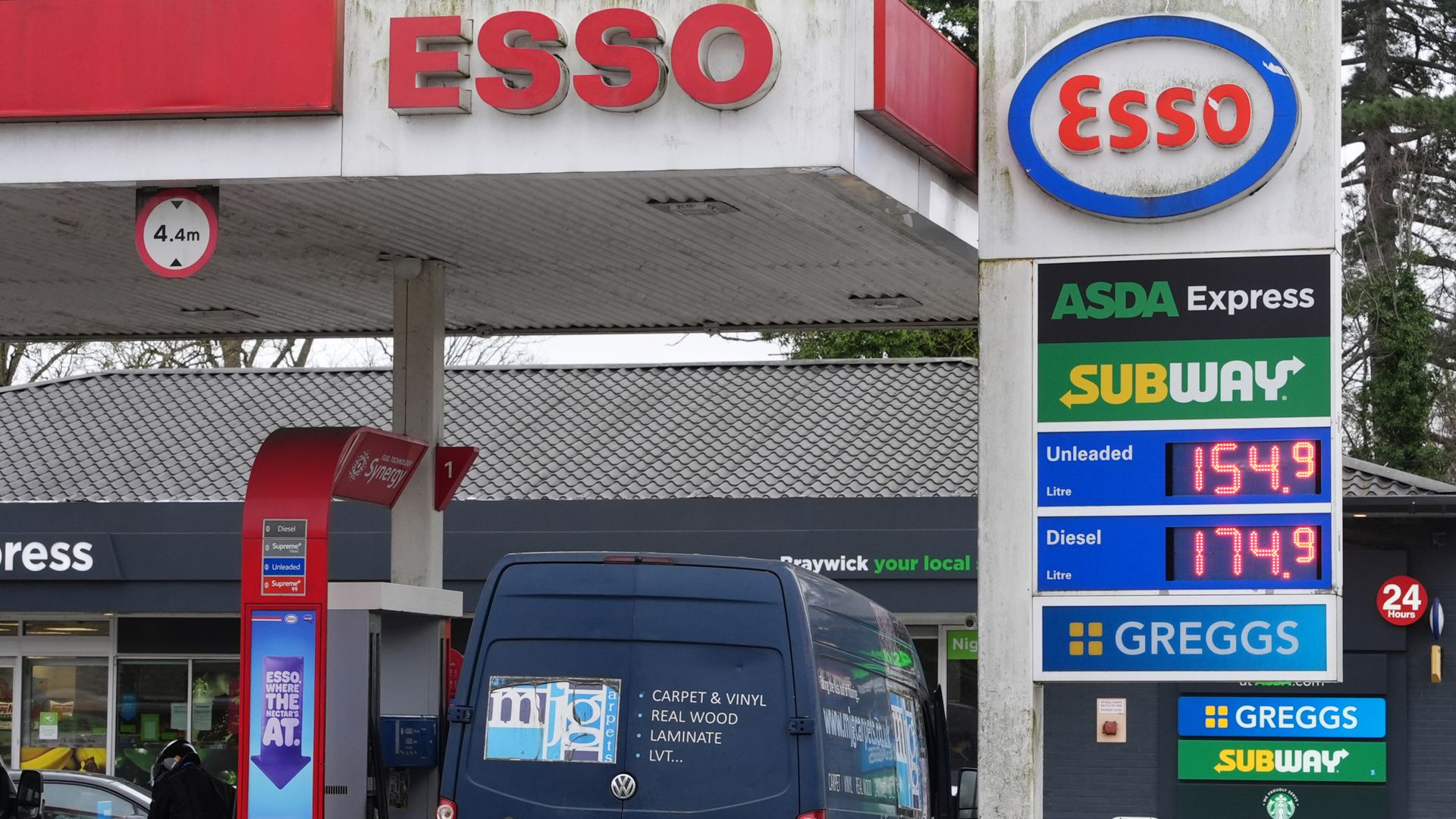
She pulled into the station on Tuesday night, her eyes darting to the digital display. The numbers flickered, settling on a price that felt like a physical blow to the stomach. Behind her, a line of cars began to snake out onto the main road. The air was thick with the smell of petrol and the palpable, vibrating energy of collective anxiety. People weren't just filling their tanks; they were hoarding a sense of security that was rapidly evaporating.
This is the theater of the fuel crisis. It is played out in freezing forecourts and hushed conversations over kitchen tables. When the news cycles begin to hum with words like "supply chain disruption" and "global market volatility," the human response is rarely clinical. We do not look at a spreadsheet and decide to remain calm. We look at the empty space in our tanks and feel a primitive urge to fill it before the gates slam shut.
The Psychology of the Full Tank
Government ministers often stand behind polished walnut lecterns and urge the public to "fill up as normal." It is a phrase designed to project stability. From a macroeconomic perspective, it makes perfect sense. If every motorist in the country suddenly decides to top off their tank at the same time, the sudden surge in demand outstrips the immediate delivery capacity of the logistics network. The shortage, in many ways, becomes a self-fulfilling prophecy.
But "normal" is a relative term when your radiator is whistling and your bank account is whispering.
Consider a hypothetical commuter named David. David has half a tank of fuel. Under standard conditions, he wouldn't dream of stopping. But he hears a snippet of a radio broadcast about soaring prices. He sees a social media post showing a "Sold Out" sign at a station three towns over. Suddenly, that half-tank doesn't look like three days of commuting; it looks like a ticking clock.
He joins the queue. So do ten thousand other Davids.
The logic of the individual clashes violently with the logic of the collective. To the minister, David is part of a statistical "panic buy" trend that threatens national infrastructure. To David, he is simply ensuring he can get his daughter to school on Thursday morning. You cannot fight a survival instinct with a press release.
The Invisible Stakes of the Forecourt
The soaring prices we see on the big plastic totems outside the stations are merely the surface of a much deeper ocean. Fuel is the blood of the economy. When the price of moving a gallon of liquid from point A to point B rises, the price of everything that liquid touches rises too. The bread on the shelf, the medicine in the pharmacy, the Amazon package at the door—they all carry a hidden surcharge of expensive diesel.
For families living on the edge, this isn't about the inconvenience of a long line. It is about the "heat or eat" trade-off. If it costs twenty pounds more to fill the car this week, that is twenty pounds stripped from the grocery budget. The stakes are invisible to those who view the crisis through the lens of policy, but they are agonizingly real to those who feel them in their marrow.
We are told that the supply is there. We are told the tankers are moving. Yet, the disconnect between the official narrative and the lived experience at the pump creates a vacuum of trust. When a minister says "don't panic," the lizard brain often hears "the time to panic was five minutes ago."
The Anatomy of a Price Hike
Why does the price go up like a rocket and come down like a feather? This phenomenon, often called "rockets and feathers" pricing, is one of the most frustrating aspects of the motorist's life. When global oil prices spike, retailers are quick to adjust their prices to protect their margins against the rising cost of their next delivery. However, when global prices dip, those same retailers often hold their prices high for as long as possible to recoup losses or maximize profit while consumers are still "acclimatized" to the higher cost.
There is a technical explanation involving "lag time" and "inventory turnover," but to the person holding the nozzle, it feels like a shakedown. It feels like being penalized for a global game of chess you never agreed to play.
The volatility is driven by a chaotic cocktail of factors:
- Geopolitical tensions in oil-producing regions that threaten the flow of crude.
- Refinery capacity bottlenecks that create "choke points" in production.
- The lingering shadows of global events that shifted consumption patterns overnight.
- Currency fluctuations that make importing fuel more expensive even if the oil price remains steady.
The complexity is staggering. Yet, the solution offered to the public is often a simple plea for restraint.
The Weight of the Commute
Imagine the silence in a car when the driver is coasting toward a red light, trying to eke out every last drop of momentum to save a fraction of a penny. There is a specific kind of exhaustion that comes from constant vigilance over a needle on a dial.
It changes how we move through the world. We stop visiting the elderly relative who lives forty miles away. We cancel the weekend trip to the coast. The "discretionary spend" disappears first, followed by the essential. The world shrinks. The horizon pulls closer.
The minister’s advice to "fill up as normal" assumes a level of financial padding that many simply do not possess. If you only have thirty pounds to your name, you cannot fill up "as normal." You fill up for ten pounds and pray it lasts until Friday. For these drivers, the soaring prices aren't an economic trend to be monitored; they are a barrier to participation in society.
A Culture of Scarcity
We have become a society conditioned by the fear of "running out." Whether it is toilet paper, flour, or fuel, the post-modern psyche is fragile. We have spent decades enjoying "just-in-time" supply chains that functioned so perfectly they became invisible. We forgot that the milk on the shelf and the petrol in the underground tanks required a thousand things to go right simultaneously.
Now, we see the stitches. We see the gaps in the fabric.
The panic isn't irrational. It is a response to a perceived loss of control. When the government tells us there is plenty of fuel, but we see a "No Diesel" sign, the cognitive dissonance creates a spark. That spark ignites a rush.
The real tragedy is that the rush actually creates the very thing we fear. By trying to protect ourselves individually, we unintentionally sabotage the system we all rely on. It is the prisoner’s dilemma played out in the middle of a rainy Tuesday afternoon, with the smell of exhaust fumes in the air.
The Road Ahead
There is no magic switch to flip. The global energy market is a behemoth that turns slowly, and the transition to alternatives is a marathon, not a sprint. In the meantime, we are left with the reality of the forecourt.
We are left with Sarah, who finally reached the front of the queue. She put in exactly twenty-five pounds. Not a penny more. She watched the numbers climb much faster than the volume of liquid entering her car. She clicked the cap shut, checked her mirrors, and pulled back into the stream of traffic.
She didn't fill up "as normal." She filled up with a sense of dread, wondering if she would have to do the same thing again in three days, and what the numbers on the plastic totem would say then.
The minister is back in the city, the cameras are off, and the press releases are filed. But out on the asphalt, the heartbeat of the dashboard light continues to pulse, a silent metronome in a world that feels increasingly out of sync with its own movement.
Sarah doesn't need to be told not to panic. She just needs to be able to afford the drive home.