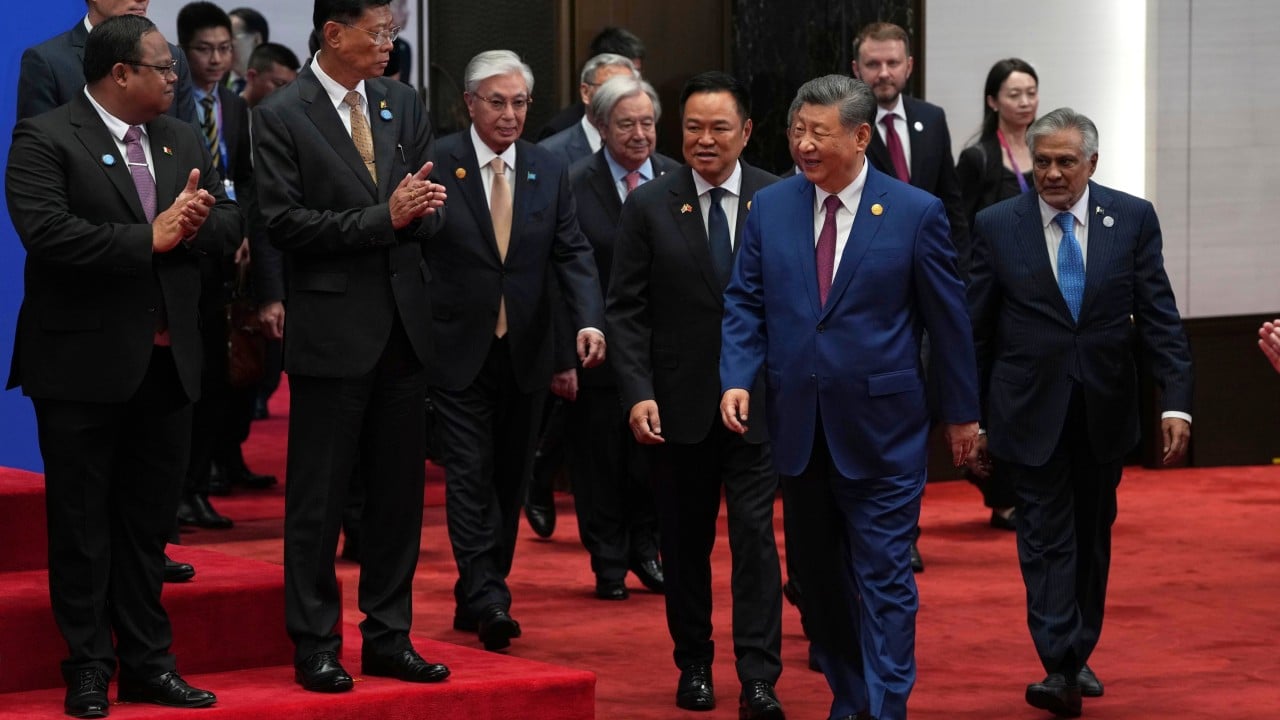
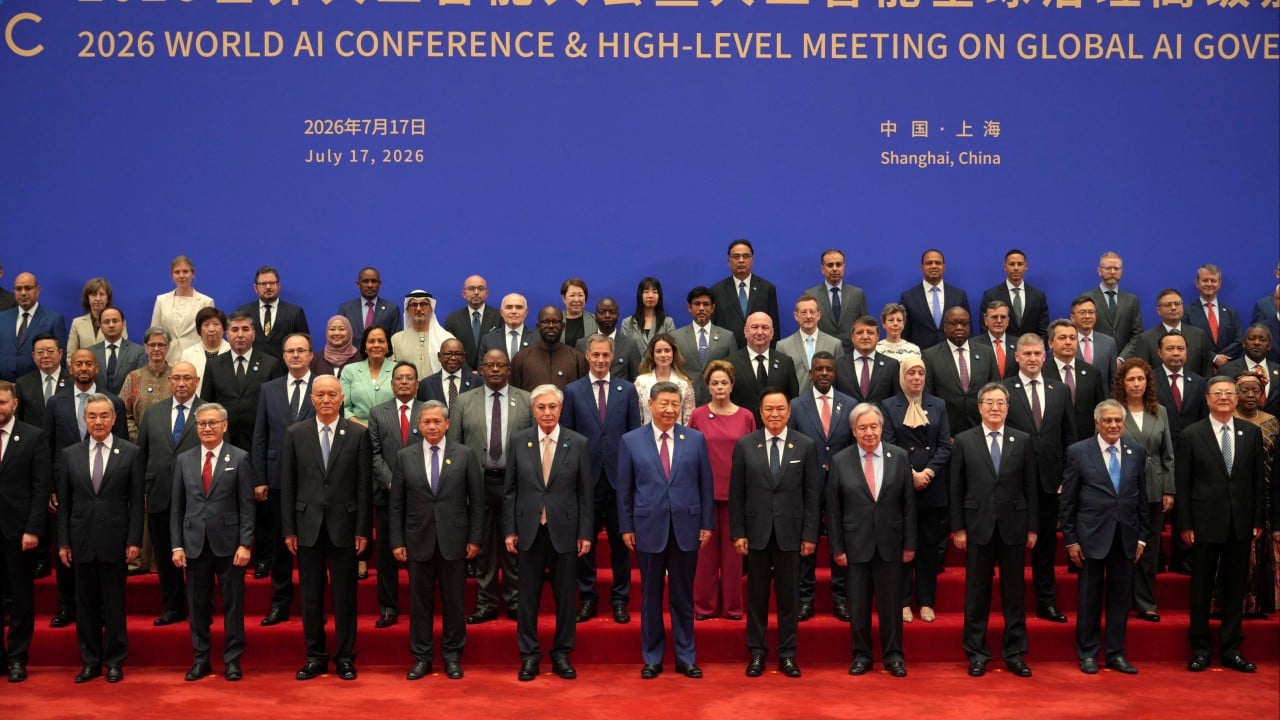
The room in Shanghai smelled of faint ozone, expensive carpets, and the quiet panic of two hundred diplomats trying to decode a shift in the global weather. On the stage, the message from Beijing was smooth, polished, and entirely unexpected. China, a nation famous for building the most sophisticated digital wall in human history, was suddenly pitching a future of radical openness.
To understand why this matters, we have to look away from the podiums. We have to look at the hands typing the code. Read more on a similar topic: this related article.
Imagine a software engineer in Nairobi. We can call him David. David does not care about geopolitical chess matches. He cares about electricity costs and API access. For the past three years, David has watched the building blocks of artificial intelligence become increasingly locked behind Western tollbooths. A subscription to the latest premium model costs more than his weekly grocery bill. The servers are located in Virginia or Dublin. The datasets reflect the cultural assumptions of Silicon Valley. When David asks a question about local agricultural patterns, the machine guesses, stumbles, and fails.
Then comes a different offer. It arrives not with a demand for credit card details, but with an invitation. It promises shared frameworks, localized language models, and technology that does not judge a country by its GDP. Further reporting by Gizmodo explores comparable views on the subject.
This is the pitch. It is a masterful piece of theater, and it is reshaping the world while the West is busy arguing about safety guardrails and board seats.
The Irony in the Architecture
There is a profound contradiction at the heart of this new diplomatic push. Beijing is actively promoting the democratization of artificial intelligence on the global stage while maintaining strict, unyielding control over its domestic internet.
It feels confusing. It feels like a trap.
But from a strategic perspective, it is perfectly logical. The goal is not to spread Western-style free speech; the goal is to rewrite the rules of global dependency. By offering open-source alternatives and infrastructure support to developing nations, a new ecosystem is being quietly constructed.
Consider how power used to be projected. Steel railways. Oil pipelines. Shipping lanes. Today, power is projected through weights, biases, and token optimization. If a nation can convince the growing economies of Asia, Africa, and Latin America to build their national infrastructure on its foundational models, it secures an influence that lasts for generations.
The language used in these international forums is deliberate. It avoids the aggressive tone of the past. Instead, it speaks of equity. It speaks of a world where no single bloc has the right to decide who gets to innovate and who gets left in the dark. For a startup in Jakarta or a research lab in Lima, that message sounds remarkably like freedom.
The Friction of the Tollbooth
The current Western approach to artificial intelligence often resembles an exclusive club. The gatekeepers are a handful of corporations with valuations larger than the economies of medium-sized countries. They speak of safety, alignment, and existential risk.
These are valid concerns. The technology is volatile.
However, to a researcher in the Global South, these warnings can look suspiciously like a ladder being pulled up. When a Western company restricts access to its models out of an abundance of caution, the immediate consequence is not a safer world; it is a more unequal one. The gap between the tech-rich and the tech-poor widens by a few more inches every single day.
China’s strategy capitalizes on this exact frustration. By positioning itself as the alternative benefactor, it offers an escape hatch from the Silicon Valley monopoly. It provides the hardware, the computing power, and the open weights.
But software is never just software. It carries the values of its creators. An AI model trained under strict regulatory oversight will inherently reflect those boundaries, even if the code itself is shared openly. The censorship is baked into the mathematical probabilities of the words it chooses to generate next.
The Quiet Shift in the Soil
The real transformation is not happening in the headlines. It is happening in university labs and municipal offices across the globe.
When a city government decides to automate its traffic system or a regional health ministry deploys a diagnostic tool, they look for the path of least resistance. If the Western models require constant internet connectivity to overseas servers, high licensing fees, and compliance with foreign laws, the alternative becomes incredibly attractive. A localized, open model backed by Chinese infrastructure can run locally, cheaply, and without lecturing the user on political values.
Slowly, the digital soil of these regions is being conditioned. Once a generation of developers is trained on a specific set of tools, switching becomes nearly impossible. The habits are formed. The libraries are integrated. The dependency is locked in.
This is not a future threat. It is a quiet, daily migration.
The West has spent years focusing on the hardware bottleneck—restricting the export of advanced microchips to contain competitor growth. It is a strategy of denial. But you cannot easily embargo an idea, and you cannot block the appeal of a helping hand when someone feels ignored by the dominant powers.
The Human Ledger
What does this mean for David in Nairobi?
He gets his tool. His startup survives another quarter because his operational costs dropped by forty percent. He can build a system that speaks Swahili fluently, trained on data that actually understands the soil of East Africa. He is grateful.
But the trade-off remains unwritten in the user agreement. The infrastructure that keeps his business alive is tied to a network that monitors, filters, and shapes information according to a very specific set of national interests. The autonomy he thought he gained is merely a different kind of lease.
The struggle for the future of intelligence is often framed as a race of speed. Who will build the largest cluster? Who will train the model with the most parameters?
But the truer, more consequential race is one of geography. It is about who can make themselves indispensable to the five billion people who do not live in the tech capitals of the world. By offering openness as a diplomatic tool, a new path is being paved. It is a path where the code is free, but the cost of entry might be the very architecture of our shared future.
The diplomats in Shanghai packed their bags and went home, but the models they discussed are already running on servers across three continents. The code is executing. The weights are adjusting. The quiet, digital rewrite of global influence has already begun, one line at a time.