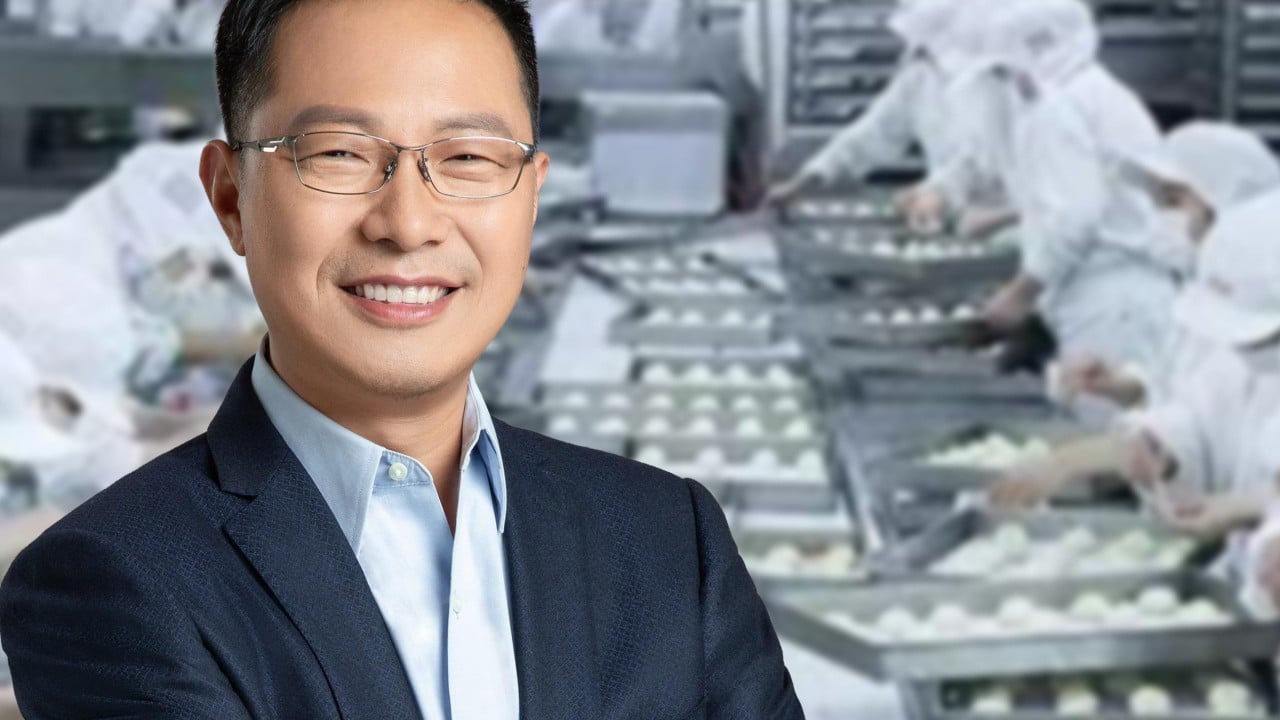
The air in a bamboo steamer at four in the morning doesn't just smell like dough. It smells like a gamble. For Liu Huojin, that scent was once the only thing standing between a quiet life of rural obscurity and the crushing weight of systemic failure. He was seventeen when he walked away from his middle school classroom in Jiangxi province. He didn't leave because he lacked intellect. He left because his pockets were empty, containing exactly zero yuan and a heavy silence that only the children of the Chinese countryside truly understand.
Most people see a steamed bun—a baozi—as a convenience. A soft, white orb grabbed in a rush on the way to a subway station. They don't see the physics of the crumb or the brutal economics of the filling. They certainly don't see the US$580 that Liu eventually scraped together to start his own life. That sum is less than a high-end smartphone. It is a rounding error for a tech firm. For Liu, it was the entire perimeter of his universe.
The Weight of a Single Yuan
Imagine standing on a street corner in a city that doesn't know your name. You have dropped out of school, a label that carries a specific sting in a culture that prizes the examination above almost all else. Your hands are covered in flour. Your back aches from leaning over a stainless steel counter. This was Liu’s reality as he apprenticed in the trade of flour and water.
He wasn't just learning to pleat dough. He was observing a friction point in the Chinese economy.
The traditional breakfast market was fractured. It was a collection of thousands of "mom and pop" stalls, each operating with varying degrees of hygiene and zero consistency. If you bought a bun in one alley, it might be fluffy and rich; ten feet away, it might be leaden and dry. There was no brand. There was only the momentary relief of hunger.
Liu saw the gap. He realized that while China was building skyscrapers and high-speed rails, the most fundamental element of the working day—the breakfast—was stuck in the Middle Ages. He took his US$580 and opened a shop. He didn't call it a "disruptive startup." He called it a job.
The Architecture of the Perfect Bun
Success in the food industry is often a slow burn, but in the world of baozi, it is a race against the clock. Flour starts to oxidize. Yeast loses its punch. Meat fillings are a logistical nightmare of cold-chain management.
Liu’s first major breakthrough wasn't a secret recipe. It was a realization about human psychology. People in a burgeoning economy crave two things that are often diametrically opposed: speed and trust. They want their food in thirty seconds, but they want to know it won't make them sick.
He began to standardize.
Consider the "Baozi Blueprint." In a traditional stall, the ratio of dough to filling is decided by the whim of the cook's hand that morning. Liu shifted the narrative. He treated the bun like an engineering project. By creating a centralized supply chain, he ensured that the bun you bought in a bustling Shanghai district was identical to the one you bought in a quiet suburb.
This is where the math gets staggering.
He moved from one shop to a dozen. From a dozen to a hundred. He founded Zhongyang Group, the parent company of the "Babi Mantou" brand. He was no longer just a man with a steamer. He was a conductor of a vast, white-floured orchestra.
The Invisible Stakes of Scalability
When a business scales from a few hundred dollars to a valuation of US$580 million, something happens to the soul of the product. The critic will say that the "human touch" is lost. They argue that a mass-produced bun can never compete with the one made by an old woman in a rain-slicked alleyway.
But the critic isn't the one waking up at 5:00 AM to commute two hours to a factory job.
The human element of Liu’s empire isn't found in the artisanal "imperfections" of the dough. It is found in the reliability of the calories. For the millions of workers fueling China’s GDP, a Babi Mantou shop is a beacon of safety. It is a promise kept. Liu leveraged the most powerful force in business: the removal of anxiety.
By the time he took his company public on the Shanghai Stock Exchange, he had become the first "steamed bun king" to ring the opening bell. The school dropout was now a billionaire on paper. Yet, the product remained humble. A few yuan for a piece of bread.
The Anatomy of a Pivot
The most dangerous moment for an entrepreneur is the second when they think they have "won."
When Liu reached his US$580 million valuation, the temptation was likely to stay the course. But the market in China is a voracious beast that eats the static. A new generation of consumers was rising. They didn't just want a bun; they wanted an experience. They wanted plant-based fillings. They wanted transparent sourcing.
The invisible stakes were higher than ever.
Liu invested in R&D that would make a pharmaceutical firm blush. He looked at the science of freezing. If a bun is frozen, how does the water within the cell structure of the dough expand? Does it tear the gluten? Can a bun frozen at -40 degrees Celsius be revived to taste like it was pulled from a bamboo basket?
He wasn't just selling dough anymore. He was selling a cold-chain logistics solution that allowed his products to reach the furthest corners of a continent. He transformed the most perishable of goods into a durable asset.
Beyond the Flour and the Finance
The reality of Liu Huojin is not a story of a "lucky" dropout. It is the story of a man who realized that the most valuable thing in the world is the thing that people take for granted.
He didn't need a university degree to understand that a billion people need to eat at dawn. He didn't need a venture capital firm to tell him that trust is the only currency that doesn't devalue.
The US$580 that he started with didn't just buy ingredients. It bought a tiny bit of space. It bought the freedom to try, to fail, and to try again with a slightly different recipe.
Today, a Babi Mantou store is as common as a Starbucks in many Chinese cities. Its logo is a bright, cheerful red. Its buns are white, uniform, and warm. They are a monument to the middle schooler who walked out of a classroom and into a kitchen, carrying nothing but the weight of his own ambition and a few hundred dollars he had no intention of losing.
If you stand outside one of those shops today, you will see a businessman in a suit, a delivery driver on a scooter, and a grandmother with a toddler. They are all eating the same thing. They are all part of an empire built on the most basic of human needs.
The steam rises from the metal trays, clouding the glass. Behind it, a worker in a white cap pulls out a tray of fresh buns. They are identical. They are safe. They are proof that even the most invisible person can build a monument out of nothing but water and wheat.
The next time you hold a piece of warm bread, feel its weight. That softness isn't just air. It is the solid evidence of a five hundred million dollar idea that began in a pocket with no money at all.