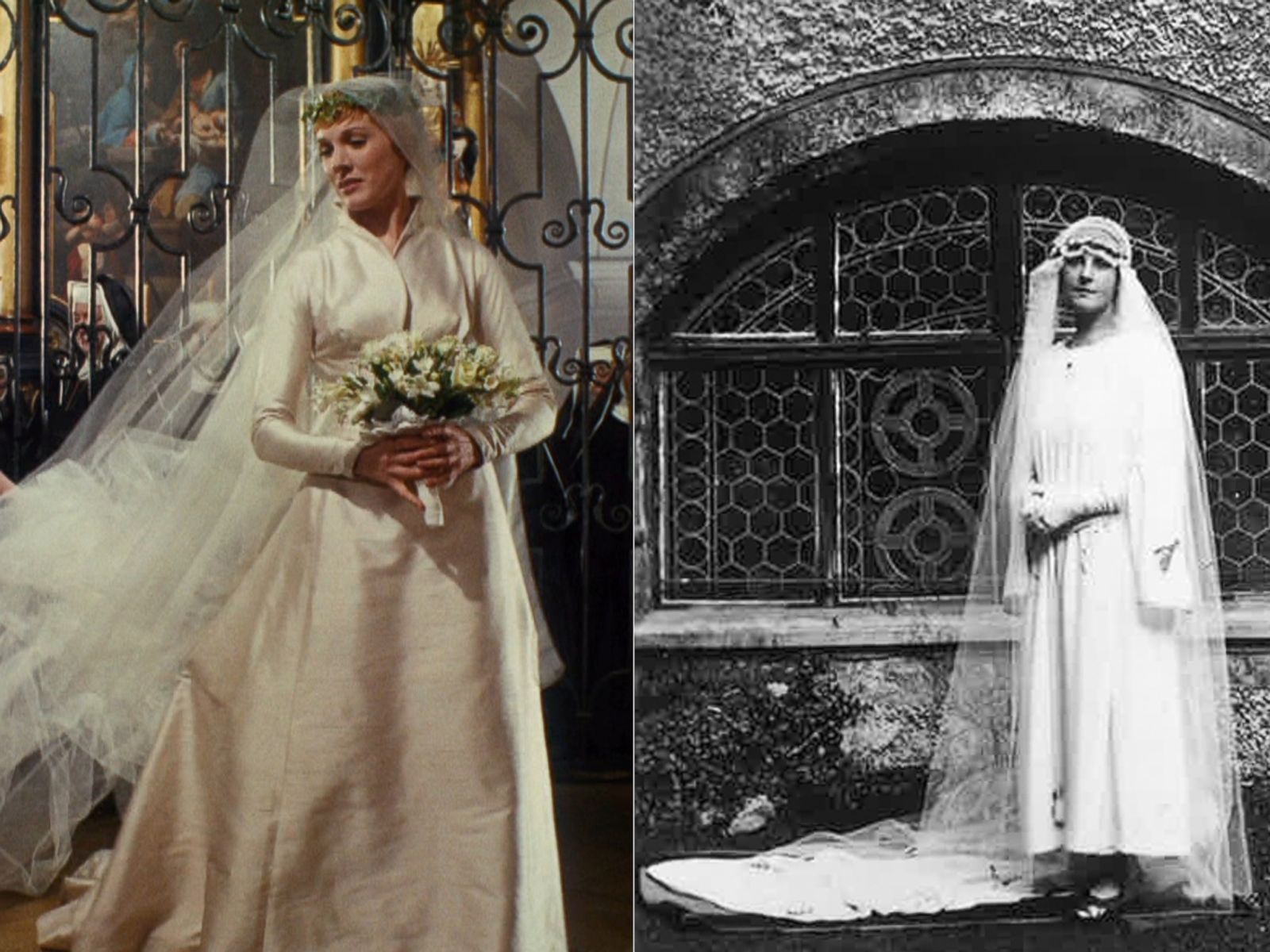
If you close your eyes and think of young Maria von Trapp, you probably see Julie Andrews spinning on a lush Austrian hilltop. It's the ultimate cinematic "vibe." But the real Maria Augusta Kutschera? Honestly, her actual life was way more intense—and kind of darker—than any Hollywood musical would dare to show.
She wasn't just a sweet girl who couldn't stop singing in a convent. She was a survivalist.
Born on a train heading to Vienna in 1905, Maria's life started with a literal jolt. By the time she was ten, both her parents were dead. She ended up with an uncle who was, by all accounts, pretty terrible. He was an atheist and a socialist who didn't have much room for a lonely kid, and Maria grew up in a household where the Church was basically a punchline.
The Atheist Who Accidentally Found God
Here’s a detail that feels like a movie script but is 100% true. While Maria was at the State Teachers’ College of Progressive Education in Vienna, she wandered into a church on Palm Sunday.
She didn't go in to pray.
She thought she was going to hear a Bach concert.
Instead of a choir, she found a Jesuit priest giving a sermon that, in her words, "swept her off her feet." This wasn't some slow-burn religious awakening. It was a lightning strike. Suddenly, the girl raised to hate religion was knocking on the doors of Nonnberg Abbey in Salzburg, demanding to be let in.
Why the Nuns Actually Kicked Her Out
In The Sound of Music, the nuns sing about how Maria is a "headache" because she’s late for everything and whistles in the halls. In reality? Young Maria von Trapp was a handful because she was physically too active for the cloistered life.
She had grown up hiking the Alps and breathing mountain air. Putting her in a silent, stone cell was basically like putting a wild bird in a shoebox. She started getting sick. Her headaches were brutal.
The Mother Abbess didn't send her to the von Trapp villa because she was a "problem child." She sent her there to save her health. The doctor literally told the Abbey that Maria needed fresh air and exercise or she wouldn't make it.
So, in 1926, she was sent to tutor just one child—Maria Franziska—who was recovering from scarlet fever. She wasn't a governess for seven kids. She was a tutor for one.
The Marriage: Not a Fairytale
Let's talk about the wedding. People love the scene where Maria walks down the aisle in that massive dress, looking deeply in love with the Captain.
The real Maria? She was kind of miserable.
When Georg von Trapp asked her to marry him, she panicked. She didn't love him. Not yet, anyway. In her own autobiography, she admitted, "I really and truly was not in love. I liked him but didn't love him. However, I loved the children, so in a way I really married the children."
She actually ran back to the Abbey to ask the Mother Abbess for a way out. The response she got was basically: "It's God's will. Go get married."
She was 22. He was 47.
They married in 1927, which is a huge ten years before the Nazis actually showed up in Austria. The movie condenses all of this into a few weeks, but they had a whole decade of "normal" life before the world fell apart.
The Myth of the "Cold" Captain
One of the biggest lies the movie told was about Georg. Christopher Plummer played him as this whistle-blowing, joyless statue who hated music.
The real Georg von Trapp was actually the one who encouraged the music. He was warm, he played the violin, and he was deeply involved with his kids long before Maria showed up.
If anyone was the "tough" one, it was Maria.
The children later recalled that Maria had a legendary temper. She could be the most loving person in the room one minute and throwing a literal chair the next. She’d yell, slam a door, and then five minutes later, she’d be totally fine, wondering why everyone else was still upset. She was a force of nature—brilliant, determined, and sometimes a little bit scary.
The Great Escape (Via Train, Not Mountain)
When the Nazis took over Austria in 1938, the family didn't sneak out over a mountain with heavy suitcases.
That would have been suicide.
If they had hiked over the mountains behind Salzburg, they would have ended up right in Germany—specifically near Berchtesgaden, where Hitler had his summer home. Not exactly a great escape route.
Instead, they just... left.
They told people they were going to Italy to sing. They boarded a train like regular passengers. Because Georg was born in Zadar (which was then part of Italy), he was technically an Italian citizen. That bit of paperwork is what actually saved their lives. They went to Italy, then London, and finally caught a boat to New York.
Life as a Refugee
When the family arrived in America, they weren't rich. They had about four dollars to their name.
They weren't "The von Trapps" yet. They were a group of exhausted immigrants who barely spoke English. They spent years traveling in a cramped bus, performing in high school gyms and small town halls just to pay for gas.
Young Maria von Trapp became the business manager, the lead singer, and the undisputed boss. She was the reason they survived. She bought a farm in Stowe, Vermont, because the landscape reminded her of the hills she left behind.
Actionable Insights for History Fans
If you want to dig deeper into the real story of the woman behind the musical, here are the most reliable ways to do it:
- Read her own words: Pick up The Story of the Trapp Family Singers by Maria Augusta von Trapp. It was published in 1949 and is surprisingly funny and blunt.
- Visit the source: The National Archives holds the actual passenger manifests and citizenship papers of the family. It’s a trip to see their real signatures on those "Declaration of Intention" forms.
- Listen to the real music: Look for recordings of the "Trapp Family Singers" from the 1940s. It’s not Broadway pop; it’s complex, beautiful Renaissance madrigals and Austrian folk songs.
- Check the timeline: Remember that the "Sound of Music" timeline is a mashup. Maria arrived in 1926, married in 1927, and left in 1938.
The real Maria wasn't a porcelain doll. She was a woman who survived an abusive childhood, found a radical faith, and dragged her family across the world to keep them safe. That’s a story worth remembering.