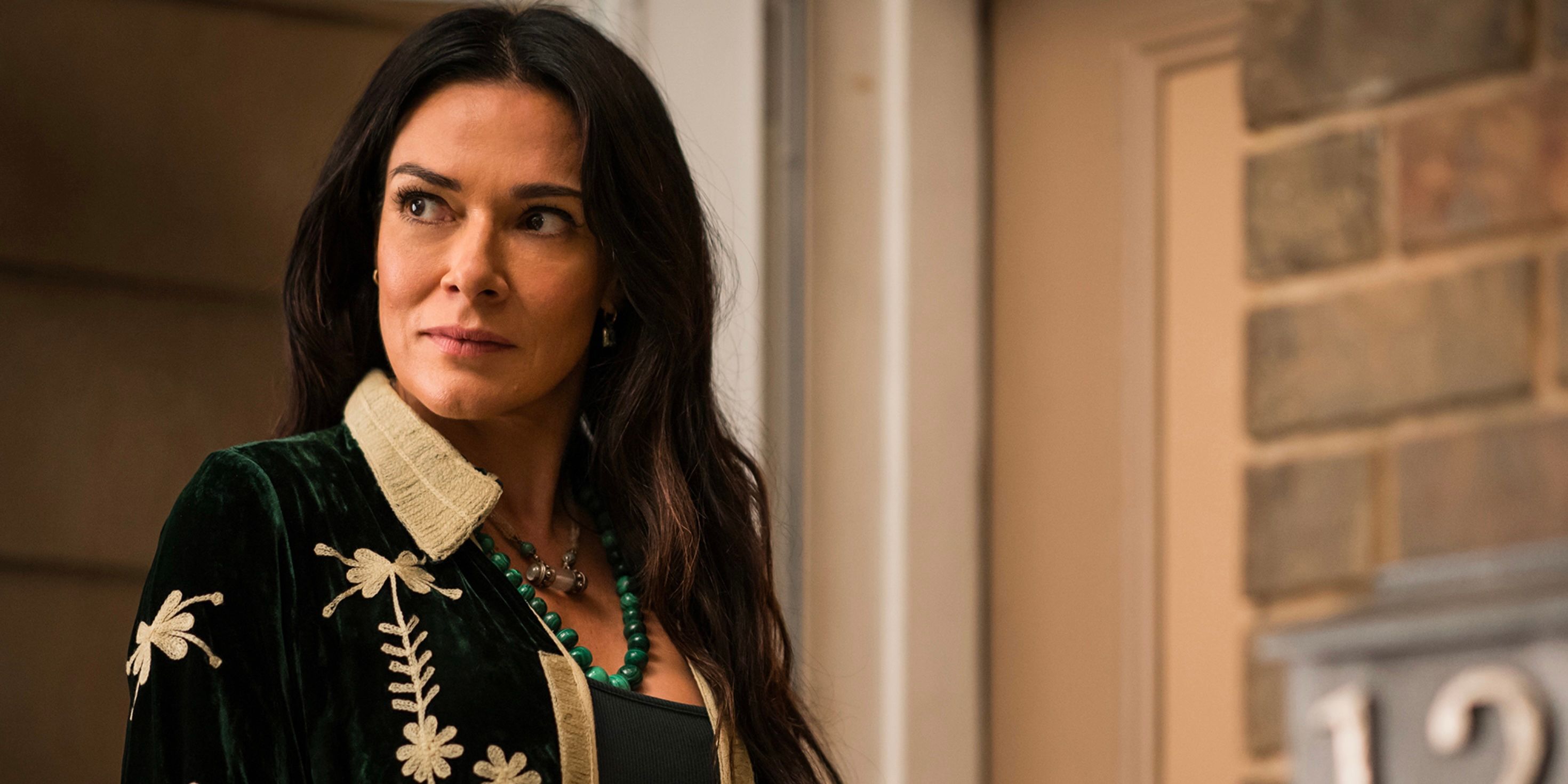
Lottie Matthews is a problem. Not for the show’s writers, but for every single person stuck in those woods with her. When we first meet young Lottie Yellowjackets fans generally see her as the "quiet one." She’s the rich kid with the private jet and the medication. But honestly? Courtney Eaton plays her with this vibrating, under-the-skin anxiety that tells you exactly where things are headed long before the first ritual mask appears.
She’s the pivot point. Everything that happens in the 1996 timeline—the hunger, the paranoia, the eventual descent into what looks like a cult—revolves around whether or not Lottie is actually psychic or just experiencing a massive, unmedicated mental health crisis in the middle of a trauma. It’s messy. For a deeper dive into similar topics, we recommend: this related article.
The Medication Mystery and the Cabin
The show establishes early on that Lottie’s father put her on Loxapine. For the non-medical experts out there, Loxapine is a heavy-duty antipsychotic. In the pilot, we see her take it before the flight. In the wilderness, the pills run out. This is the ticking clock nobody talks about enough. When young Lottie Yellowjackets starts seeing things, the audience has to ask: is she seeing the "Wilderness," or is she seeing what happens when a brain is suddenly deprived of its chemical anchor?
It starts small. She stands in front of a window. She stares at the woods. Then, she finds the cabin. For additional context on the matter, comprehensive coverage is available on Entertainment Weekly.
Finding that cabin wasn’t just a lucky break for the team; it was the moment Lottie’s "gift" became the group's compass. If Lottie hadn't been drawn to that specific spot, they might have stayed by the lake and died of exposure much sooner. But because she felt something there, the group survived. This creates a dangerous feedback loop. The girls start looking to her for answers because her "delusions" are the only things providing actual results.
Why Young Lottie Yellowjackets Divides the Fanbase
Is she a villain? Is she a victim? People argue about this constantly on Reddit and in Discord servers. Some see her as a manipulative force who uses her status to lead a cult. Others see a terrified teenager who is being used by the rest of the group to justify their own descent into violence.
Think about the "Doomcoming" episode. Lottie isn't the one who suggests hunting Travis. But she is the one who puts the antlers on. She provides the ritualistic framework that makes the girls feel like their actions aren't just "murder"—they're "sacrifice." It’s a coping mechanism that got way out of hand. Courtney Eaton has mentioned in various interviews that Lottie doesn't necessarily want to be a leader; she’s just reacting to the intense energy around her. She’s a mirror. If the group is hungry and scared, she reflects that back as a spiritual demand.
The complexity of young Lottie Yellowjackets is that she truly believes she is saving them. When she pushes her hand into the fire or stands in the freezing lake, she isn't doing it for clout. She’s doing it because she thinks the Wilderness requires a price.
The Symbols and the Sacrifice
We have to talk about the "Antler Queen" imagery. For a long time, the mystery was who is under the veil. While the show plays with our expectations, the spiritual DNA of that figure is all Lottie. She’s the one who starts seeing the French Hunter. She’s the one who identifies the symbol as something more than just a carving on a tree.
What we know for sure about her 1996 arc:
- Her parents essentially used medication to silence her "visions" since childhood.
- She is the primary financier of the trip (the plane belongs to her family).
- She is the first to embrace the idea that the woods are "hungry."
- Her relationship with Laura Lee was the only thing grounding her in reality, and once Laura Lee died in that plane explosion, Lottie’s connection to the "civilized" world snapped.
Laura Lee’s death is the catalyst. You can see the shift in Lottie's eyes. Before the explosion, she was a girl trying to stay sane. After, she became a prophet. Without Laura Lee’s Christian framework to contain Lottie’s visions, Lottie began creating her own religion. One built on blood and dirt.
The Physicality of the Role
Eaton’s performance is hauntingly physical. She spends half the time looking like she’s trying to crawl out of her own skin. When she screams, it isn’t a "horror movie" scream. It’s a guttural, exhausted sound. This is why young Lottie Yellowjackets feels so real compared to other "creepy kid" tropes in TV. She feels like a person who is losing her mind in real-time while thirty other people are cheering her on.
The show balances on this knife-edge. If Lottie is just sick, the story is a tragedy about a girl who needed a doctor. If Lottie is actually psychic, the story is a supernatural horror. The genius of Yellowjackets is that it never quite tells us which one is true. Even in the adult timeline, we see Lottie struggling with this exact same question.
How to Analyze Lottie’s Journey
If you're re-watching the series or jumping in for the first time, keep your eyes on the background. Lottie is often reacting to things before they happen. She notices the bear before it walks into camp. She notices the birds falling from the sky.
Is it supernatural? Or is it hyper-vigilance? Trauma survivors often develop an uncanny ability to read their environment. Lottie, being off her meds and under extreme duress, might just be hyper-aware of the shifting weather and animal patterns. But to a group of starving teenagers, hyper-awareness looks a lot like magic.
The "Misty vs. Lottie" dynamic is also worth watching. Misty is the one who handles the practical, grisly details of survival. Lottie handles the emotional and spiritual justification for those details. They are the two halves of the same dark coin. Without Lottie, the girls would feel like monsters. With her, they feel like chosen ones.
Actionable Insights for Fans and Theorists
To truly understand the trajectory of the 1996 timeline and Lottie's role in the eventual "pit girl" ritual, focus on these specific markers:
- Watch the eyes: Notice when Lottie’s pupils are dilated versus when she’s in a trance; the makeup and lighting teams use this to signal her "shifts."
- The "Offering" patterns: Track what Lottie asks for. It starts with a bear heart and escalates. The escalation is the key to predicting where the 1996 timeline ends.
- Silence the noise: Ignore the adult Lottie for a second. If you only look at the teenager, you see a girl who is being failed by every adult in her life—from her parents who drugged her to the "Hunter" whose cabin she inherited.
- The French connections: Pay attention to her speaking French during her "possessions." It’s one of the few pieces of evidence that points toward a genuine supernatural element, as it’s unlikely she was fluent enough to speak in that specific dialect naturally.
Understanding Lottie Matthews isn't about deciding if she's "good" or "evil." That's too simple. It's about recognizing how a group of people can turn a vulnerable girl into a god because they are too afraid to face the reality of their own desperation. She didn't lead them into the dark; she just gave them a reason to stay there.