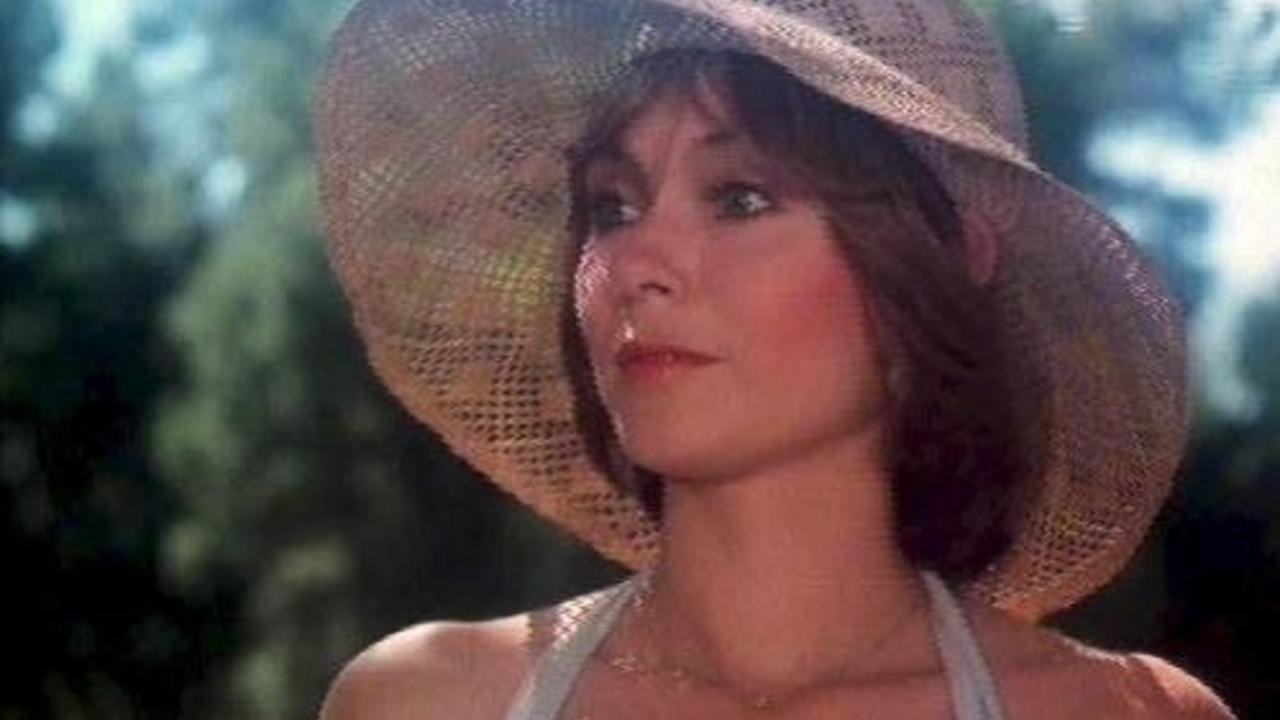
When people talk about D.H. Lawrence, they usually picture dusty library shelves, high-brow literary scandals, or maybe that prestige Netflix adaptation with Emma Corrin. But there is a weird, neon-tinted corner of film history where the Chatterley name took a hard turn into the world of American softcore. We are talking about the young lady chatterley movie, a 1977 release that basically threw the original book's heavy social commentary out the window in favor of California sunshine and low-budget steaminess.
It’s honestly a bizarre artifact. Directed by Alan Roberts, the film isn't just a remake; it’s a loose, "modernized" sequel-of-sorts that resets the action on the Harold Lloyd estate in Beverly Hills.
What Really Happens in the Young Lady Chatterley Movie?
Basically, the plot follows Cynthia Chatterley, played by Harlee McBride. She’s the niece of the "original" Lady Chatterley. After inheriting her aunt's massive estate, Cynthia stumbles upon a secret diary. It’s not just any diary, though. It’s a step-by-step account of her aunt’s legendary affair with the gardener back in 1901.
Cynthia is currently engaged to a guy named Phillip who is, frankly, a bit of a bore. He’s "overbred" and stiff. Naturally, after reading about her aunt's exploits, Cynthia decides the family tradition is worth keeping alive. She sets her sights on the new gardener, Paul, played by Peter Ratray.
The movie isn't exactly trying to win an Oscar for screenwriting. It’s a softcore "mores comedy." It leans heavily into the fantasy of the era—think gauzy filters, 70s soundtracks, and a lot of very convenient excuses for people to lose their clothes.
The Cast and the Weird Adam West Connection
You might recognize a few names here, which is what makes these films so fascinating to look back on. Harlee McBride carries the lead, and she actually returned for the sequel years later. But the real "wait, what?" moment comes in the 1985 sequel, Young Lady Chatterley II.
Yes, Adam West—Batman himself—shows up in the second film.
In the sequel, Cynthia is now the "new" Lady Chatterley, feeling neglected by her husband. While he’s away, she amuses herself with another gardener (named Thomas this time). Adam West plays Professor Arthur Bohart Jr., a repressed academic who visits the estate for "research." It’s as campy as it sounds. Seeing the Caped Crusader in a softcore R-rated comedy is the kind of trivia that keeps film nerds up at night.
Why the 1977 Film Standing Out
At the time, the young lady chatterley movie was part of a wave of "prestige" erotica. It wasn't quite the hardcore stuff you'd find in a back-alley theater, but it was far more explicit than anything on standard television.
- The Setting: Moving the story to a Beverly Hills estate changed the vibe completely. It lost the dreary, coal-dusted atmosphere of industrial England and replaced it with a wealthy, bored-housewife aesthetic.
- The Tone: It’s much lighter than Lawrence’s novel. While the book was a serious look at class warfare and the "death of the soul" in modern society, the 1977 movie is mostly about Cynthia having a good time.
- The Legacy: It spawned a sequel eight years later, which is a lifetime in the world of independent cult films.
Is It Worth a Watch Today?
Honestly, it depends on what you're looking for. If you want a faithful adaptation of D.H. Lawrence, stay far away. Go watch the 1993 BBC version starring Sean Bean or the 2022 Netflix film. Those actually care about the source material.
However, if you're a fan of 70s cult cinema or the "Golden Age" of softcore, the young lady chatterley movie is a prime example of the genre. It’s got that specific grain of film and low-stakes drama that defines late-70s indie production. It’s also notable for its cinematography; Frederick Elmes, who worked on David Lynch’s Eraserhead and Blue Velvet, was actually a camera operator on this. That’s a wild crossover of talent.
Quick Facts for the Trivia Buffs:
- Director: Alan Roberts (who also did the sequel).
- Runtime: 100 minutes of 1970s nostalgia.
- Rating: It was originally unrated but mostly falls into the R or "softcore" category today.
- Availability: It’s popped up on various "cult" DVD labels like Monterey Video over the years.
There is a common misconception that this movie is just a cheap knock-off. While it certainly didn't have a massive budget, it has a weirdly polished look for what it is. The use of the Harold Lloyd estate gives it a sense of scale that most "shlock" films from that era lacked.
Actionable Takeaways for Film Fans
If you're diving into the world of Chatterley adaptations, here is how to navigate it without getting confused:
- Check the Year: If it’s 1977, you’re watching the Harlee McBride cult classic. If it’s 1981, you’re watching the Sylvia Kristel version (directed by the guy who did Emmanuelle).
- Look for the "Young": The "Young" in the title is the giveaway that you’re in the Alan Roberts universe, not the D.H. Lawrence one.
- Embrace the Camp: Don't go in expecting a period drama. Expect a comedy of manners with a lot of 70s flair.
The young lady chatterley movie remains a strange footnote in the history of erotic cinema. It represents a time when filmmakers were trying to bridge the gap between "art" and "exploitation." Whether it succeeded is up for debate, but the fact that people are still searching for it decades later says something about its staying power.
To truly understand the impact, you have to look at it through the lens of 1970s sexual liberation. It wasn't trying to be deep; it was trying to be provocative. And with a cast that eventually included Adam West and Sybil Danning, it certainly managed to be memorable.



