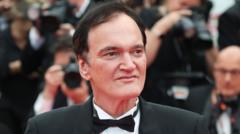
Quentin Tarantino is finally doing it. He's trading the grainy 35mm film stock of Hollywood for the creaky floorboards of a London stage. For years, rumors swirled about how the man behind Pulp Fiction would wrap up his legendary career. Most of us expected a tenth and final film—something gritty, bloody, and hyper-stylized. Instead, Tarantino is pivoting to a "swashbuckling comedy" play set to debut in the West End.
It's a move that caught the industry off guard. But if you've been paying attention to his obsession with dialogue and stagecraft, it makes perfect sense. This isn't just a side project. It’s a deliberate shift from the director who once claimed he’d retire after ten movies to preserve his legacy. By stepping onto the stage, he isn't breaking his "ten film" rule; he's bypassing it entirely to explore a medium where his love for long-winded, rhythmic banter can truly breathe without the constraints of a cinema screen.
Why the West End is the Perfect Playground for Tarantino
London's West End has a certain gravity that Broadway sometimes lacks. It’s raw. It’s historical. For a director who breathes cinema history, the chance to put his mark on the same district that hosted the greats is clearly too tempting to pass up. We aren't talking about a minimalist black-box production here. Reports suggest a "swashbuckling comedy," which implies swords, period costumes, and likely a high body count—all delivered with that signature Tarantino wit.
Think about The Hateful Eight. That movie was basically a stage play trapped in a blizzard. It had a limited location, a heavy focus on character entrances, and chapters that felt like acts. Tarantino has been practicing for the theater his entire career. He knows how to build tension in a single room better than almost anyone alive. Moving to a physical stage in London just removes the camera from the equation.
The Swashbuckling Element Explained
When people hear "swashbuckling," they think Pirates of the Caribbean. Don't expect Johnny Depp-style antics. Tarantino’s version of a swashbuckler will likely lean closer to the cynical, sharp-tongued adventures of the 1940s but with a modern, R-rated edge.
- Dialogue over Action: Expect the sword fights to be secondary to the insults thrown during them.
- Historical Revisionism: Just as he rewrote the end of WWII and the Manson era, don't expect him to play fair with British history.
- Ensemble Chaos: He excels at putting five people in a room who all want to kill each other. A stage play is the purest form of that trope.
The Death of The Movie Critic and the Birth of the Playwright
For a while, everyone thought The Movie Critic would be his final bow. Then, he abruptly scrapped it. That decision sent shockwaves through Cinephile Twitter. Why walk away from a script that was already in pre-production?
The truth is likely simpler than the conspiracy theories suggest. Tarantino is a perfectionist who realizes that the theatrical experience in cinemas is changing—and not necessarily for the better. The West End offers something movies can't provide anymore: a guaranteed, captive audience that values the spoken word over CGI explosions. By choosing a swashbuckling comedy, he’s leaning into the "fun" aspect of his writing that sometimes gets buried under the weight of "prestige filmmaking" expectations.
A New Chapter for the Tarantino Brand
This isn't his first brush with the stage. He famously directed a stage version of Reservoir Dogs early in his career and has often spoken about his desire to adapt his films for the theater. However, creating an original work specifically for London shows a different level of commitment. He isn't just translating his film language; he’s learning a new one.
What This Means for the Final Film Rule
Does this mean the "ten and done" rule is dead? Not really. Tarantino is a stickler for his own mythology. If he doesn't call it a movie, it doesn't count toward the tally. This play allows him to keep creating without "tarnishing" the cinematic filmography he’s so protective of. It’s a loophole. A brilliant, swashbuckling loophole.
The play is rumored to feature a mix of his regular collaborators and fresh British talent. Imagine Samuel L. Jackson or Michael Madsen projecting to the back row of a 1,000-seat theater. It’s a mouth-watering prospect for anyone who appreciates the "theatricality" that has always defined his work.
How to Get Tickets When the Time Comes
London theater is notorious for selling out in seconds, especially when a name like Tarantino is attached. If you want to actually see this swashbuckling comedy, you need to be proactive. This isn't like a movie premiere where you can just find a showing at the local multiplex three weeks later.
- Monitor West End Production Houses: Keep a close eye on major players like the National Theatre or the Royal Court, though a commercial house is more likely for a production of this scale.
- Sign Up for Priority Mailers: Sites like London Theatre Direct or the individual theater box offices often give 24-hour leads to subscribers.
- Prepare for High Prices: A Tarantino play is a "prestige event." Ticket prices will reflect that.
This shift to London might be the most "Tarantino" move he’s ever made. It’s bold, it’s slightly pretentious, and it’s deeply rooted in a love for classic storytelling. Whether it’s a masterpiece or a chaotic mess, it’ll be the talk of the town.
Keep your eyes on the official casting calls and production announcements coming out of London over the next few months. If history is any indication, Tarantino doesn't do anything quietly. This "swashbuckling comedy" is about to be the loudest thing in the West End.
Start looking for flights to London now. You don't want to be the person reading the reviews while everyone else is experiencing the mayhem in person. The stage is set.


