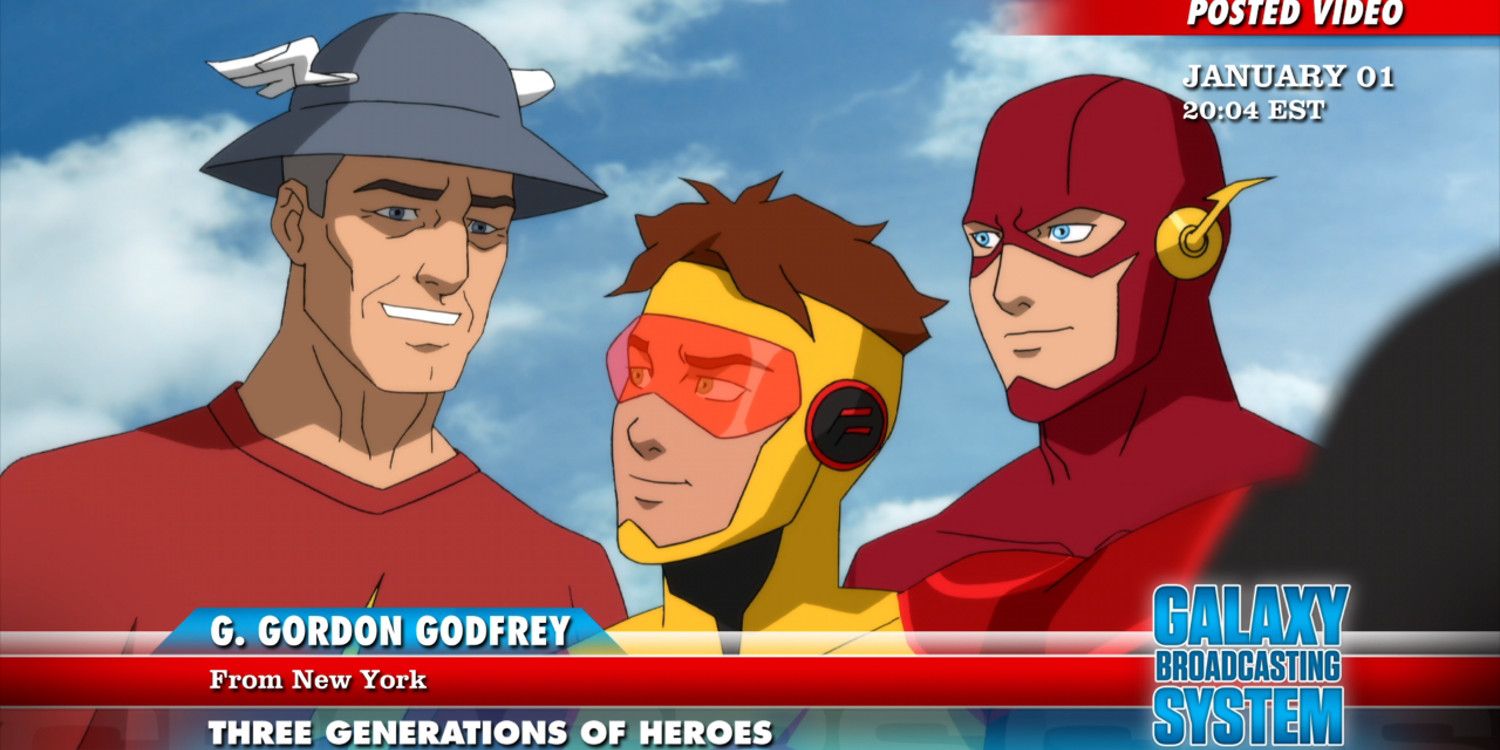
Barry Allen is usually the guy who dies to save the universe. It's his thing. In the comics, his sacrifice in Crisis on Infinite Earths defined an entire generation of DC storytelling. But in the world of Young Justice, the writers flipped the script in a way that still has fans arguing in Reddit threads a decade later.
Honestly, seeing Young Justice Barry Allen on screen for the first time was a bit of a shock for purists. He wasn't the lonely, brooding forensic scientist haunted by his mother's murder. He was... happy? He was a mentor who actually had his life together. It felt weirdly refreshing.
The Mentor Who Actually Mentored
Most versions of the Justice League treat the sidekicks like interns. In this show, Barry treats Wally West like family because, well, they are.
Barry Allen in this universe is a "police scientist" (the show's preferred term for forensic tech) who carries himself with a sort of dorky, optimistic charm. He isn't the fastest man alive who’s too busy to talk. He's the guy making "dad jokes" at the dinner table with Iris and Wally.
Varying the speed of the plot is what this version does best.
We see him balancing the heavy lifting of the Justice League with the very real responsibility of raising a speedster. When Wally gets in over his head, Barry doesn't just scold him. He teaches. He understands the physics of their powers—something the show leans into heavily by making speed a science rather than just "magic lightning."
A Different Kind of Speed
In the Young Justice continuity, Barry is significantly faster than Wally. This isn't just a power level thing; it's a plot point. Wally never had the same "accident" Barry did. He tried to recreate it in his garage and ended up with a diluted version of the powers.
This creates a fascinating dynamic. Barry is the gold standard. He’s the one who can actually vibrate through solid objects without exploding. Wally, meanwhile, is constantly hitting a wall.
Then comes Bart Allen.
When Impulse arrives from the future in Season 2, the family dynamic gets chaotic. Barry suddenly has a grandson from a dystopian future who is faster and more impulsive than anyone he's ever met. The way George Eads (the original voice actor) plays Barry’s reaction to Bart is pure gold. It’s a mix of "I’m too young to be a grandpa" and "I need to save this kid's future."
Why the Death of Kid Flash Changed Barry Forever
We have to talk about the "Endgame" episode. It's the moment that broke the fandom.
During the Reach invasion, the "Magnetic Field Disruptors" are about to vaporize the Earth. The only way to stop them is for speedsters to run in the opposite direction of the energy flow to siphon it off. Barry and Bart are doing fine. They’re fast enough to handle the kinetic friction.
Wally isn't.
He joins in anyway. He knows he’s the "slow" one. As they run, Barry realized what was happening before anyone else. You can see it in his eyes. He tries to tell Wally to stop, but it’s too late. Wally West ceases to exist, leaving Barry Allen to carry the guilt of being the one who survived.
It’s a brutal subversion of the source material. Usually, Barry dies and Wally takes the mantle. Here, the mentor is left standing in a world that feels much slower without his nephew.
The Science of the Scarlet Speedster
One thing Young Justice gets right is the metabolic cost of being Barry Allen.
Basically, if he doesn't eat constantly, he dies. We see the Flashes constantly snacking. It’s a small detail, but it adds a layer of "human-quality" realism to a guy who can run across the Atlantic.
He isn't a god. He’s a guy with a very high caloric requirement and a heart that beats too fast.
Voice Acting Shifts
Did you notice the voice change? George Eads voiced Barry in the first season and the start of the second. He gave Barry a bit of a "good ol' boy" Southern twang that made him feel grounded. Later, James Arnold Taylor took over.
The transition was subtle, but the characterization stayed consistent. Barry remained the "policeman" of the League—methodical, cautious, and deeply invested in the rules.
Why This Version of Barry Matters in 2026
With so many versions of the Flash out there—from the CW's emotional rollercoaster to the cinematic versions—the Young Justice take remains the most balanced.
He isn't a mess. He isn't a loner. He’s a pillar.
He represents the "Silver Age" ideal brought into a modern, cynical world. Even after the time skips, even after losing Wally, Barry continues to lead. He helps train the next generation because he knows that the "Flash Legacy" isn't about how fast you run. It's about who you leave behind to keep running when you can't.
If you’re looking to dive deeper into the lore, start by re-watching Season 2, Episode 6, "Bloodlines." It’s the definitive "Flash Family" episode. You get Jay Garrick (the original), Barry, Wally, and Bart all on screen at once. It’s the best representation of what makes Barry Allen more than just a guy in a red suit.
To truly understand the impact of Barry's role, pay close attention to his interactions with Artemis in Season 3. His silence speaks volumes about his grief.
Next Steps for Fans:
- Re-watch "Endgame" (Season 2, Episode 20) to analyze Barry's technical explanation of the "vortex" effect.
- Compare Barry’s speed feats in Season 4 to his early Season 1 appearances; the animators subtly increased his "lightning" effects as he grew more experienced.
- Check out the tie-in comics (Issues #20-25) which bridge the gap between the five-year time jump and show Barry's struggle with the growing "Flash Family" responsibilities.