Hip-hop changed forever on July 26, 2005. That isn't hyperbole. Before that Tuesday, the "trap" was a local Atlanta term, a murky concept that hadn't yet fully swallowed the global music industry. Then Jay "Jeezy" Jenkins dropped Let's Get It: Thug Motivation 101. It wasn't just a collection of songs. It was a manual. If you look at the landscape of modern rap today, the DNA of young jeezy albums is everywhere—from the cinematic brass sections to the ad-lib-heavy flows that guys like Migos and 21 Savage later perfected.
Honestly, people forget how risky Jeezy’s sound was at the time. He didn't have the lyrical complexity of a Nas or the pop-crossover polish of Nelly. He had a rasp. He had a white T-shirt. He had a snowman logo that eventually got banned from middle schools across America. But more than that, he had a direct line to the psyche of the hustle.
The Blueprint of the Trap: Thug Motivation 101
When we talk about the most influential young jeezy albums, we have to start with the earthquake. TM101 is a masterpiece of atmospheric pressure. Produced largely by Shawty Redd, the album introduced a gothic, synth-heavy sound that felt like a horror movie set in the projects. Tracks like "Standing Ovation" and "Go Crazy" weren't just hits; they were anthems for a demographic that felt ignored by the "bling-bling" era of the early 2000s.
Success wasn't guaranteed. Critics initially dismissed him. They said he was too simple. "He just yells 'Yeaaaah' and 'That's right,'" they complained. They missed the point entirely. Jeezy wasn't trying to be a poet; he was a motivational speaker for people who felt they had no options. The album debuted at number two on the Billboard 200, moving 172,000 copies in its first week. It eventually went Platinum multiple times over.
It's weird to think about now, but Jeezy’s ad-libs were revolutionary. Before him, ad-libs were mostly background noise. Jeezy turned them into a second lead vocal. When you hear "Ha-haaaaa" or "Let’s get it," it’s a rhythmic anchor. He understood that rap is as much about feeling and cadence as it is about the actual words being spoken.
The Evolution: From The Inspiration to The Recession
Following up a classic is a nightmare. Most artists fail. Jeezy, however, leaned into the pressure with The Inspiration: Thug Motivation 102. Released in 2006, it was slicker. The production was bigger. Songs like "I Luv It" showed he could handle a faster tempo without losing that gravelly grit. It proved he wasn't a one-hit-wonder or a fluke of the Atlanta scene.
But then 2008 happened.
The world was falling apart. The housing market crashed. People were losing their jobs. In the middle of this chaos, Jeezy released The Recession. This is arguably his most "important" work. While other rappers were still bragging about their jewelry, Jeezy was talking about gas prices and the struggle to keep the lights on. "Put On" featuring Kanye West became a generational anthem, but it’s the deeper cuts like "My President" that defined the era.
He managed to capture the specific anxiety of 2008. He endorsed Barack Obama before it was a safe marketing move for a "trap rapper." He connected the struggle of the street corner to the struggle of the average American household. That’s why his discography has such staying power. He grows with his audience.
The Later Years and the TM Series Legacy
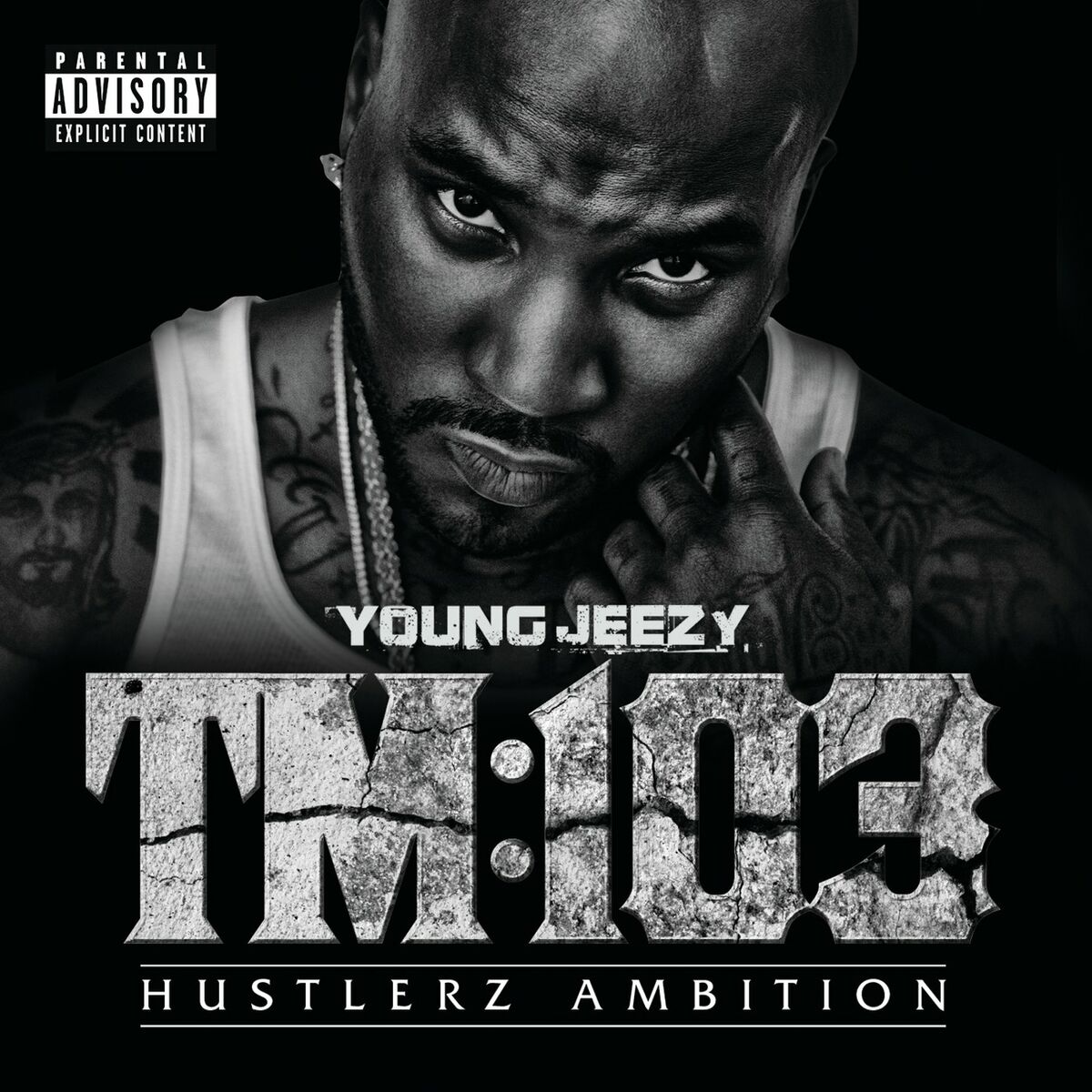
The 2010s were a bit of a roller coaster. You had TM103: Hustlerz Ambition, which suffered from massive delays and high expectations. It was good—solid, even—but the landscape was shifting. Future and Young Thug were starting to take the trap sound into weirder, more melodic territories.
Jeezy didn't try to chase them. Well, mostly.
- Seen It All: The Autobiography (2014) was a return to form. The title track with Jay-Z is a heavyweight bout between two titans of the "coke rap" subgenre.
- Church in These Streets (2015) saw him taking on a "Pastor Young" persona, focusing more on social commentary and leadership.
- Trap or Die 3 (2016) went back to the roots, ditching the experimentation for the heavy bass and aggressive bars that made him famous.
Basically, Jeezy realized he didn't need to reinvent the wheel. He owned the wheel. He had become the elder statesman of the South.
Why People Misunderstand Jeezy’s Discography
A common mistake casual listeners make is grouping all young jeezy albums into one "drug rap" bucket. If you actually listen, the narcotics are just a metaphor for capitalism. Jeezy is a business-minded artist. Whether he’s talking about a brick or a real estate investment, the core theme is always the same: self-reliance.
There's also the "lyricism" debate. If you’re looking for double-entendres and complex metaphors, you’re looking at the wrong artist. Jeezy is a minimalist. He uses the fewest words possible to create the maximum emotional impact. It’s "blue-collar" rap. It’s why his music resonates so deeply in places like Detroit, Chicago, and St. Louis, not just Atlanta.
His later work, like The Recession 2 or Snofall (with DJ Drama), shows a man who has made it out. He’s no longer the guy on the corner; he’s the guy in the boardroom. Some fans miss the "hungry" Jeezy, but there’s something fascinating about watching a rapper age gracefully in a genre that usually discards its legends by age 35.
Actionable Insights for the Aspiring Listener
If you’re trying to navigate the massive catalog of Jeezy, don’t just hit "shuffle" on Spotify. You’ll get lost in the mixtapes and the later-career filler.
Start with Thug Motivation 101. Listen to it start to finish. Don't skip the skits. They set the tone. Then, jump straight to The Recession. It provides the perfect contrast between his early "street" energy and his "global" perspective.
For the deeper dives, look for the Trap or Die mixtapes (especially the first one). These aren't official studio albums, but in the world of Jeezy, the mixtapes are often more influential than the retail releases. They represent the raw, unpolished version of the Snowman that built the foundation for everything that followed.
Study the production credits. Notice how the sound shifts from Shawty Redd's dark synths to Toomp's cinematic horns and eventually to the modern bounce of D. Rich. Understanding the producers is key to understanding why Jeezy sounds the way he does.
Finally, pay attention to the transition in his subject matter. You can literally hear a man growing up through his music. It’s a rare thing in hip-hop to have a discography that doubles as a chronological autobiography of a man’s journey from the bottom to the absolute top of the food chain.
Next Steps for Deepening Your Knowledge
To truly appreciate the impact of these albums, track the evolution of the "Trap" genre by comparing Jeezy’s TM101 to T.I.’s Trap Muzik and Gucci Mane’s Trap House. These three albums, all released within a few years of each other, form the "Holy Trinity" of the Atlanta sound. Analyze how Jeezy’s emphasis on "motivation" and "hustle" differed from T.I.’s "king" persona or Gucci’s "outlaw" energy. This context will make your next listen of a Jeezy project much more nuanced.
Also, look into the business side of CTE World (Corporate Thugz Entertainment). Seeing how Jeezy translated his music success into spirits (Avion Tequila) and other ventures provides the real-world conclusion to the stories he’s been telling since 2005. It turns the music from entertainment into a proven case study of brand building.