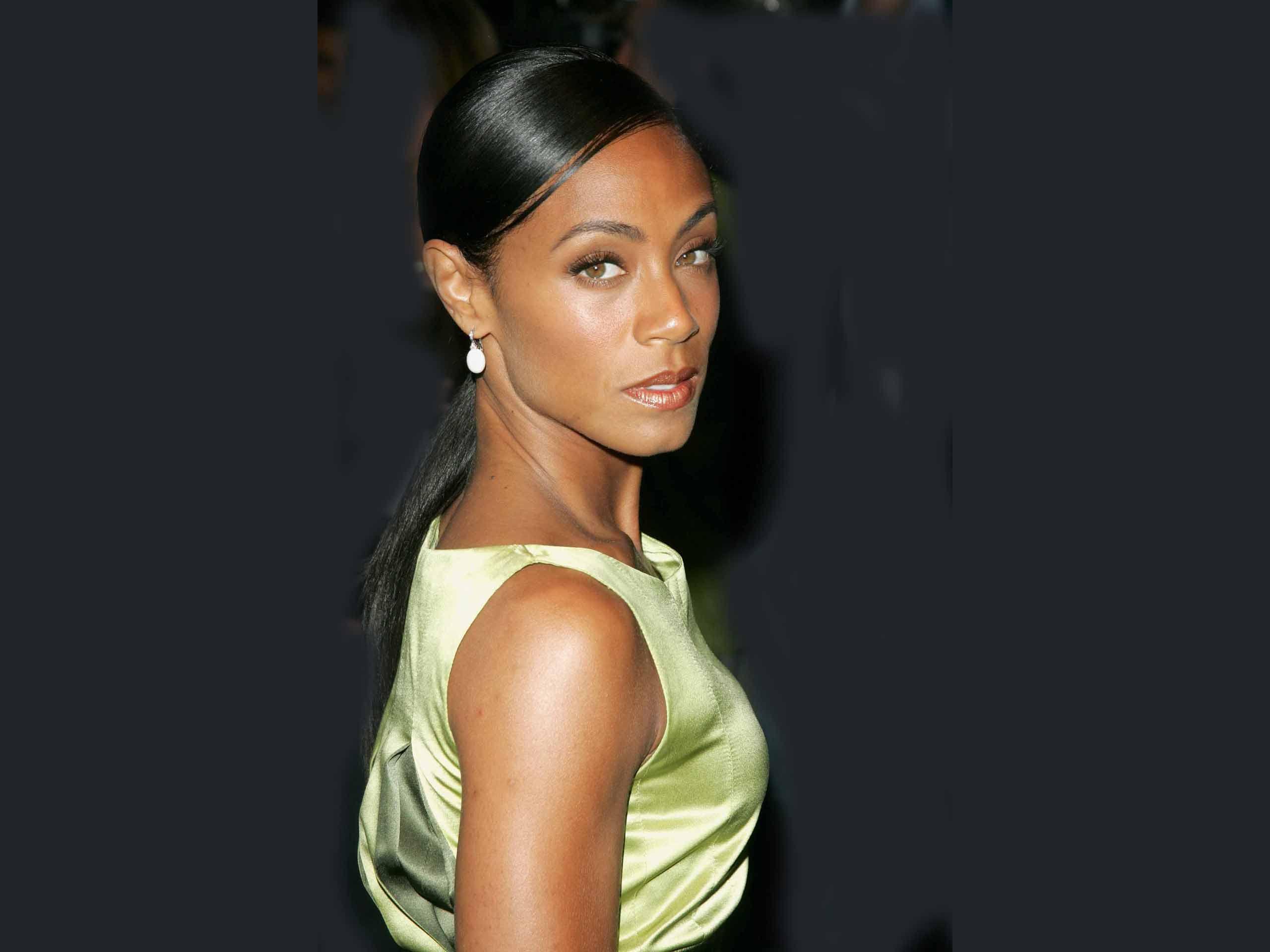
Before the Red Table, before the Oscars "slap," and long before she became one half of Hollywood’s most scrutinized power couple, there was just Jada. A 5-foot-tall firecracker from Baltimore. Honestly, if you only know her as Will Smith’s wife, you’ve missed the most interesting version of her. Young Jada Pinkett Smith wasn't just another aspiring actress; she was a survivalist with a pixie cut who carried the grit of the Maryland streets into the high-gloss world of 90s Hollywood.
She didn't exactly have a "silver spoon" start. Born in 1971 to a high school student mother and a father who ran a construction company, Jada’s upbringing in Baltimore was, well, complicated. Her parents divorced almost immediately. She was largely raised by her mother, Adrienne Banfield-Norris, and her grandmother, Marion Martin Banfield. It was Marion who noticed the kid couldn't sit still and put her into piano and dance lessons.
The Baltimore School for the Arts and the 2Pac Connection
People love to romanticize the friendship between Jada Pinkett and Tupac Shakur. It’s basically the stuff of legend now. But back in the mid-80s, they were just two "theater nerds" at the Baltimore School for the Arts (BSA). Jada has been very vocal about the fact that she was actually selling drugs when she met Pac. Yeah, she wasn't just a dancer; she was hustling.
They were broke. Like, "sharing a single bag of chips for lunch" broke.
"When I met Pac, he owned two pairs of pants and two sweaters," Jada once told Howard Stern.
Their bond was intense but, according to her, never romantic. They were kindred spirits who pushed each other. While Jada was perfecting her ballet and tap, Pac was writing poetry and becoming the charismatic leader of their friend group. She’s admitted she wasn’t the best student. She showed up late. She had an attitude. But the talent was undeniable.
After graduating in 1989, she tried the North Carolina School of the Arts. She lasted a year. She dropped out, packed her bags, and moved to Los Angeles. No backup plan. Just Baltimore grit.
Breakout Years: From "A Different World" to "Menace II Society"
L.A. didn't roll out the red carpet immediately. She did the usual rounds—a guest spot on True Colors, a bit on Doogie Howser, M.D., even 21 Jump Street. But 1991 changed everything. She landed the role of Lena James on A Different World.
Lena was basically Jada. She was a "fish out of water" from a rough Baltimore neighborhood attending the fictional Hillman College. She brought a certain "sassiness" that the show needed. She stayed until the series wrapped in 1993, but by then, she was already eyeing the big screen.
Then came Menace II Society.
If you want to see why young Jada Pinkett Smith became a star, watch her as Ronnie. In a movie dominated by hyper-masculinity and violence, she was the moral compass. She played a single mother trying to get out of the hood, and she did it with a vulnerability that made you forget she was barely 21. She didn't just play the role; she lived it.
A 90s Filmography That Defined a Decade
After Menace, the roles started coming in fast. She wasn't just a "drama" actress; she was versatile.
- The Inkwell (1994): A nostalgic coming-of-age story where she played the romantic lead.
- A Low Down Dirty Shame (1994): She showed off her comedy chops opposite Keenen Ivory Wayans.
- Tales from the Crypt: Demon Knight (1995): She went full action-horror hero. She even cut her hair into that iconic platinum blonde pixie for this.
- The Nutty Professor (1996): This was the mainstream crossover. Playing Carla Purty opposite Eddie Murphy made her a household name.
Why Young Jada Pinkett Smith Still Matters
What most people get wrong is thinking she was just "lucky."
She was a pioneer of the "look." The 90s wasn't just about the acting; it was about the aesthetic. Jada’s style—the oversized leather jackets, the tiny shades, the constantly evolving hair—defined an era of Black girl magic before the term existed. She was "culturally seasoned," as her hairstylist Neeko Abriol once put it. She wasn't trying to fit the Hollywood mold of the "girl next door." She was the girl from the block who could out-act the veterans.
She also had a backbone. In 1994, she met Will Smith when she auditioned for the role of his girlfriend on The Fresh Prince of Bel-Air. She didn't get the part. They told her she was too short.
She didn't care. She told him he was too tall.
They didn't start dating then—Will was married—but that interaction set the tone. She wasn't intimidated by the rising "Prince." When they did eventually marry in 1997, she was already a millionaire with a massive career of her own. She was Niobe in The Matrix sequels before she was "Will's wife" in the eyes of the public.
The Reality of the "Hustle"
Honestly, the most impressive thing about her early years is the transition from the streets of Baltimore to the heights of Hollywood without losing her sense of self. She’s been open about her struggles with "addiction to everything" during those early years—not just substances, but the thrill of the hustle.
She used that intensity to fuel her roles. When you see her on screen in the mid-90s, you aren't seeing a polished product. You're seeing a raw, unfiltered talent that was often smarter than the scripts she was given.
Actionable Insights from Jada’s Early Career
- Versatility is a superpower. Jada jumped from slapstick comedy to heavy drama to horror in the span of three years. Don't pigeonhole yourself.
- Own your "flaws." They told her she was too short. She turned her petite stature into a "pint-sized powerhouse" brand.
- Network horizontally. Her friendship with 2Pac wasn't about "climbing." They were both at the bottom, helping each other grow. Look at who is next to you, not just who is above you.
- Aesthetic as an extension of art. She used her hair and fashion to signal character shifts and personal growth, long before it was a marketing tactic.
If you’re looking to understand the Jada Pinkett Smith of today, you have to go back to the Baltimore girl who wasn't afraid to sweat. She wasn't a product of the system; she was a glitch in it.
To really appreciate her evolution, go back and watch Set It Off (1996). Her performance as Stony is arguably her best. It captures that specific blend of desperation, loyalty, and fierce independence that defined the young Jada Pinkett Smith era. It reminds us that before she was a mogul, she was a storyteller who fought for every inch of screen time she got.
Next Steps: Research the "TWIGS" program at the Baltimore School for the Arts to see how it continues to fund young artists from under-resourced neighborhoods today. You can also watch the 1993 film Menace II Society to see her breakout dramatic performance firsthand.