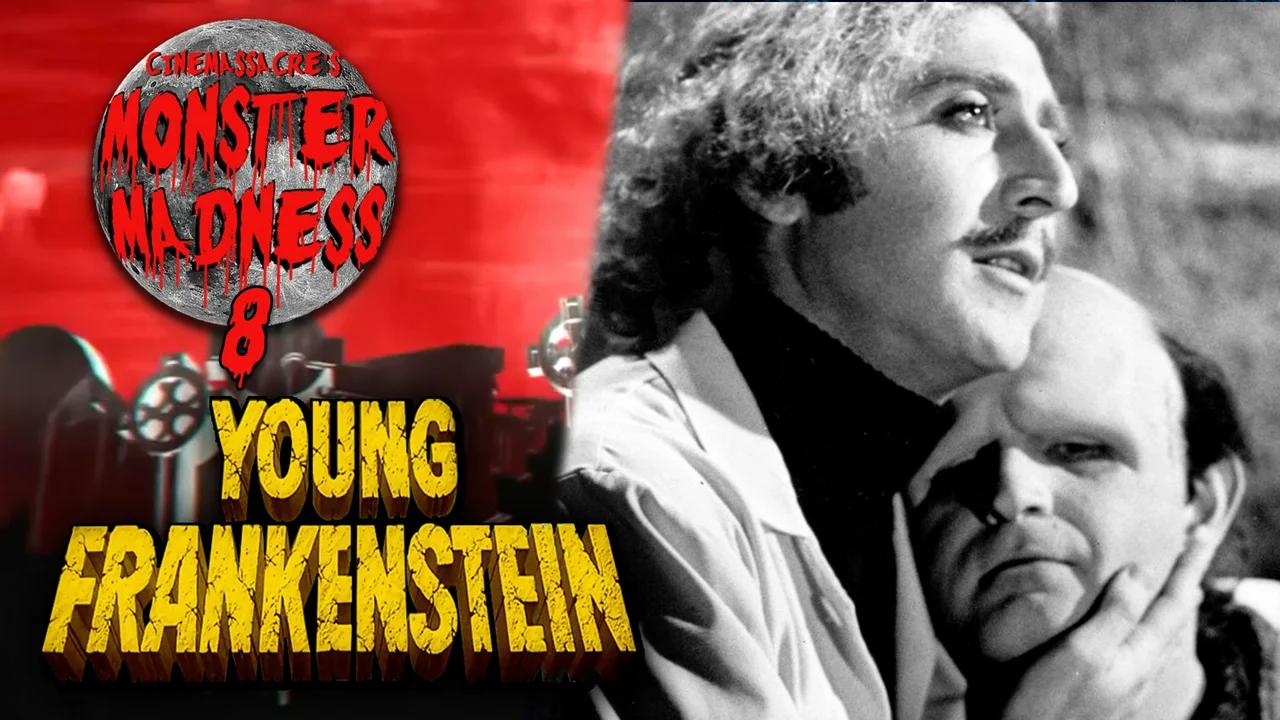
He’s huge. He’s green-ish. He’s got zippers where most people have scars. Honestly, Young Frankenstein the monster is a total subversion of everything Mary Shelley or even James Whale originally intended. When Peter Boyle stepped into those massive platform boots in 1974, he wasn't just playing a reanimated corpse; he was playing a misunderstood toddler trapped in the body of a terrifying titan.
Mel Brooks didn't want a horror movie. He wanted a "salute" to the 1930s Universal classics, but with more fart jokes and a surprising amount of heart.
Most people remember the "Puttin' on the Ritz" dance number. It’s iconic. It’s also the perfect distillation of what makes this specific version of the creature so enduring. You’ve got this hulking beast trying his absolute best to be a sophisticated gentleman while his brain—which we later find out belonged to a certain "Abby Normal"—is clearly struggling with the motor skills required for a high-kick. It's hilarious. It's also kind of tragic if you think about it for more than ten seconds.
The Abnormal Truth About the Monster’s Brain
Let's talk about the brain. It is the central pivot point of the whole plot. Igor (pronounced Eye-gor, obviously) is sent to fetch the brain of Hans Delbrück, a scientist and a saint. He drops it. In a panic, he grabs the "Abnormal" brain instead.
This isn't just a gag. It changes the entire DNA of the character.
Unlike Boris Karloff’s monster, who was often depicted as genuinely menacing or driven by a primal, misunderstood rage, Boyle’s monster is reactive. He’s a blank slate that gets poked and prodded by a world that hates him. When Gene Wilder’s Dr. Frederick Frankenstein (that’s Fron-ken-steen) finally locks himself in the room with the creature, he isn't just performing surgery. He’s a parent. He’s trying to bridge the gap between creator and creation through nothing but sheer, desperate empathy.
Wilder actually insisted on the "Puttin' on the Ritz" scene. Mel Brooks hated the idea at first. He thought it was too silly, even for a movie with a blind man accidentally pouring hot soup into a monster's lap. Wilder fought for it. He argued that the monster needed a moment of "dignity" that goes horribly, rhythmically wrong. That's the secret sauce.
Why Peter Boyle Was the Only Choice
Boyle had this incredible ability to use his eyes. Because he was covered in heavy greasepaint—which was actually a shade of blue-green that looked "white" on the black-and-white film stock—he had to emote through layers of latex.
He didn't use many words. Mostly grunts. Occasionally a "Mmm!" when he tasted something good, like a cigar or some bread. But his face told the story of a man who was very confused about why everyone was screaming.
It’s worth noting that before this, Boyle was famous for playing Joe, a very different, very angry character. Moving from a gritty, blue-collar drama to playing a tap-dancing undead giant is a career pivot most actors couldn't pull off. He brought a soulfulness to the role that kept the movie from being a 100-minute sketch. Without that grounded performance, the movie is just a parody. With it, it’s a masterpiece of character-driven comedy.
The Science of the "Transference"
In the final act, Frederick performs a "brain-drain" or a personality transference. This is where the movie gets surprisingly deep for a comedy. The doctor gives the monster a part of his own intellect. In exchange, the doctor gets... well, let’s just say he gets the monster’s "enormous" physical gifts, which the character Inga seems quite happy about.
This swap settles the monster down. He becomes articulate. He reads the Wall Street Journal. He’s no longer the "Monster." He’s just a very large guy with an interesting medical history.
This ending is a massive departure from the source material. In Shelley’s book, everyone dies. It’s miserable. In the 1931 movie, the monster is burned in a windmill. But in Young Frankenstein, the monster gets a happy ending. He gets a wife (Madeline Kahn’s Elizabeth, who finds his "sweet mystery of life" quite compelling) and a stable home life. It’s the ultimate subversion of the horror genre.
Looking Back: The Legacy of the 1974 Creature
The impact of Young Frankenstein the monster is still felt in how we handle "sympathetic villains" today. You can see DNA of Boyle’s performance in things like The Shape of Water or even Shrek. It’s that idea that the scary thing outside is actually the most vulnerable thing in the room.
If you’re watching it today, pay attention to the lighting. Gerald Hirschfeld, the cinematographer, used many of the same techniques from the original 1930s films—heavy shadows, high contrast, and the actual original laboratory equipment from the 1931 Frankenstein set.
This creates a "visual lie." The movie looks like a terrifying horror film. But the monster behaves like a scared kid. That dissonance is why the jokes land so hard. When the monster sees fire and screams, it’s not just a plot point; it’s a callback to decades of cinema history that Mel Brooks is both mocking and hugging at the same time.
How to Appreciate the Monster Like a Pro
To really "get" the brilliance of what Boyle and Wilder did, you sort of have to look at the scenes where nothing is happening.
- Watch the eyes: Notice how the monster looks at the violin. It’s the only thing that calms him.
- The "Blind Hermit" scene: Gene Hackman’s cameo is legendary, but watch Boyle’s restraint. He sits there while his hand is set on fire and his wine is spilled, and he just takes it because he’s so desperate for a friend.
- The Zippers: Look at the costume design. The zippers on the neck instead of bolts were a conscious choice to make him look "modern" in an old-fashioned way.
There’s a reason this movie stays on "Top 100" lists. It isn't just the writing. It’s the fact that the monster feels real. We’ve all felt like the "Abnormal" one in the room at some point. We’ve all wanted to burst into a Broadway show tune to prove we’re sophisticated.
What to do next:
Go back and watch the 1931 Frankenstein followed immediately by Young Frankenstein. You’ll see that Peter Boyle isn't just mocking Boris Karloff—he’s actually paying a very deep, very specific tribute to him. Then, look for the 2007 Broadway musical adaptation. While Roger Bart does a great job, you’ll see how much of the "monster's" soul was tied specifically to Peter Boyle’s physical presence and those weird, soulful eyes.
If you're a film student or just a nerd for comedy history, track down the "making of" documentaries. Hearing Mel Brooks talk about how he fought to keep the movie in black and white—despite the studio’s protests—explains why the monster looks the way he does. The silver-screen aesthetic was non-negotiable for the character to work.
Stop calling him "Frankenstein." The doctor is Frankenstein. The creature is the monster. But in this movie, maybe he's just a guy named Harold who really likes show tunes and a good cigar.