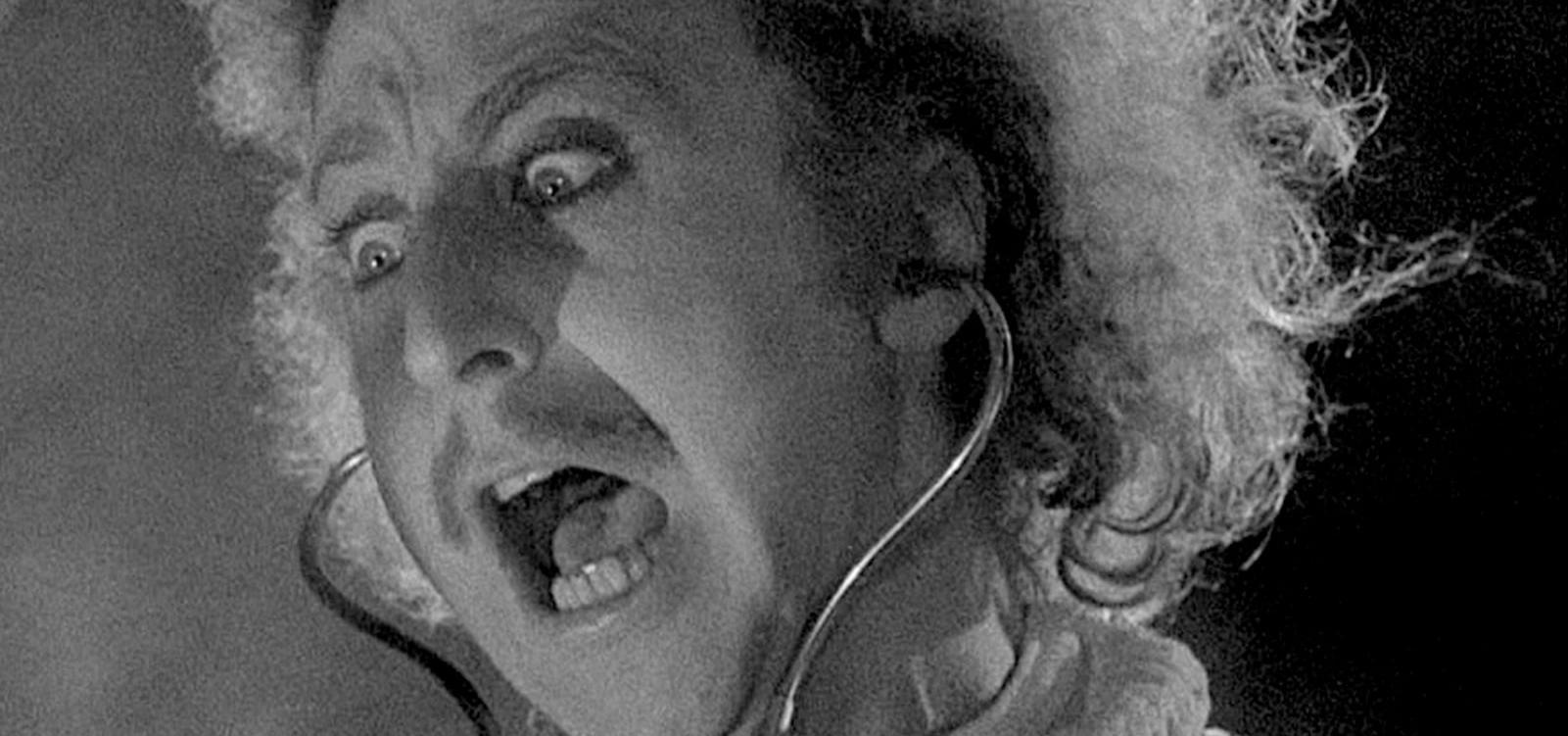
It was supposed to be the surest bet in the history of the Great White Way. Think about it. Mel Brooks—the man who had just single-handedly saved the Broadway economy with The Producers—was bringing his 1974 cinematic masterpiece to the Hilton Theatre. He had the same director, Susan Stroman. He had a massive budget. He had a cast that looked like a Tony Award fever dream. Yet, when Young Frankenstein on Broadway finally creaked open its heavy laboratory doors in 2007, the reaction wasn't the universal roar of laughter everyone expected. It was more of a polite, slightly confused chuckle.
Why?
The show is a fascinating case study in what happens when you try to catch lightning in a bottle twice. Honestly, the expectations were so high they were basically astronomical. People didn't just want a good musical; they wanted a religious experience that would make them forget how much they paid for their tickets. And man, those tickets were pricey.
The $450 Ticket Problem
Let's talk about the elephant in the room: the "Premier" seating. Before the show even had its first preview, the producers made a bold, perhaps arrogant, move. They introduced a $450 ticket price for the best seats in the house. In 2007, that was an insane amount of money. Even now, in 2026, we flinch at those prices, but back then? It felt like a slap in the face to the average theatergoer.
The press smelled blood in the water immediately.
When you charge that much, you aren't just selling a show; you're selling perfection. Young Frankenstein on Broadway was a massive production, but it struggled under the weight of its own price tag. Critics weren't just looking at the choreography; they were looking at the bottom line. It created a "prove it to me" atmosphere in the audience that is death for a comedy. Comedy needs a relaxed, willing crowd. It doesn't need a group of people sitting with their arms crossed thinking, "This better be worth four hundred and fifty bucks."
A Cast of Giants (And One Transylvanian Monster)
You really can't fault the talent. The casting was, quite frankly, inspired. Roger Bart, who had been so brilliant in The Producers, took on the role of Frederick Frankenstein ("That’s Fron-ken-steen!"). He had the impossible task of stepping into Gene Wilder's shoes. How do you do that? You don't. You try to pivot, but the ghost of Wilder hangs over every line of that script.
Then you had Sutton Foster as Inga. Sutton is Broadway royalty. She can do a high belt while yodeling on a hayride—which she literally did in the song "Roll in the Hay"—and make it look easy. She brought a level of professional polish that almost felt too good for the material.
And who could forget Christopher Fitzgerald as Igor? Or Shuler Hensley as the Monster?
- Roger Bart: High energy, neurotic, and vocally tireless.
- Megan Mullally: As Elizabeth, she brought that Will & Grace sharpness to "Please Don't Touch Me," a song about being "touch-blind."
- Andrea Martin: Playing Frau Blücher (neigh!), she was arguably the funniest person on that stage. Her delivery of "He Vas My Boyfriend" was a masterclass in comic timing.
The talent was there. The bones were there. But the scale was... off.
The Hilton Theatre: Where Intimacy Goes to Die
The Hilton Theatre (now the Lyric) is a barn. It’s huge. It’s one of the largest houses on Broadway, and for a show that relies on Vaudeville-style jokes and subtle facial expressions, it was a tough room to play. Mel Brooks’ humor is often intimate. It’s a wink to the audience. In a theater that seats nearly 2,000 people, that wink becomes a frantic wave.
Everything had to be bigger. The sets by Robin Wagner were gorgeous and expensive—massive laboratory equipment that actually hummed and sparked—but they took up so much space that the actors sometimes felt like they were competing with the furniture. The production cost somewhere around $16 million. That’s a lot of pressure for a show about a man making a monster out of "dead tissue."
Comparing The Producers to Young Frankenstein
People kept asking: Is it as good as The Producers?
The answer was usually a hesitant "no." The Producers worked because it was a story about the theater itself. It felt meta. Young Frankenstein on Broadway felt like a recreation. When you watch the movie, the black-and-white cinematography and the quiet pauses are part of the joke. On stage, in Technicolor, with a 20-piece orchestra, those quiet moments disappeared.
The show tried to fill every gap with a musical number. Some worked. "Transylvania Mania" was a high-energy act one closer that got people on their feet. But others felt like filler. You can only hear so many jokes about "enormous schwanstuckers" before the novelty wears off.
The "Puttin' on the Ritz" Moment
If there is one reason the show stayed alive as long as it did, it’s this scene. If you've seen the movie, you know the gag. The doctor and the monster, in white tie and tails, performing an Irving Berlin classic.
On Broadway, they turned this into a sprawling, ten-minute tap extravaganza. It was spectacular. Shuler Hensley, in massive platform boots, tapping his heart out alongside Roger Bart was a sight to behold. It was pure, unadulterated Broadway joy. This is where Susan Stroman’s direction really shined. She knows how to build a tap number until the audience has no choice but to cheer.
But even a show-stopping tap number couldn't hide the fact that the book felt a bit dated. Brooks wrote the book along with Thomas Meehan, and while they are legends, some of the jokes felt like they had been sitting in a vault since 1974.
What the Critics Actually Said
The reviews were mixed, to put it kindly. Ben Brantley of the New York Times wasn't exactly a fan. He felt it was overblown. The word "loud" came up a lot.
However, it wasn't a total disaster. The show ran for 484 performances. That’s not a flop by any standard definition. It’s just that when you’re the follow-up to a show that ran for over 2,500 performances and won 12 Tonys, 484 feels like a disappointment.
Interestingly, the West End production years later was much more successful in terms of tone. They scaled it down. They made it scrappier. They cut some of the bloat. It turns out Young Frankenstein on Broadway didn't need more money; it needed more room to breathe.
The Legacy of the Musical
Does it still matter? Honestly, yeah. It’s become a staple for regional theaters and high schools. Why? Because it’s fun. The characters are iconic. Every bass-baritone in the world wants to play the Monster and belt out "Deep Love."
It also served as a lesson for Broadway producers. You can't just throw money at a brand and expect a hit. Audiences are smarter than that. They can feel when a show is being "produced" versus when it’s being "created."
The show did garner three Tony nominations, but it went home empty-handed. That hurt. It was the year of In the Heights and Passing Strange. The Broadway landscape was shifting toward something newer and fresher, and Mel Brooks’ brand of old-school musical comedy was suddenly looking a bit like the creature itself—sewn together from parts of the past.
Actionable Insights for Theater Fans
If you’re looking to dive into this show now, don't just hunt for bootlegs. There are better ways to experience what Mel Brooks was trying to do.
- Listen to the London Cast Recording: It’s tighter than the Broadway one. The arrangements feel a bit more modern and the comedic timing is snappier.
- Watch the "Working in the Theatre" Episodes: The American Theatre Wing has some great footage of the cast discussing the mounting of the show. It gives you a real sense of the technical hurdles they faced.
- Check out the West End Script: If you're a performer or director, look at the revisions made for the 2017 London run. They cut the intermission in some versions and trimmed the fat, making it a much more effective comedy.
- Visit the Museum of Broadway: They often have pieces from the original production, including some of the costume designs by William Ivey Long, which were arguably the best part of the visual experience.
The story of the show is a reminder that even the biggest names in the business can't always predict what will land. It was a big, messy, loud, and sometimes brilliant attempt to turn a cinematic classic into a stage legend. It didn't quite reach the heights of its predecessor, but it gave us a tap-dancing monster in a top hat. And sometimes, that's enough.