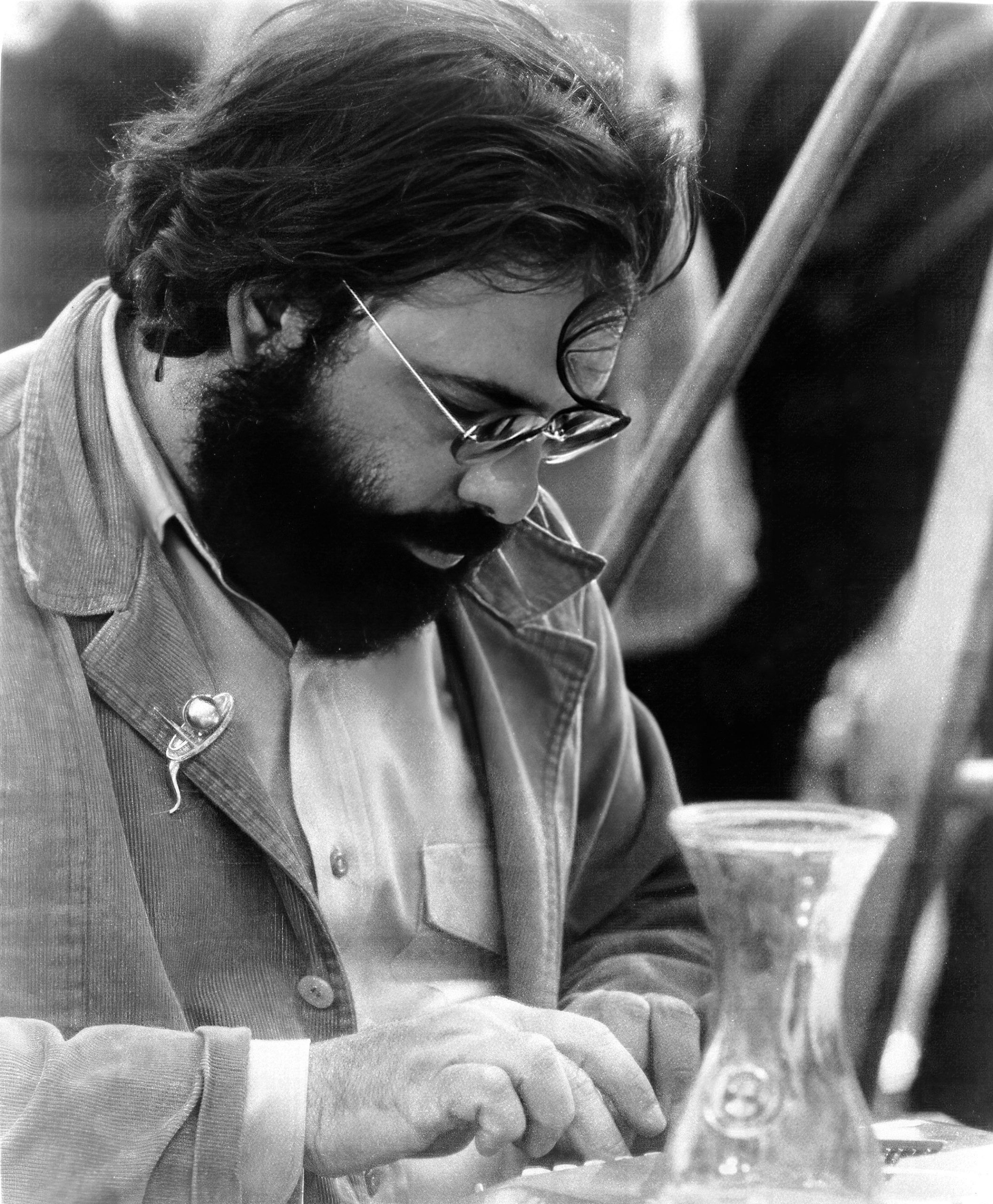
When you think of Francis Ford Coppola, you probably see the titan. You see the man who conquered the 1970s with The Godfather and Apocalypse Now. But the version of Francis before the Oscars and the beard—the young Francis Ford Coppola—wasn't some pre-ordained king of cinema. He was a skinny kid with a limp who spent a year paralyzed in bed, a "nudie-cutie" filmmaker just trying to make rent, and a guy who literally had to lie about his skills to get a job.
Most people assume he walked into Hollywood and demanded greatness. Honestly? It was more like he stumbled through a series of chaotic, low-budget disasters that would have broken a less stubborn person.
The Year of the Puppet Theater
Before he was a director, Francis was a patient. At nine years old, he contracted polio. This wasn't a minor thing; he was paralyzed for about a year and a half. While other kids were outside in Queens playing stickball, he was stuck in a room watching television and listening to the radio.
He didn't just sit there, though. He got obsessed with a toy 16mm movie projector and started putting on puppet shows. Imagine that for a second. The guy who eventually directed Marlon Brando was first directing hand-puppets because he couldn't walk. He’s said that this period of isolation is where his imagination really took root. It wasn't about "art" yet. It was about survival and boredom.
By the time he hit his teens, he was a theater geek. He moved around a lot—attending 23 different schools before graduating high school. That’s not a typo. Twenty-three. You can see why he became so adaptable. He had to be. He eventually landed at Hofstra University, where he basically took over the drama department, merging different clubs into the "Spectrum Players." He was a whirlwind of energy even then.
The "Nudie-Cutie" Hustle and Roger Corman
After Hofstra, he headed to UCLA for film school. This is where the young Francis Ford Coppola myth usually starts, but the reality is much grittier. He was broke. Like, $10-a-week broke. To make money, he did what a lot of film students did back then: he worked on "nudie-cuties." These were softcore flicks that were basically just excuses to show some skin without being legally considered "obscene."
His first real credit, Tonight for Sure (1962), was a Frankenstein’s monster of a movie. He took an unreleased western, shot some new footage with a Playboy Bunny, and mashed it together. It wasn't high art. It was a paycheck.
Then came Roger Corman.
Corman is the legendary "King of the B-Movies," and he hired Francis as a general assistant. This was the ultimate film school. Corman’s philosophy was simple: do it fast, do it cheap, and never waste a foot of film. Francis did everything. He dubbed Soviet sci-fi movies, he was a sound man, and he was a dialogue director.
There’s a great story about how he got the job as a sound engineer on The Young Racers. Corman asked if he knew how to record sound. Francis said "yes" and then spent the night frantically reading a manual to figure out how the machine actually worked.
The Birth of Dementia 13
While they were in Ireland filming The Young Racers, Corman told Francis he had $20,000 left over in the budget. He told Francis he could use it to make his own horror movie, provided it was a Psycho rip-off. Francis wrote the script for Dementia 13 in one night.
He didn't just make a cheap slasher, though. He tried to make it stylish. He used high angles and eerie underwater photography. He was already trying to be an auteur even when he was essentially working for a guy who cared more about the poster than the plot. This is also where he met Eleanor Neil, who would become his lifelong partner and a massive creative force in her own right.
Why the Patton Script Almost Ruined Him
In 1963, Francis got hired by Seven Arts as a screenwriter. This was a huge jump from Corman’s low wages. He was tasked with writing a biopic about General George S. Patton.
The young Francis Ford Coppola decided to start the movie with a scene that everyone now considers iconic: Patton standing in front of a giant American flag, giving a speech to the audience. At the time, the studio hated it. They thought it was too weird and stylized. They actually fired him because of his "eccentric" approach to the script.
Fast forward several years. Francis is broke again. He’s in a basement in San Francisco, working with a young George Lucas, repairing editing machines just to keep the lights on. He happens to see some footage from a movie being made at Fox.
He asks, "What is this?" The editor says, "It’s Patton."
It turns out that George C. Scott (the actor playing Patton) had hated the "safe" scripts the studio tried to write after they fired Francis. Scott demanded they go back to the "weird" script with the flag opening. That script won Francis his first Oscar in 1970. He wasn't even at the ceremony because he was busy trying to figure out how to direct a movie called The Godfather without getting fired from that, too.
The American Zoetrope Dream
Before the massive success of the 70s, Francis and George Lucas were just two guys who hated the Hollywood system. In 1969, they founded American Zoetrope in San Francisco. The goal was to create a "film family"—a place where artists could make personal movies without studio suits breathing down their necks.
They bought a bunch of European editing equipment and set up shop in a warehouse. Their first big bet was Lucas’s THX 1138. Warner Bros. hated it. They demanded their money back, and suddenly, Zoetrope was hundreds of thousands of dollars in debt.
Basically, the only reason Francis agreed to direct The Godfather was because he was desperate for the money to save Zoetrope. He didn't even want to do a "mob movie." He thought the book was trashy. But he was a father with kids and a failing studio, so he took the gig.
Lessons from the Young Coppola Years
If you look at the trajectory of young Francis Ford Coppola, a few things become really clear for anyone trying to build a creative career today:
- Lying about your skills can be a catalyst. Not in a "fake doctor" way, but in a "I'll figure it out by morning" way. Francis wasn't a sound engineer, but he became one because he needed the opportunity.
- Isolation isn't always a waste. His year with polio created a mental landscape that he's been mining for decades.
- The stuff you get fired for is usually your best work. The flag speech in Patton was the reason he was booted, and it’s the reason he’s an Oscar winner.
- Partnership matters. Without the push-and-pull between him and George Lucas (Francis the boisterous dreamer, George the calculated technician), neither of them would have reshaped the industry the way they did.
To really understand how he became a legend, you have to look at the guy who was re-cutting German "skin flicks" and begging for extra film stock from Roger Corman. He wasn't waiting for permission to be a genius. He was just busy working.
If you're looking to dive deeper into this era, the best thing you can do is track down a copy of Dementia 13. It’s rough, it’s low-budget, and you can see the seams of the production—but you can also see the exact moment a master started to find his voice. Watch it not as a "classic," but as a blueprint for how to make something out of nothing.