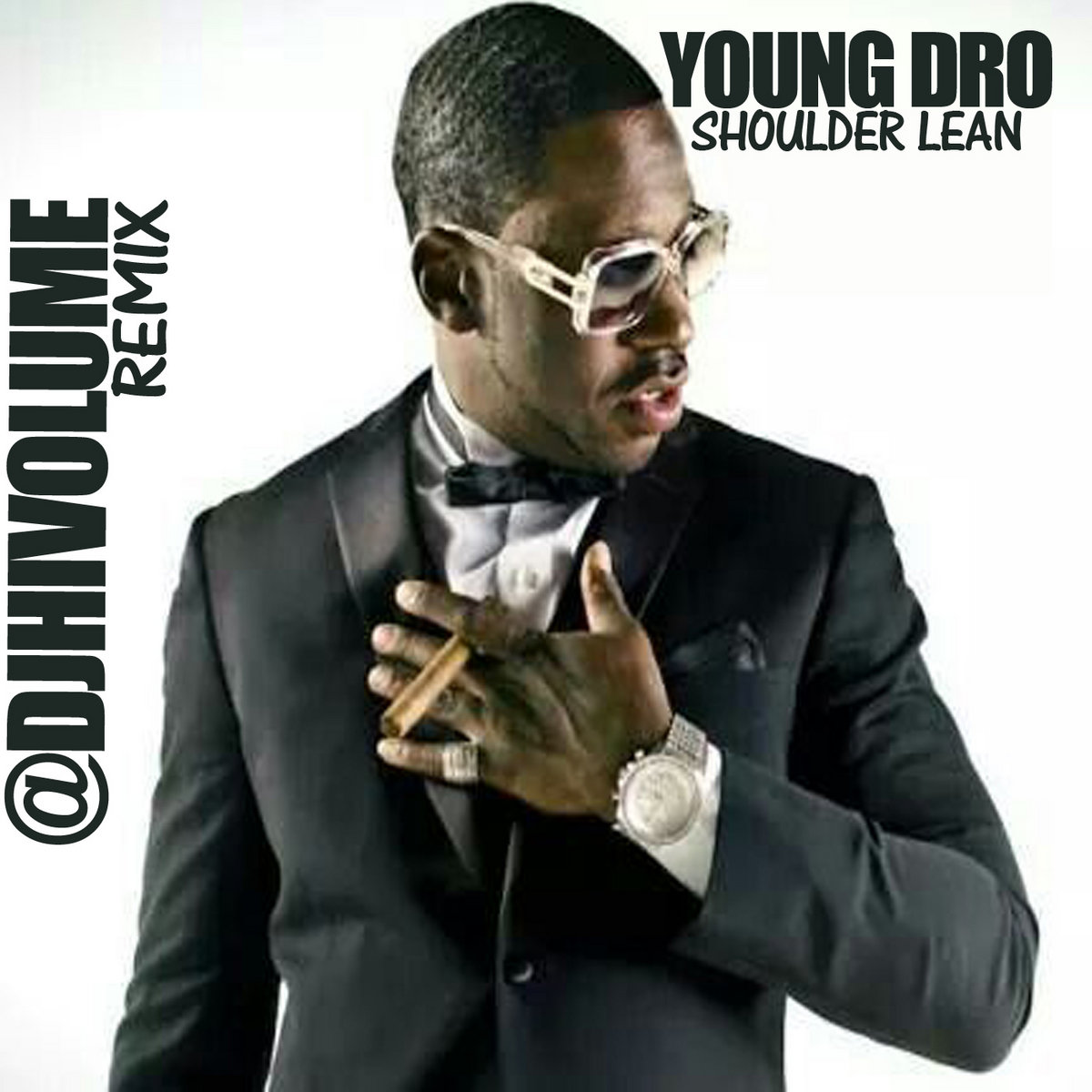
You can hear it. Those bright, synthetic horns start blaring, and immediately, your upper body just wants to tilt. It’s a physical reaction. That’s the legacy of the Young Dro Shoulder Lean song, a track that didn't just top charts but basically defined an entire era of Atlanta’s dominance in hip-hop.
Released in the summer of 2006, "Shoulder Lean" was everywhere. It was the ringtone you heard on every Motorola Razr. It was the anthem at every high school prom. Dro, signed to T.I.’s Grand Hustle label, managed to create something that felt both incredibly cool and deceptively simple.
The Magic Behind the Young Dro Shoulder Lean Song
Most people think a hit just happens. It doesn't. This track was the result of a very specific alchemy between Dro’s slick, eccentric wordplay and T.I.’s veteran presence. Young Dro, born Djuan Hart, brought a style to the table that was "nouveau riche" before that was even a common term in the rap lexicon. He talked about colors like they were flavors—carmine, custard, lime.
The beat, produced by C-Gutta, is a masterclass in mid-2000s Southern production. It's clean. It's bouncy. It leaves enough room for the lyrics to breathe while providing that heavy low-end needed for club speakers. Honestly, the simplicity is what made it a viral sensation before "viral" was even a digital metric we tracked. You didn't need to be a professional dancer to do the move. You just had to lean.
Dro’s flow on the Young Dro Shoulder Lean song is weirdly rhythmic. He’s not rushing. He’s confident. When he raps about "all-over print" and "Bape sneakers," he was documenting the exact moment streetwear began to swallow high fashion whole.
Why T.I. Was the Perfect Feature
T.I. was at the absolute peak of his powers in 2006. He had just released King. He was the self-proclaimed King of the South, and honestly, nobody was arguing with him at the time. By jumping on his protégé’s lead single, he gave Dro the "Grand Hustle" seal of approval.
Tip’s verse isn't just a throwaway. He brings that sharp, staccato delivery that contrasts perfectly with Dro’s more laid-back, "greasy" Southern drawl. It felt like a passing of the torch, or at least a widening of the circle. They weren't just making a song; they were building a brand.
The Cultural Impact of the Lean
Let's talk about the dance. The shoulder lean wasn't a complex choreographed routine like we see on TikTok today. It was a vibe. It was an attitude. It represented the "cool" of the South—relaxed, slightly arrogant, and completely unbothered.
- It democratized the dance floor. If you could stand, you could "Shoulder Lean."
- It crossed over. This wasn't just a "rap song." It hit number ten on the Billboard Hot 100. That’s huge for a debut single from a Southern rapper in that era.
- The fashion. In the music video, you see the oversized polos, the baggy jeans, and the colorful hats. It’s a time capsule of 2006 Atlanta.
Dro's obsession with "Polo" became his trademark. He wasn't just wearing the brand; he was synonymous with it. He made it okay for rappers to be preppy and hood at the same time. That's a shift we still see in the style of guys like Tyler, The Creator or A$AP Rocky today, even if the silhouettes have changed.
The Chart Performance and Real Numbers
"Shoulder Lean" peaked at number one on the U.S. Billboard Hot R&B/Hip-Hop Songs chart. It stayed there. People couldn't get enough of it. It eventually went triple platinum in mastertones. Remember when buying a 30-second clip of a song for $2.99 was a legitimate business model? Dro was the king of that world.
The album it came from, Best Thang Smokin', debuted at number three on the Billboard 200. While Dro had other hits like "FDB" later in his career, nothing ever quite touched the cultural saturation of the Young Dro Shoulder Lean song. It was a lightning-in-a-bottle moment.
Misconceptions About Young Dro's Career
A lot of people label Dro as a "one-hit wonder." That’s just objectively wrong. He’s a rapper's rapper. If you listen to his mixtapes, specifically the Day Two series, his lyrical dexterity is insane. He uses internal rhyme schemes that most "mainstream" rappers couldn't touch.
The problem—if you can call it that—is that "Shoulder Lean" was so massive it cast a shadow over everything else. When you create a cultural phenomenon, people expect you to do it again every single time. That’s a high bar. Dro stayed true to his sound rather than chasing another dance craze.
He also dealt with the "Grand Hustle" curse. Sometimes, being on a label with a superstar like T.I. means you're fighting for oxygen. But Dro never seemed bitter about it. He was the colorful, charismatic lieutenant who could always deliver a show-stopping verse.
The Production Secrets of C-Gutta
C-Gutta doesn't get enough credit for this beat. The way the snare hits is distinct. It’s snappy. It cuts through the muddy bass that dominated a lot of 2006 rap. If you listen closely, there’s a subtle "twinkle" in the background melody that keeps the song from feeling too aggressive. It’s a party record, through and through.
How to Appreciate the Song in the Modern Day
If you're revisiting the Young Dro Shoulder Lean song today, don't just look at it as a piece of nostalgia. Look at the technicality. Listen to the way Dro fits words together.
- Watch the music video. Pay attention to the cameos and the energy of the ATL scene at the time.
- Check the lyrics. Dro’s use of color and luxury imagery was way ahead of its time.
- Listen to the remix. The "Shoulder Lean" remix added even more flavor to the track and showed how much respect Dro had in the industry.
There’s a reason this song still gets played at weddings and sporting events. It’s infectious. It doesn't feel dated in a "cringe" way; it feels vintage in a "classic" way.
Actionable Takeaways for Rap Fans
If you want to truly understand the Atlanta rap explosion of the mid-2000s, you have to start here.
Analyze the flow. Try to map out Dro's rhyme scheme in the first verse. It's more complex than the catchy hook lets on.
Explore the discography. Move past "Shoulder Lean." Check out Best Thang Smokin' in its entirety. Tracks like "Rubber Band Banks" show his range.
Observe the influence. Watch modern artists like Young Thug or Gunna. You can hear pieces of Dro’s DNA in their "mumble-adjacent" but highly technical flows and their obsession with high-fashion aesthetics.
The Young Dro Shoulder Lean song is more than just a dance. It was a pivot point for Southern rap, moving it from the "crunk" era of the early 2000s into a more polished, lyrical, and fashion-forward space. It proved that you could be from the streets of Atlanta and still be the coolest, most sophisticated person in the room. Dro didn't just give us a song; he gave us a mood that hasn't faded in nearly two decades.
Next time you’re in the car and those horns come on, don't fight it. Just lean.
Next Steps for Deepening Your Knowledge
To get the full picture of this era, listen to T.I.'s King and Young Dro's Best Thang Smokin' back-to-back. Notice the shared production styles and the distinct lyrical approaches. You can also find several "Making of" interviews with C-Gutta online that explain the specific hardware used to get that iconic 2006 snap. Finally, look up Young Dro’s more recent freestyle appearances on platforms like "Sway in the Morning" to see how his lyrical ability has actually sharpened with age, proving he was always much more than just a "lean."