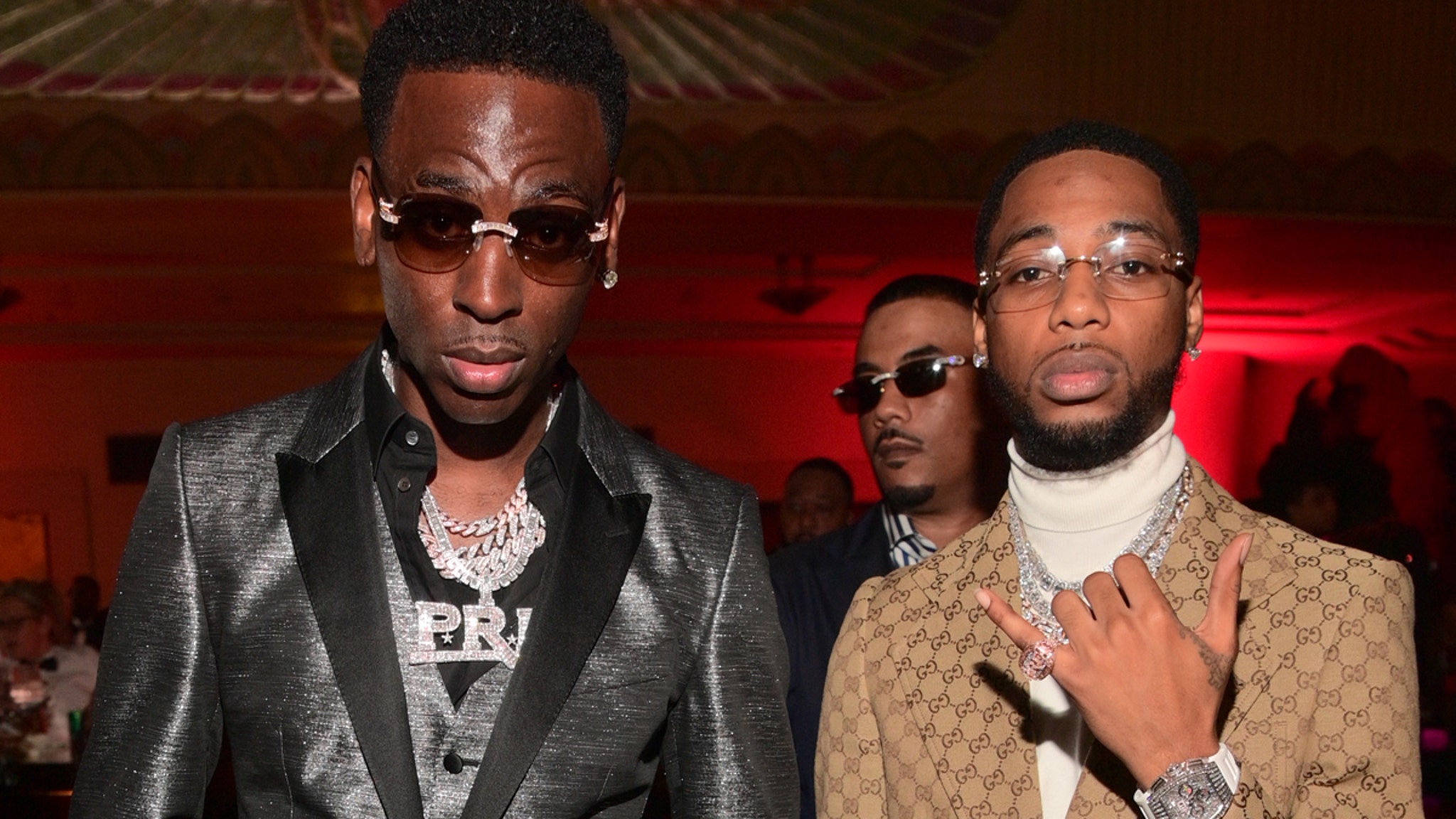
It was November 17, 2022. Exactly one year after the world lost Adolph Thornton Jr. to a senseless shooting in South Memphis. While fans were still mourning at Makeda’s Homemade Cookies, his estate did something heavy. They dropped Young Dolph Get Away.
It wasn't just a random vault scrap.
Most posthumous releases feel like a cash grab. You know the vibe—cluttered features, unfinished verses, and "frankensteined" beats that the artist never heard. This wasn't that. Get Away arrived as the lead single for Paper Route Frank, an album Dolph had basically finished before his passing. It was intentional. It was somber. And honestly? It was probably the most honest we ever saw the "Paper Route Frank" persona get.
The Sound of a Man Who Had Everything (and Wanted Out)
If you’re looking for the high-energy "Major" or "100 Shots" energy, this ain't it. Young Dolph Get Away is a mood. It’s produced by Sosa 808 and Ghostrage, built around a haunting, echoey vocal sample that just repeats "I wanna get away" like a ghost in the background.
Dolph sounds tired here. Not lazy—just weary.
He talks about the weight of the streets and the exhaustion of the rap game. There’s a specific line where he mentions tasting codeine when he burps. It’s a grim, visceral detail that grounds the song in a reality most rappers try to glaze over with jewelry talk. He mentions he’s tired of trapping, but he’s also tired of rapping. Think about that. The man who built an independent empire, Paper Route EMPIRE (PRE), was finally admitting the crown was heavy.
Why Young Dolph Get Away Hits Different Post-2021
Context is everything in hip-hop. When Dolph recorded this, he was a living legend. When we heard it, he was a memory. That shift changes the lyrics from "standard introspective rap" to something that feels like a premonition.
He raps about wanting to be with his grandmother. He says, "I wish I could go be with my granny." Knowing he joined her just a short time later makes that line almost impossible to hear without a lump in your throat. It’s not just a song; it’s a timestamp of his mental state during his final year.
Key facts about the release:
- Official Release Date: November 17, 2022.
- Album: The closing track of Paper Route Frank.
- Producer Credits: Sosa 808 and Ghostrage.
- Significance: Released on the first annual Adolph "Young Dolph" Thornton Jr. Day of Service in Tennessee and Georgia.
People often mistake this song for a "goodbye" letter. PRE CEO Daddy-O and others close to him have been vocal that it wasn't meant to be a farewell. It was just Dolph being Dolph—switching from a joke about his virginity in one song to deep, soul-searching vulnerability in the next. He contained multitudes.
The Memphis Connection and the "Getaway" Irony
There is a darker, more news-heavy side to the phrase "getaway" in the Dolph saga. In early 2022, police found a white Mercedes-Benz E-Class—the actual getaway car used in the shooting—parked at a home in Orange Mound.
The kicker? One of the suspects, Justin Johnson (who rapped under the name Straight Drop), actually filmed a music video in front of that house just days after the murder. The irony of the song title Young Dolph Get Away vs. the literal getaway car found in Memphis isn't lost on the fans. It adds a layer of grit and tragedy to the keyword that makes it haunt the search results.
But let’s stick to the music.
The visualizer for the song shows a cartoon Dolph on a beach. It’s peaceful. It’s the peace he rarely got in life, especially after surviving 100 shots in Charlotte and another shooting in Los Angeles. He was always moving, always looking over his shoulder, always "moving smart." On this track, he finally sounds like he’s stopped running.
What Most People Get Wrong About the Lyrics
A lot of listeners think Dolph was "predicting" his end. Humans love a good coincidence. But if you actually dive into his discography—stuff like Thinking Out Loud or Rich Slave—he was always talking about the proximity of death.
He wasn't a psychic; he was a realist.
In Young Dolph Get Away, he says "Don't nobody understand me." That’s the core of the song. Beyond the camo-wrapped Lamborghinis and the million-dollar independent deals, he was a guy from Castalia who missed his family. He mentions it’s been a while since he went to church. He talks about his kids. These aren't "rap tropes." They're the thoughts of a 36-year-old man who had conquered the industry but couldn't quite escape the gravity of where he came from.
How to Appreciate the Legacy Today
If you really want to understand the impact of this track, don't just stream it on repeat. You've gotta look at what it represents for the independent movement. Dolph proved you could be a mogul without a major label breathing down your neck.
- Listen for the production: Pay attention to how the Sosa 808 beat leaves space for his voice. It’s not cluttered.
- Check the album order: Listen to Paper Route Frank from top to bottom. Get Away is the final track. It’s the "period" at the end of the sentence.
- Support the mission: Look into the IdaMae Foundation. That was his family’s non-profit. They’re the ones keeping "Dolph Day" alive with community service, not just music drops.
Honestly, the best way to honor the "Get Away" spirit is to move like Dolph did—independently and with your people. He left behind a blueprint, not just a catalog.
Keep an eye on Key Glock and the rest of the PRE roster. They’re carrying the torch, but tracks like this remind us that there will never really be another Flippa. He was a one-of-one, and this song was his final, quiet moment of reflection before the world changed forever.
Next Steps for Fans: Go back and watch the "Hall of Fame" video, then play "Get Away" immediately after. The contrast between the "victory lap" and the "need for peace" tells the whole story of Young Dolph’s final year better than any documentary ever could.