Honestly, walking into a Tsui Hark movie is a bit like jumping into a blender filled with neon paint and historical footnotes. It's chaotic. It's loud. But man, Young Detective Dee Rise of the Sea Dragon really holds a special place in that wild filmography. Released in 2013, it had a massive job to do. It had to follow up the 2010 hit Mystery of the Phantom Flame, which featured the legendary Andy Lau. Replacing a titan like Lau with a younger, greener Mark Chao was a gamble.
People were skeptical.
Most fans wondered if a prequel could actually capture that "Sherlock Holmes meets Wuxia" vibe without feeling like a cheap cash grab. It didn't just meet expectations—it arguably surpassed them in terms of pure, unadulterated spectacle. This isn't just a movie about a guy solving crimes in the Tang Dynasty; it’s a high-fantasy fever dream involving underwater horses, tea laced with parasite larvae, and a "Sea Dragon" that looks like something out of a Lovecraftian nightmare.
The Weird Genius of Tsui Hark’s Vision
If you know anything about Hong Kong cinema, you know Tsui Hark is basically the "Godfather of the New Wave." He’s obsessed with technology. In Young Detective Dee Rise of the Sea Dragon, he pushed the boundaries of underwater 3D filming in a way that most directors at the time wouldn't touch. He used the Red Epic cameras in custom-built underwater housings. The result? Action sequences that feel fluid and genuinely disorienting in the best way possible.
The plot kicks off with the Tang Navy being absolutely decimated by a mysterious creature. The citizens of Luoyang are terrified. They think they’ve offended the gods. Enter Dee Renjie. He’s young, he’s a bit arrogant, and he’s just arrived to join the Daolusi (the Supreme Court).
What makes this specific entry in the franchise stand out is the dynamic between the leads. Mark Chao plays Dee with a sort of intellectual twitchiness. He’s paired with Feng Shaofeng, who plays Yuchi Zhenjin, the chief of the Daolusi. Yuchi is all red hair and simmering rage. They don't like each other. At all. This "buddy cop" energy gives the film a grounded core amidst all the CGI madness.
The Mystery of the Longevity Tea
Let's talk about the actual detective work. While the film is a spectacle, the core mystery involves "Longevity Tea." It’s a classic Tsui Hark trope: the corruption of something beautiful. The tea is being used to poison the imperial family and the elite of Luoyang.
It turns out the "Sea Dragon" isn't a god. It’s a biological weapon. Specifically, it’s related to a group of marginalized people—the Duiyidong—who are using toxic parasites to transform victims into "Sea Monsters." This reflects a recurring theme in the Detective Dee series: there is always a logical, albeit fantastical, explanation for the supernatural.
Dee’s brilliance lies in his ability to see through the superstition. While everyone else is praying to avoid a curse, Dee is looking at the chemical composition of the water and the biology of the parasites. It's basically forensic science in 665 AD.
Why the CGI Still Sparks Debate
Look, the CGI in Young Detective Dee Rise of the Sea Dragon isn't perfect. Even in 2026, looking back at 2013 tech, some of the compositing looks a bit "floaty."
But here’s the thing.
Hark uses CGI like a brush stroke, not a mirror. He’s not trying to make it look 100% "real." He’s trying to make it look like a moving painting. The scene where the "Sea Dragon" first emerges to crush the fleet is framed with such a sense of scale that you forgive the slightly soft textures. The creature design itself—a massive, armored crustacean-mammal hybrid—is terrifyingly unique.
Then there’s the "Bat Cave" sequence. Dee and his companion, the physician Shatuo Zhong (played by Lin Gengxin), have to infiltrate a mountain hideout. The verticality of the action here is insane. Characters are running up walls, swinging from ropes, and engaging in swordplay that defies every law of physics ever written. It’s pure Wuxia. It’s why we watch these movies.
Carina Lau as Empress Wu Zetian
You can't talk about this film without mentioning Carina Lau. She is the anchor. Her portrayal of Empress Wu Zetian is cold, calculating, and absolutely magnetic. In Rise of the Sea Dragon, we see her before she’s fully seized total power. She’s still vulnerable to the court’s politics, which makes her dangerous.
Her costumes alone probably cost more than some indie movies. The sheer detail in the silk embroidery and the towering headpieces serves a purpose. It shows the stifling weight of the Tang Dynasty’s bureaucracy. Wu Zetian isn't just a ruler; she’s an institution. When she looks at Dee, you can see her weighing his usefulness against his potential to be a nuisance. It’s a high-stakes chess game played with lives instead of wooden pieces.
Breaking Down the Action Choreography
The action was handled by Yuen Bun. If that name sounds familiar, it should. He’s a veteran of the Hong Kong action scene. In this prequel, the fighting style is notably different from the Andy Lau version.
- Dee's Style: More defensive, using his wits and a mace that can find the weak points in blades.
- Yuchi’s Style: Aggressive, using dual swords and incredible speed.
- The Monsters: Heavy, lumbering, and destructive.
The contrast works beautifully. One of the best fights takes place in a cliffside medical clinic. It’s cramped. It’s messy. It involves a lot of shattered porcelain. It forces the characters to use the environment, which is a hallmark of good action directing.
The Cultural Legacy of the Detective Dee Franchise
Dee Renjie was a real person. He was a magistrate and statesman under the reign of Empress Wu. While the movies take massive liberties—the real Dee probably didn't fight sea monsters—they capture the spirit of the "Gong'an" fiction. These are traditional Chinese detective stories where the protagonist is a moral paragon fighting against both criminals and supernatural forces.
Young Detective Dee Rise of the Sea Dragon successfully modernized this genre for a global audience. It paved the way for the third film, The Four Heavenly Kings, which went even deeper into the "illusion vs. reality" theme.
What’s interesting is how the film treats its "villains." The Duiyidong aren't just evil for the sake of being evil. They are a displaced people seeking revenge for how they were treated by the Empire. It adds a layer of political nuance that you don't always get in a summer blockbuster. It asks the question: is the Empire worth saving if it treats its fringes with such cruelty?
Technical Specs Worth Noting
For the nerds in the room, the film was a massive production.
- Budget: Roughly $30 million USD, which was huge for the Chinese market at the time.
- Box Office: It raked in over $90 million, proving that the franchise had legs without Andy Lau.
- VFX Houses: A mix of Korean and Chinese studios worked on the over 1,000 VFX shots.
The sound design also deserves a shoutout. The roar of the Sea Dragon wasn't just a generic monster noise. It was a layered mix of animal sounds and mechanical grinding, intended to make the creature feel "ancient" and "other."
What Most People Get Wrong About the Plot
A common complaint is that the plot is too convoluted. I disagree. It’s actually quite linear if you pay attention to the tea.
The tea is the "MacGuffin." Everything revolves around who has the tea, who is drinking it, and where the ingredients come from. Once you realize the Sea Dragon is a distraction created by the poisoned victims' mutations and the Duiyidong’s engineering, the pieces fall into place.
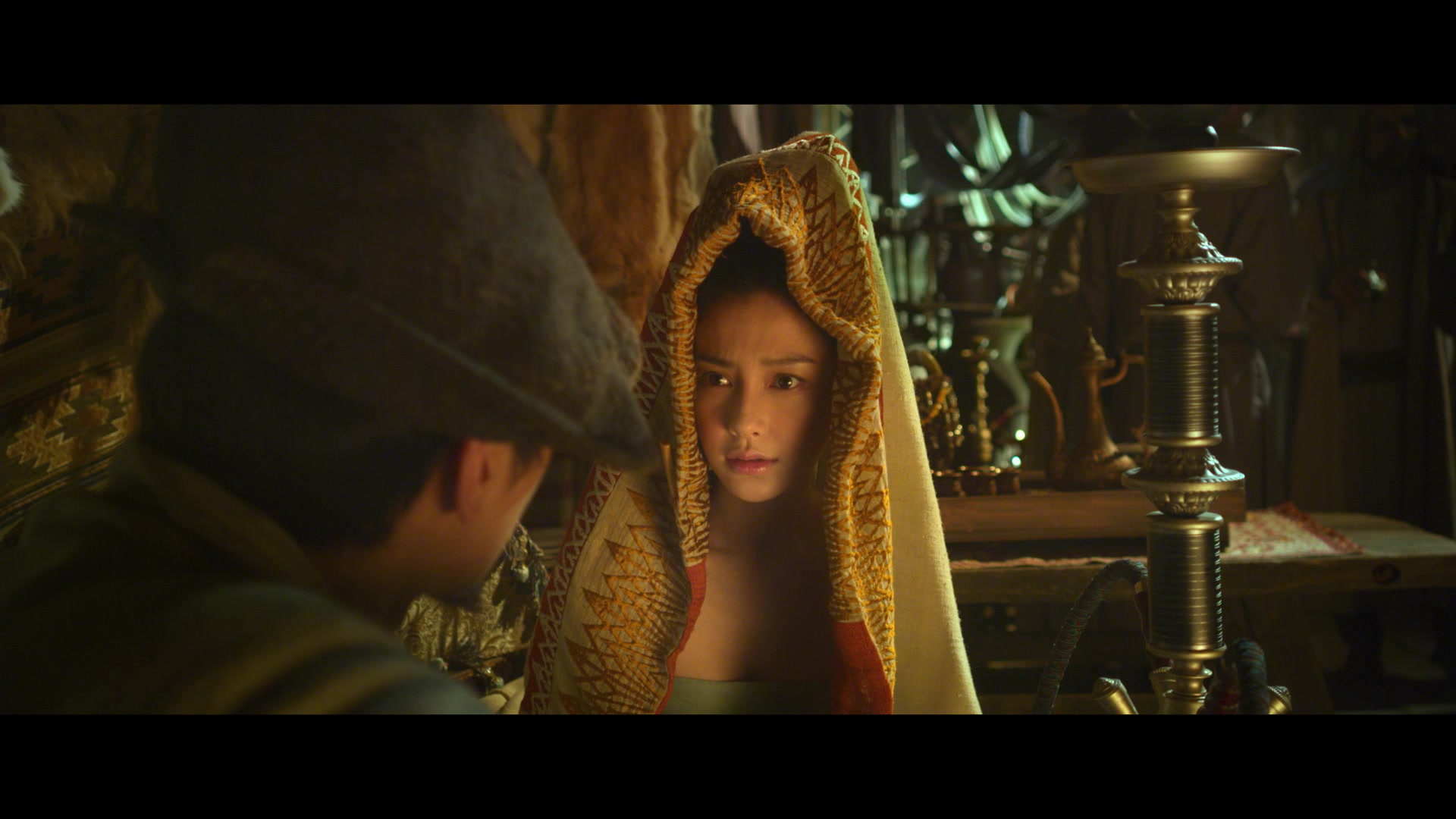
Also, some viewers think the romance between Yuan Zhen (the "Sea Monster" scholar) and the courtesan Yin Ruiji (played by Angelababy) is fluff. It's not. It’s the emotional heart of the movie. It represents the tragedy of the Duiyidong's plot—innocent people caught in the crossfire of a biological war. Their story is a classic "Beauty and the Beast" retelling set against the backdrop of imperial intrigue.
How to Watch It Today
If you’re planning on revisiting this gem, try to find the Blu-ray or a high-bitrate 4K stream. The colors are so saturated that lower-quality versions tend to "smear," especially during the fast-paced night scenes.
Actionable Steps for the Best Experience:
- Watch the Trilogy in Order of Release: Even though this is a prequel, watch the 2010 Phantom Flame first. It makes the younger versions of the characters in Rise of the Sea Dragon more interesting because you know who they become.
- Pay Attention to the Background: Tsui Hark loves "clutter." The markets of Luoyang are filled with actual period-accurate details (mixed with fantasy elements).
- Subtitle Choice: If you can, go with the original Mandarin audio and English subtitles. The dubs often lose the poetic nature of the dialogue, especially the verbal sparring between Dee and the Empress.
- Check Out the Making-Of: The featurettes on the underwater filming are genuinely fascinating and show just how much of a mad scientist Tsui Hark really is.
Young Detective Dee Rise of the Sea Dragon isn't just a movie; it's a testament to the fact that you can have a big, loud, CGI-heavy blockbuster that still has a brain and a heart. It respects the history of the character while throwing him into a world of impossible imagination. Whether you're there for the mystery or the monster, it delivers.
To fully appreciate the scope of this world, look into the actual history of Empress Wu Zetian. Understanding her rise to power makes her portrayal in these films—as a woman constantly under threat but always three steps ahead—far more impressive. Dig into the history of the Tang Dynasty's "Silk Road" influence as well, as it explains the diverse cast of characters and the melting-pot vibe of Luoyang seen on screen.