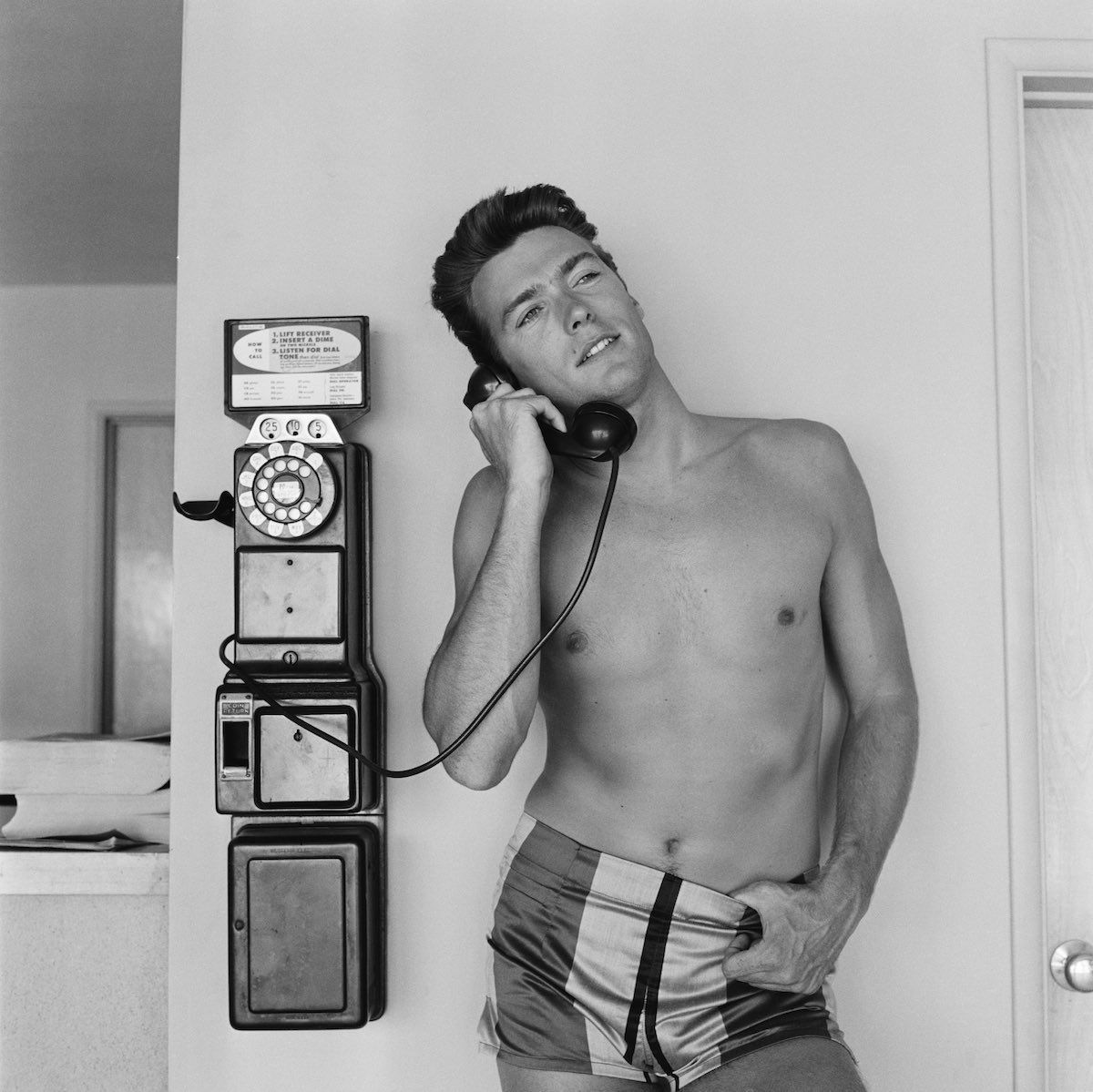
Ever scrolled past one of those grainy, black-and-white pics of young Clint Eastwood and felt like you were looking at a different species? You’re not alone. Long before he was the gravel-voiced patriarch of American cinema or the guy talking to an empty chair, Clint was basically the blueprint for "Old School Cool."
He was huge. Literally.
When he was born in San Francisco back in 1930, the hospital staff nicknamed him "Samson" because he weighed 11 pounds and 6 ounces. Most newborns are barely the size of a sourdough loaf, but Clint showed up ready to haul timber. Honestly, looking at those early shots of him—6’4”, lean, and looking like he was carved out of California redwood—it’s easy to see why Hollywood didn't know what to do with him at first.
The Rough Beginnings of a Screen Icon
Before the fame, there were the jobs. Real jobs. The kind that leave you with callouses and stories. If you find a photo of Clint from the early 50s, he’s probably sweaty. He wasn’t sitting in a Starbucks waiting for his big break; he was baling hay, fighting forest fires, and working as a lifeguard at Fort Ord.
There’s this one legendary story about a plane crash. In 1951, Clint was hitching a ride on a Navy bomber that ran out of fuel and ditched in the Pacific. He and the pilot had to swim two miles through shark-infested waters to the shore at Point Reyes.
Two miles.
Most people today get winded walking from the parking lot to the theater. But that ruggedness wasn't an act. When you see those pics of young Clint Eastwood where he looks genuinely exhausted or grit-covered, remember he’d already survived things most "tough guy" actors only read about in scripts.
Breaking Into the Studio System
When he finally got to Universal, it wasn't exactly a red-carpet welcome. Director Arthur Lubin thought he was "quite amateurish" during his first audition. He told Clint he didn't know which way to turn or how to move. Still, his physical presence was so undeniable that they gave him a contract for 100 bucks a week.
His early filmography is a weird trip:
- Revenge of the Creature (1955) – He’s a lab tech.
- Tarantula (1955) – He’s a pilot wearing a mask.
- The First Traveling Saleslady (1956) – A supporting role where he’s basically just being handsome.
He eventually got fired. Universal dropped his option in 1955, and he went back to digging swimming pools to pay the bills. It’s a wild thought—the man who would become the most powerful person in Hollywood was once just another tall guy with a shovel in Los Angeles.
Rawhide and the Birth of a Look
Everything changed with Rawhide. If you’re looking for the definitive pics of young Clint Eastwood, look for Rowdy Yates. For eight seasons, he played the "hotheaded" second-in-command, and this is where the style we associate with him really baked in.
The denim. The neckerchiefs. The way he sat on a horse.
He did his own stunts, too. In a 1959 interview, he mentioned it was more "gratifying" to do the action himself. He stayed in incredible shape, lifting weights when most actors were just focused on their cocktail hour. He even practiced a low-fat, high-protein diet decades before it became a trendy TikTok "What I Eat in a Day" video.
Why the Internet Loves These Images
There’s a reason these photos go viral every few months. It’s the "classic" factor. Put a young Clint in a plain white t-shirt and jeans, and he could walk into a bar in 2026 without looking out of place. He wasn't chasing trends.
A lot of people think he came from a struggling Depression-era family, and while his father did move around for work, they were actually doing alright in Piedmont. They had a pool. They belonged to a country club. Clint just happened to have a blue-collar soul. He preferred the "individual pursuits" like golf and tennis over team sports, which probably explains that solitary, "Man with No Name" vibe he perfected later in Italy.
What to Look For in Rare Clint Collections
If you're a collector or just a fan, keep an eye out for the candid shots taken on location for A Fistful of Dollars (1964). Those are the bridge between the "pretty boy" Rowdy Yates and the lethal, squinting icon we know now.
You’ll notice a shift in his eyes. He stopped trying to look like a movie star and started looking like a guy who had seen too much.
Next Steps for Fans: If you want to dive deeper into this era, skip the highlight reels. Go find a copy of Ambush at Cimarron Pass (1958). Clint famously called it the "low point" of his career and almost quit acting because of it. Seeing him struggle in a mediocre Western makes his eventual rise to greatness feel a lot more human. Also, look for the photos of him playing ragtime piano in Oakland bars—he was a musician long before he was a director, and those rare shots show a side of him that isn't just "tough."
The lesson here? Even if you're 6'4" and look like a Greek statue, the road to the top is usually paved with rejections and plane crashes.