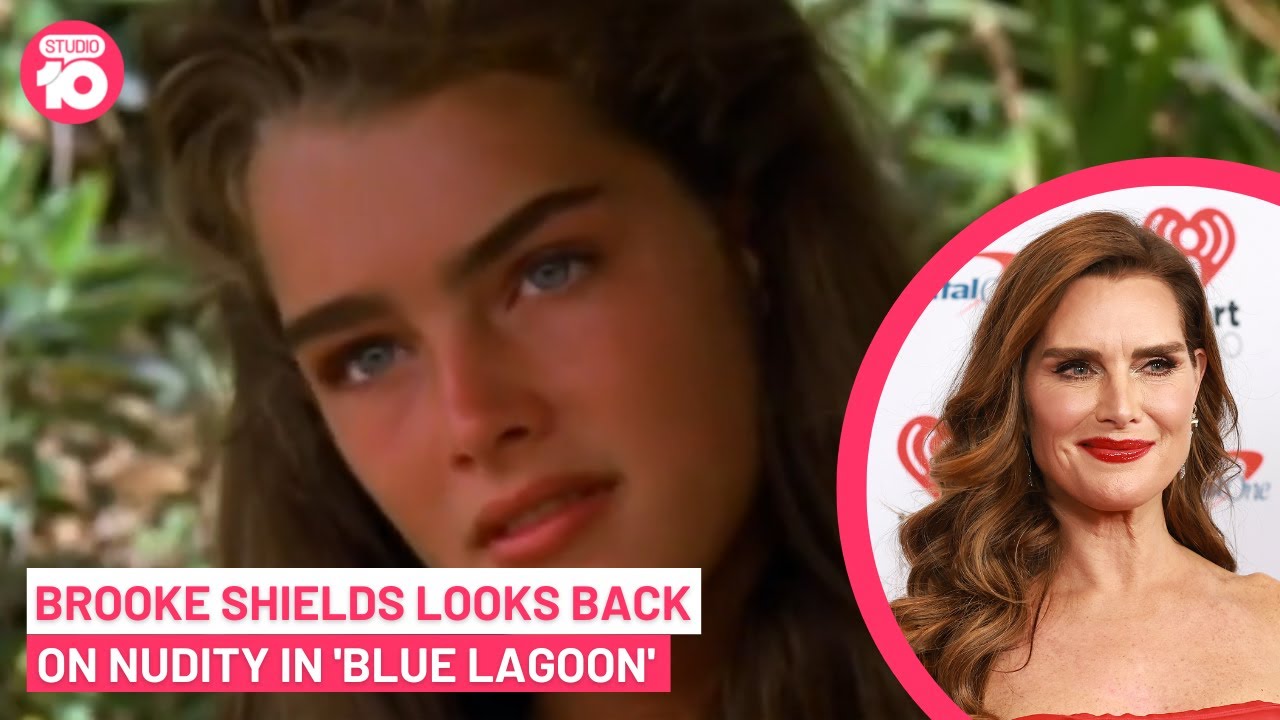
It was 1980. People were flocking to theaters to watch two teenagers basically live out a shipwrecked fever dream in the South Pacific. You probably know the image: a young Brooke Shields with impossibly long hair, sun-kissed skin, and that piercing gaze that made her the "face of the eighties." The Blue Lagoon wasn't just a movie; it was a massive cultural event that pulled in over $58 million at the domestic box office.
But looking back now? It's kind of a mess. Honestly, the way we talk about Brooke Shields and that island today is worlds apart from how it was handled back then.
People love to debate the "scandal" of it all, but they usually miss the weird, gritty reality of what actually happened on that beach. This wasn't some pampered Hollywood set. It was a five-month grind on a remote Fijian island with no running water and a crew that lived in tents. Brooke was only 14. Her co-star, Christopher Atkins, was 18. The power dynamic was... well, let's just say it was complicated.
The Body Double Secret and That Infamous Hair
One of the biggest misconceptions about young Brooke Shields in Blue Lagoon is that she was actually naked on screen. She wasn't. Because she was a minor, the production had to be incredibly careful—or at least, legally careful.
They hired Kathy Troutt, the film’s 32-year-old stunt coordinator, to serve as Brooke's body double for the more explicit shots. If you see a "dorsal" (back) shot of Emmeline walking along the shore or swimming underwater, you’re almost certainly looking at a grown woman, not a 14-year-old.
But even with a double, the director, Randal Kleiser, wanted certain shots of Brooke herself to look "natural." This led to one of the most bizarre behind-the-scenes facts: they literally glued her hair to her chest.
"In Blue Lagoon, I'm using a glue gun, taping my hair, anything I can so my body doesn't show... and I didn't realize I was doing it, because I was a kid." — Brooke Shields, Now What? podcast.
Think about that for a second. A teenager on a beach, in the middle of a tropical heatwave, having her hair wig-glued to her skin just so the camera wouldn't catch a glimpse of her nipples. They even used "bumpy pads"—flesh-colored stickers—for extra coverage because, apparently, a nipple was where the 1980s censors finally decided to draw a line.
Why the Movie Would Never Be Made Today
In 2026, the idea of The Blue Lagoon being greenlit by a major studio is laughable. Brooke herself has said as much. It's not just the nudity; it's the entire vibe of the production.
- The Chemistry Pressure: The crew "desperately" wanted Brooke and Christopher to fall in love for real. They were constantly pushing them together, trying to spark a romance that just wasn't there.
- Animal Welfare: By modern standards, the production was a nightmare for local wildlife. Atkins has admitted they were spearing fish and disturbing the ecosystem in ways that would result in massive fines today.
- The "Pawn" Sentiment: In her recent documentary Pretty Baby, Brooke described herself as a "commodity." She wasn't an actress with agency; she was a piece of the set meant to serve a male-driven narrative.
It's actually fascinating how much people got wrong about her at the time. Most viewers assumed she was this "sex symbol" in the making. In reality? She hadn't even had her first real-life kiss when she was filming these romantic scenes. There was a massive gap between the "Emmeline" the world saw and the Brooke who was just trying not to get pneumonia in the island rain.
The Accidental Science of the Lagoon
Here is a detail most people totally miss: The Blue Lagoon actually led to a scientific discovery. While watching the film, a herpetologist named John Gibbons noticed a lizard in the background that he didn't recognize.
He eventually traveled to the filming location on Nanuya Levu and discovered an entirely new species: the Fiji Crested Iguana.
It’s one of the few purely "good" things to come out of the production. While the critics were busy shredding Brooke’s acting—she actually won the first-ever "Worst Actress" Razzie for this role—scientists were using her close-ups to identify endangered reptiles. Talk about a weird legacy.
What Really Happened with the Ending?
There is still a lot of confusion about the ending of the film. After Richard and Emmeline (and their baby, Paddy) eat the "berries that make you sleep," they're found drifting in a boat by Richard's father.
Is it a tragedy? A happy ending?
The movie stays true to the 1908 novel by Henry De Vere Stacpoole. When the sailor finds them, he says, "They're asleep." In the context of the book and the film, they survive. They aren't dead. They’re just... in a deep, berry-induced coma. It’s meant to be a hopeful rescue, though most modern audiences find it pretty grim.
What to Do if You're Revisiting This Era
If you're looking back at young Brooke Shields in Blue Lagoon, don't just watch the movie. It’s a beautiful piece of cinematography (Néstor Almendros was nominated for an Oscar for a reason), but it lacks context.
- Watch "Pretty Baby: Brooke Shields" on Hulu. It gives the "commodity" perspective that the 1980s media completely ignored.
- Look for the Iguanas. If you do re-watch the film, keep an eye out for those Fiji Crested Iguanas. It’s a fun way to engage with the film without getting bogged down in the controversy.
- Check the 1949 Version. If you want to see how this story was handled before the "shock value" of the 80s, the Jean Simmons version is actually quite good and focuses more on the survival aspect.
Ultimately, The Blue Lagoon remains a time capsule. It represents a moment in Hollywood where the line between "art" and "exploitation" was basically non-existent. Brooke Shields didn't just survive an island; she survived an industry that was trying to turn her childhood into a product before she even knew what that meant.
To really understand the impact of this era, the next step is looking into how Brooke's transition to Princeton University in 1983 was actually her way of reclaiming her identity after the "island girl" persona took over her life.