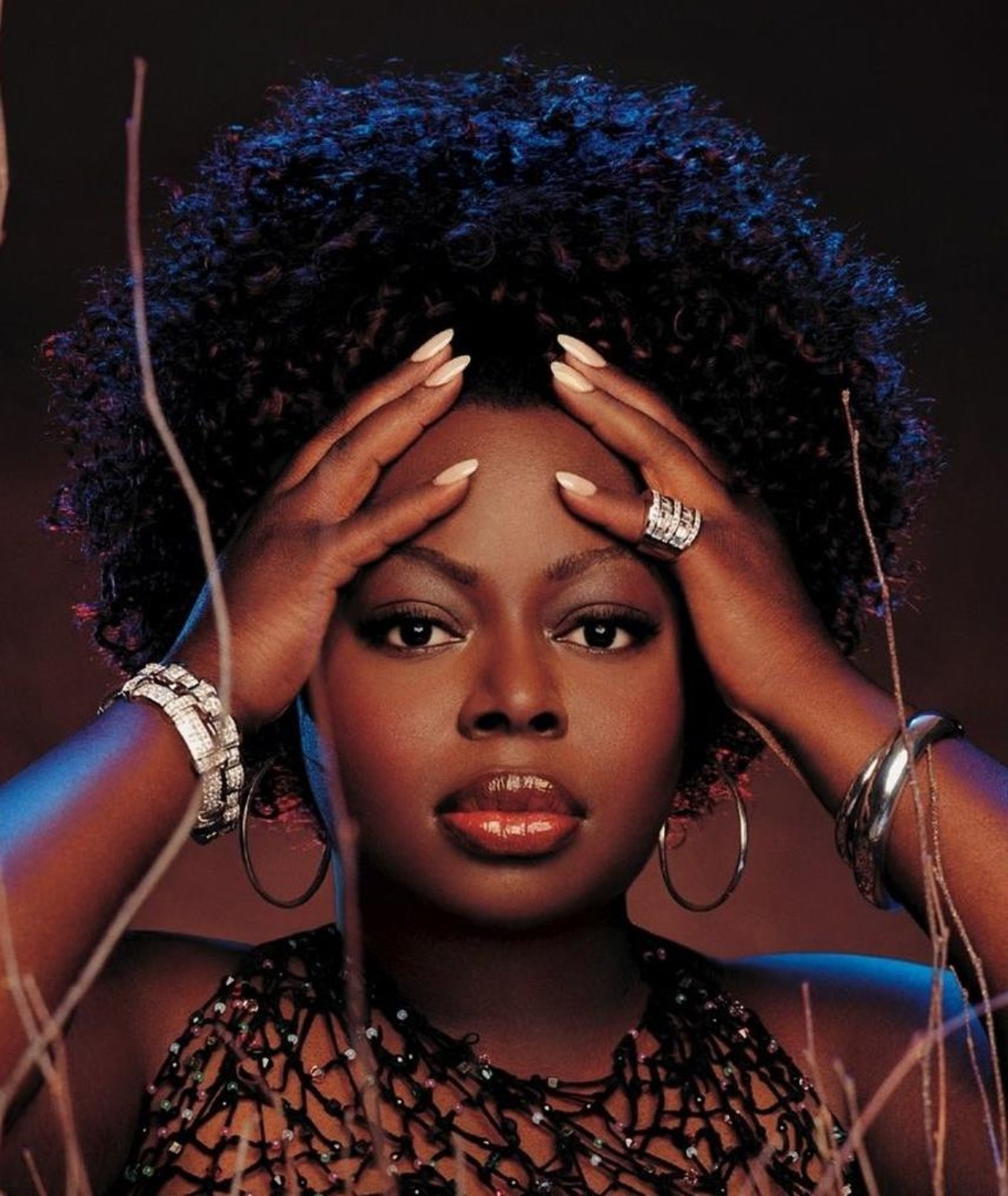
Most people remember Angie Stone as the powerhouse neo-soul queen of the late 90s. They think of the velvet voice behind "No More Rain (In This Cloud)" or the heartbreak anthem "Wish I Didn't Miss You." But if you only know that version of her, you’re missing the most fascinating part of the story. Long before she was a solo star, she was a teenager from South Carolina making hip-hop history. Honestly, her early years are a masterclass in hustle.
She wasn't always Angie Stone. Born Angela Laverne Brown in 1961, she grew up in the Saxon Homes projects of Columbia, South Carolina. Life wasn't easy, but it was loud. Her father, Bobby Williams, was a gospel singer. He was a local legend in his own right, and that church influence soaked into her bones early on. You can hear it in everything she ever recorded.
By the time she reached high school at C.A. Johnson, she wasn't just singing. She was an athlete. She was actually a standout basketball player. She had several scholarship offers on the table. But the music was pulling harder. She and her friends—Gwendolyn Chisolm and Cheryl Cook—were cheerleaders who started writing their own cheers. Those cheers turned into rhymes. Those rhymes turned into a career that would literally change the face of the music industry.
The Sequence: How Young Angie Stone Invented Female Rap
It’s 1979. Hip-hop is a New York thing. If you aren't from the Bronx or Harlem, you basically don't exist in the rap world. Then came young Angie Stone, performing under the name Angie B.
The story sounds like a movie script. The three girls heard that The Sugarhill Gang was coming to Columbia. They didn't just go to watch; they blagged their way backstage. They found Sylvia Robinson, the CEO of Sugar Hill Records, and gave her an impromptu audition right then and there. Robinson was the "Godmother of Hip Hop," and she knew a hit when she heard one. She signed them on the spot.
They became The Sequence.
They weren't just "some group." They were the first all-female rap group to sign to a major label. They were the first to go gold. Their 1979 hit "Funk You Up" hit number 15 on the Billboard Hot Soul Singles chart. Think about that. At sixteen or seventeen years old, Angie was touring with Grandmaster Flash and the Furious Five. She was a pioneer in a genre that didn't even have a name yet.
The Sequence didn't just rap; they were musical. Unlike many early hip-hop records that relied on heavy sampling, "Funk You Up" was original. It had a groove that worked in clubs and on the radio. They paved the way for Salt-N-Pepa, Queen Latifah, and every female MC that followed. But the industry was rough. Despite their success, the girls felt they weren't getting their fair share of the money. By 1985, they walked away from Sugar Hill Records.
From Angie B to the Voice of Neo-Soul
The transition from a teen rapper to a soul icon wasn't overnight. It was a grind. After The Sequence, she moved to New York. She worked at Kiss-FM. She did whatever it took to stay in the game. This period of her life is often overlooked, but it's where she sharpened her tools.
She started collaborating with everyone. She worked with Mantronix. She played saxophone and sang for Lenny Kravitz. Yeah, she was that talented. In the early 90s, she formed the trio Vertical Hold. They had a massive R&B hit with "Seems You're Much Too Busy." It was smooth, sophisticated, and a far cry from the "Angie B" persona.
But the real magic happened behind the scenes. She became a secret weapon for other artists. She co-wrote and co-produced on D’Angelo’s landmark album Brown Sugar. She helped craft his image. She was writing for Mary J. Blige and Alicia Keys. She was the architect of a sound that people were starting to call "neo-soul," even though she’d been doing it for years.
The Legacy of a Pioneer
When Black Diamond finally dropped in 1999, the world acted like she was a new artist. She was 38. In an industry obsessed with youth, she was a "newcomer" who had already been in the business for twenty years. That’s why her music felt so deep. It wasn't manufactured. It was lived in.
Tragically, we lost her in March 2025. A car accident in Alabama took her at age 63. It was a shock to the community because she was still so active, still performing, and still advocating for health issues like diabetes. She left behind a legacy that bridges the gap between the birth of hip-hop and the peak of modern R&B.
If you want to truly appreciate her, don't just stream her solo hits. Go back. Find the old 12-inch records of The Sequence. Listen to the background vocals she did for Lenny Kravitz. Look at the credits on those early D'Angelo tracks.
Next Steps to Explore Her Catalog:
- Listen to "Funk You Up" (1979): Hear the raw energy of a teenage Angie B before she became a soul singer.
- Spin "Seems You're Much Too Busy" (1993): This is the bridge between her rap roots and her solo stardom.
- Check the Credits: Look up the liner notes for Brown Sugar or Voodoo to see her influence on the neo-soul movement's foundation.
- Watch Live Clips: Find footage of her 2023 interviews where she reflects on being a woman in the early days of hip-hop.
Angie Stone was never just a singer. She was a survivor, an athlete, a rapper, and a songwriter who built the house that many modern artists still live in today.



