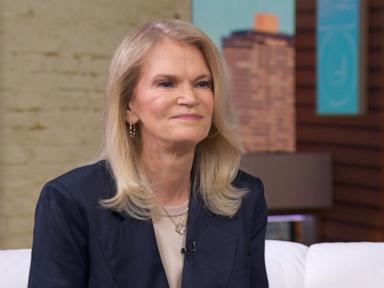
We like to think we know what a hero looks like. Hollywood gives us capes and perfectly timed explosions. History books give us stoic statues. But after twenty-five years reporting from front lines and muddy trenches, ABC News anchor Martha Raddatz thinks we are looking in the wrong direction.
Her new book, The Hero Next Door: Stories of Patriotism and Purpose, hits the shelves today. It skips the grand political grandstanding of Washington and focuses entirely on the ordinary people who did the impossible when the world caught fire after 9/11. For a different view, check out: this related article.
If you are expecting a standard military history text, you will be disappointed. This is a collection of deeply intimate portraits showing what happens when normal lives smash into catastrophic moments. Raddatz uses her decades of trust with service members to bring us into the rooms, the cockpits, and the operating theaters where life-altering choices are made in a fraction of a second.
The Quiet Reality of Modern Sacrifice
Most civilians have a massive disconnect when it comes to the military. We say "thank you for your service" at airports, but we rarely understand what that service actually costs. Raddatz addresses this gap by profiling ten specific individuals. She tracks how their lives transformed on the battlefield and, perhaps more importantly, how they rebuilt themselves afterward. Related insight on this trend has been shared by Rolling Stone.
Take Kevin Shaeffer. On September 11, 2001, he was a young naval officer working at the Pentagon. The plane hit, and his environment turned into an inferno. He survived with severe burns over nearly half his body. Instead of letting that trauma break his spirit, that brutal morning fueled a relentless determination to assist the intelligence efforts to hunt down Osama bin Laden.
Then there is Josh Webster. He is an Air Force rescue parajumper. Think about dangling by a single rope under heavy enemy fire in the jagged mountains of Afghanistan just to pull a fallen comrade to safety. It is the kind of story that makes your heart race, but Raddatz records it with a grounded realism that focuses on the human fear and focus rather than stylized bravado.
Rebuilding After the Smoke Clears
The book does not stop when the deployment ends. Raddatz understands that the toughest battle often starts when the uniform comes off. The transition back to civilian life is messy, jarring, and frequently isolating.
- Mark Little lost his legs when an IED blasted through his convoy in Iraq. His story in the book focuses on his second act: turning his pain into a mission to help other wounded veterans put their lives back together.
- Dr. Rocco Armonda, a neurosurgeon who deployed to Iraq, faced a different kind of pressure. He worked late into the night pioneering fresh surgical techniques to treat complex traumatic brain injuries under basic field conditions. His innovations saved countless lives overseas and fundamentally changed how head trauma is treated back home.
These are not stories of flawless individuals who feel no pain. They are stories of people who felt broken, faced staggering odds, and made a conscious choice to keep moving forward.
What True Patriotism Looks Like in 2026
We live in an era where the word "patriotism" gets thrown around as a political weapon or a marketing slogan. It has been co-opted by loud voices on television and social media. Raddatz offers a necessary correction to that noise.
True patriotism isn't about shouting down your neighbors or waving a flag for attention. The individuals in this book didn't join the military because they wanted to be famous. Some joined to escape abusive homes. Others joined when their entire social circle told them it was a terrible mistake. They went because they felt a pull toward something larger than their own small world.
The most striking takeaway from these interviews is how uncomfortable these heroes are with the label itself. As the legendary Kirkus Review pointed out in its assessment of the book, the easiest way to find a real hero is to find the person who adamantly claims they were just doing their job.
The Takeaway for the Rest of Us
You don't need to join the military to learn from the accounts Raddatz shares. The underlying theme of the book is that character is built in the quiet moments before the crisis hits. You don't suddenly become brave when a crisis happens; you rely on the habits, discipline, and empathy you practiced when nobody was watching.
If you want to understand the true cost of the post-9/11 conflicts, stop reading policy papers and start reading about the people who actually lived through them. Grab a copy of The Hero Next Door. Read one chapter at a time. Talk about it with your family. Then, look around your own neighborhood. The most extraordinary people are usually the ones making the least amount of noise.