Walk into a pub in Liverpool or Glasgow on a Saturday afternoon and you’ll hear it. It’s that slow, building swell of voices that starts as a hum and ends as a roar. Most people think of You'll Never Walk Alone as a football anthem first and a song second. But honestly? The story is way weirder than just some guys in scarves singing at a pitch. It actually started on Broadway in 1945. Imagine that: the toughest fans in world football are effectively singing a show tune from a musical about a carousel barker who commits suicide.
It’s kind of wild when you think about it.
The Broadway Birth of a Secular Hymn
Back in the mid-forties, Richard Rodgers and Oscar Hammerstein II were the kings of the musical world. They wrote Carousel, which is a pretty dark story compared to the bubbly stuff people usually associate with old theater. In the second act, a character named Nettie Fowler sings You'll Never Walk Alone to comfort her cousin, Julie Jordan, after Julie's husband, Billy Bigelow, dies.
It wasn't meant to be a stadium anthem. It was a funeral song.
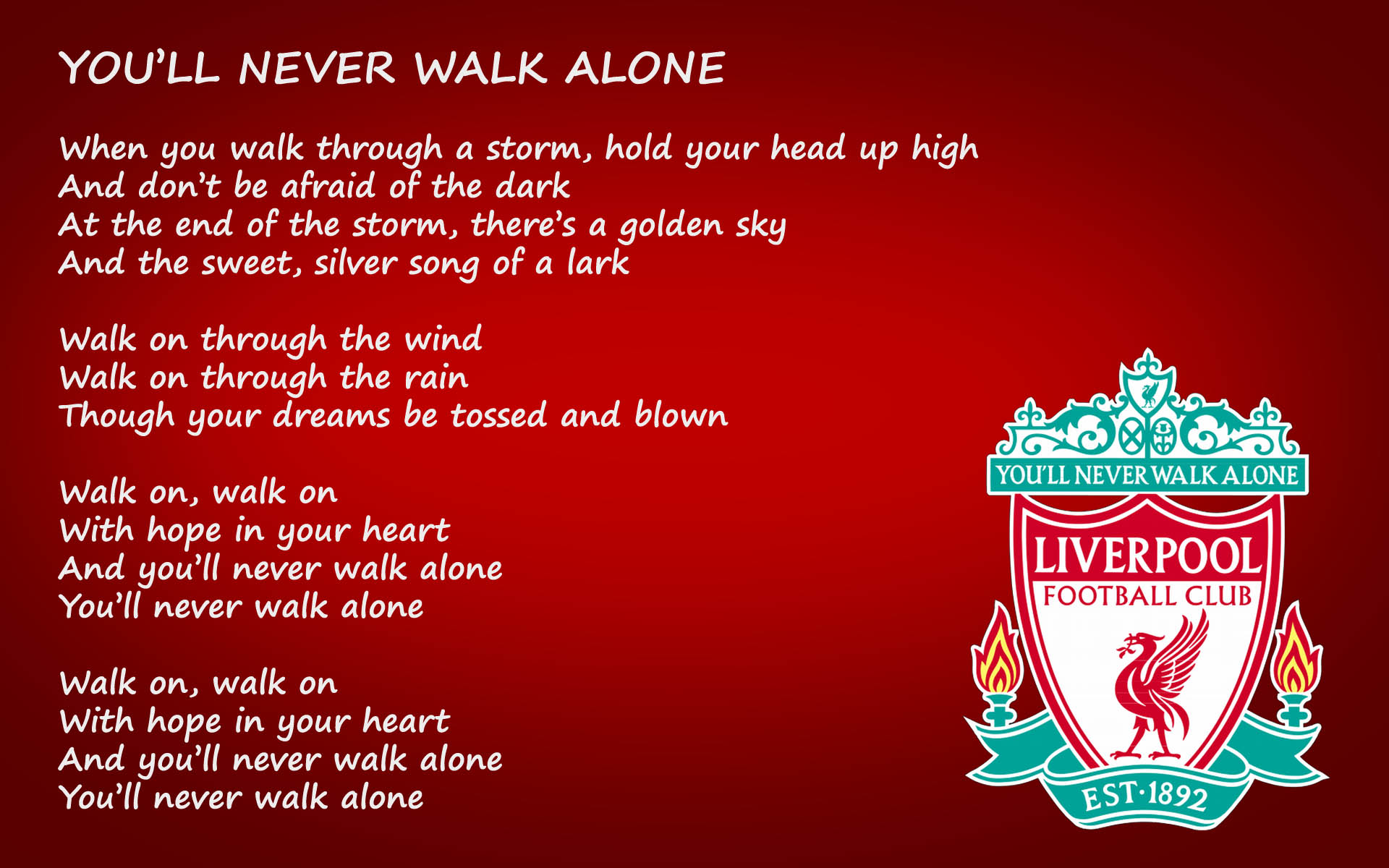
The lyrics are basically a survival guide for grief. You’ve got "walk on through the wind" and "walk on through the rain," which sounds like a metaphor until you’re actually standing in a freezing rainstorm at Anfield in January. Then it feels very literal. Irving Berlin, who wrote "White Christmas" and knew a thing or two about hits, once told Hammerstein that the song had the same emotional weight as the 23rd Psalm. That's high praise from a guy who basically invented the American songbook.
How a Local Band Stole the Show
So, how did a 1940s Broadway ballad become the soundtrack to a sport known for its grit?
Basically, you can thank Gerry Marsden. He was the frontman of Gerry and the Pacemakers, a Merseybeat band from Liverpool that was actually competing with the Beatles for chart space in the early sixties. In 1963, they recorded a cover of the song.
It was a huge risk.
Their manager, Brian Epstein, and their producer, George Martin (yeah, the same guy who produced the Beatles), weren't convinced. They wanted the band to stick to "beaty" pop songs. But Gerry insisted. He liked the drama of it. He wanted that big, emotional crescendo. The single hit number one in the UK, and that’s when the legend really started.
The Anfield Connection
Back then, the PA system at Anfield (Liverpool FC’s stadium) would play the top ten songs of the week in descending order. The crowd would sing along to whatever was popular. Because You'll Never Walk Alone stayed at number one for a while, the fans got used to singing it every week.
But then something cool happened.
The song dropped out of the charts, but the fans didn't stop. They kept singing it anyway. They’d actually shout "Where's our song?" if the DJ didn't play it. Bill Shankly, the legendary Liverpool manager at the time, reportedly told Gerry Marsden, "Gerry my son, I have given you a football team and you have given us a song."
It’s Not Just a Liverpool Thing
While Liverpool fans will fight you if you say otherwise, they aren’t the only ones who claim it. Celtic fans in Glasgow have a massive connection to the song too. They say they started singing it after a 1966 Cup Winners' Cup semi-final against Liverpool.
Then there’s Borussia Dortmund in Germany.
If you ever watch a game at the Westfalenstadion, seeing 25,000 fans on the "Yellow Wall" belt out You'll Never Walk Alone is enough to give you chills even if you hate sports. It’s also huge in the Netherlands with teams like FC Twente and Feyenoord. It has become this weird, universal language of loyalty that transcends borders.
The Darker Side of the Anthem
You can't talk about this song without talking about tragedy. It became the ultimate anthem of resilience after the Hillsborough disaster in 1989, where 97 fans lost their lives. In the days following the crush, the song wasn't just a chant; it was a way for a city to mourn without words.
There's a famous recording of a choir boy singing it at a memorial service with thousands of people spilling out into the streets. It’s haunting.
It’s also one of the most popular funeral songs in the UK. Why? Because it doesn’t promise that things won’t be hard. It just promises that you won’t be by yourself when they are. That’s a powerful message whether you’re at a graveside or a goalpost.
Everyone Who Is Anyone Has Covered It
Because the melody is so soaring, almost every major vocalist has tried their hand at it.
- Frank Sinatra: He did the first-ever recording in 1945. It’s very "Old Blue Eyes"—classy, orchestral, and a bit stiff.
- Elvis Presley: The King recorded it in 1967. It has a gospel vibe that really suits the lyrics.
- Aretha Franklin: Her live version from the 1971 album Amazing Grace is basically a religious experience.
- Pink Floyd: They actually sampled the Liverpool crowd singing it in their song "Fearless."
Even modern artists like Lana Del Rey and Josh Groban have tackled it. But honestly, none of them quite capture the raw, shaky-voiced emotion of 50,000 regular people singing it out of tune in a stadium.
What Most People Miss
People often get the lyrics wrong or miss the nuance. They think it's a song about winning. It’s actually a song about not winning but keeping your head up anyway.
"At the end of a storm, there's a golden sky."
That’s a promise for later, not a guarantee for right now. It acknowledges the "dark" and the "wind" as a permanent part of life. That’s probably why it resonates so much with working-class cities. It’s honest.
Actionable Insights for the Curious Listener:
If you want to truly experience the depth of You'll Never Walk Alone, don't just listen to the studio versions. Go find a video of the 1989 FA Cup Final where Liverpool and Everton fans sang it together—it's a masterclass in communal healing. Alternatively, if you're a musician, try playing it in the key of C Major; the way the melody steps up on the word "hope" is a perfect example of how Rodgers and Hammerstein used musical theory to trigger a physical emotional response. Next time you hear it, remember it’s not just a sports chant—it’s a piece of Broadway history that found a second life in the hearts of millions.