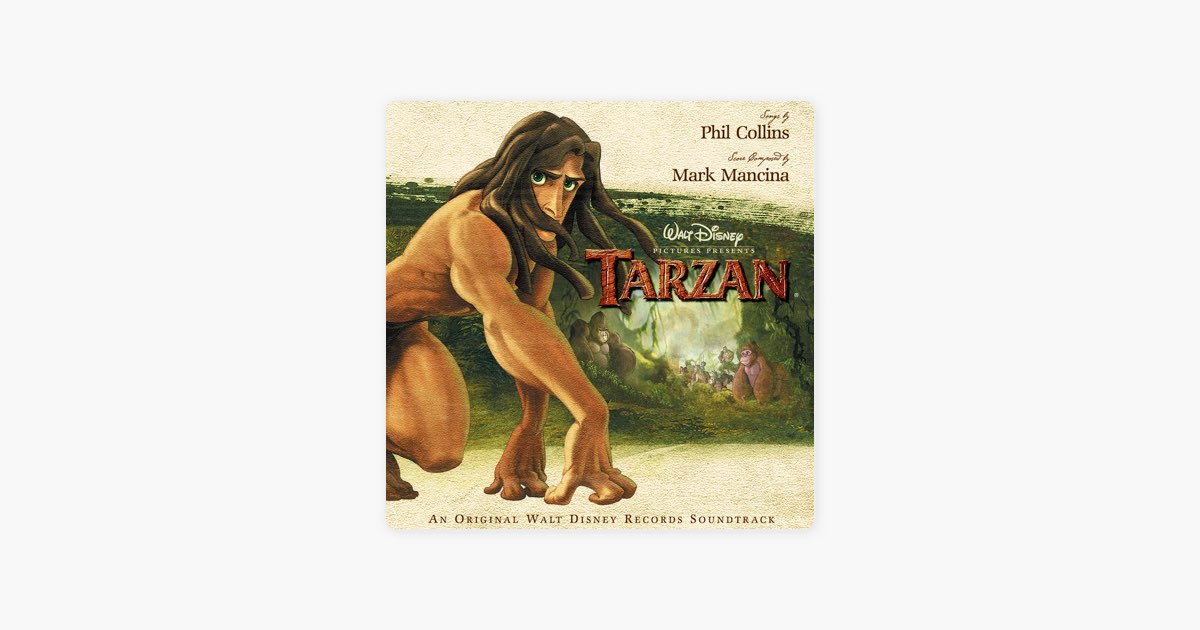
It’s the drums. Honestly, before you even hear a single lyric of You'll Be In My Heart, those gated-reverb percussion hits tell you exactly who is behind the glass. Phil Collins didn’t just write a song for a cartoon; he basically rewrote the rules for how Disney soundtracks functioned in the late nineties.
Most people remember the 1999 Tarzan movie for the high-octane vine swinging and the incredible animation, but the music? That was a whole different beast. Unlike the "I Want" songs of the Disney Renaissance—think The Little Mermaid or Beauty and the Beast where characters burst into song to explain their feelings—Collins acted as a narrator. It was a bold move. It worked.
The track wasn't just a radio hit; it became a cultural touchstone for parents, specifically because of the raw, protective nature of the lyrics. It’s a lullaby, but it has the backbone of a stadium rock ballad.
The Lullaby That Conquered the Billboard Charts
If you were around in '99, you couldn't escape this song. It spent 19 consecutive weeks at the top of the Adult Contemporary chart. That’s not just a "good run." That is dominance.
What’s wild is how the song actually started. Phil Collins originally wrote the core melody on a piece of wrapping paper while at a Christmas party at neighbor’s house. He was playing around on a piano and the phrase "You'll be in my heart" just stuck. He wasn't thinking about Oscars or Golden Globes. He was thinking about his daughter, Lily Collins.
People forget that You'll Be In My Heart had to bridge a massive gap in the movie. It had to transition the audience from the tragic opening sequence—where Tarzan’s parents are killed and Kala loses her own biological infant—into a place of hope. It’s an emotional heavy lift.
Collins’ voice has this specific rasp. It’s vulnerable. When he sings "Don't listen to them, 'cause what do they know," he isn't just singing to a baby gorilla. He’s singing to anyone who has ever felt like an outsider. It’s universal. That is why it stayed on the charts for so long. It stopped being about a movie and started being about the listener’s own life.
Breaking the Disney "Broadway" Mold
Before Tarzan, Disney was deep in its Broadway era. Howard Ashman and Alan Menken had created a formula that was untouchable. Then came Phil.
He didn't want the characters to sing. He felt it would be weird if a guy who grew up with apes suddenly had a baritone vibrato and a choreographed dance number. Directors Kevin Lima and Chris Buck agreed. By having Collins sing from the "outside," the music became the internal monologue of the characters.
This changed everything. It paved the way for the style we saw later in movies like Brother Bear.
The technical side of the recording is also fascinating. Collins recorded the song in multiple languages: English, French, German, Italian, and Spanish. He didn't just phonetically mimic the sounds; he worked with coaches to make sure the emotion translated. If you listen to the Spanish version, En Mi Corazón Tu Vivirás, the phrasing is slightly different to accommodate the romance of the language, but that signature Phil Collins "push" on the high notes remains identical.
The Technical Brilliance of the Arrangement
Let’s talk about the bridge. Most pop songs today play it safe. They stay in one lane. You'll Be In My Heart starts as a tender, synth-driven ballad and slowly builds into a percussive powerhouse.
- The opening is sparse. Just a few keys and a light pad.
- The first chorus is actually quite quiet. It’s a promise, not a shout.
- By the time the second verse hits, the "Collins Drum Sound" enters.
- The key change. Oh, the key change.
That shift at the end is what secures the emotional payoff. It’s the musical equivalent of a hug getting tighter. Rob Cavallo, who co-produced the track, helped ensure it had enough "pop" sensibility to live on the radio while keeping the cinematic sweep required for a Disney epic.
Critics at the time were actually split. Some felt Collins was "too pop" for Disney. But the Academy Awards didn't care. In 2000, the song took home the Oscar for Best Original Song, beating out heavy hitters like Randy Newman and Diane Warren.
Why the Song Sticks in 2026
We live in a world that’s increasingly loud and, frankly, kind of cynical. You'll Be In My Heart is the opposite of cynical. It’s earnest to a fault.
The song has found a second life on social media platforms. Gen Z and Millennials use it for tribute videos—not just for parents, but for pets, friends, and even self-love journeys. It’s a "comfort" song. It’s the musical equivalent of a weighted blanket.
There’s also the nostalgia factor. For a lot of people, this was the first song that made them cry in a movie theater. That kind of emotional imprinting doesn't just go away. It’s why the streams for this track remain remarkably high compared to other soundtracks from the same era.
Misconceptions and Interesting Facts
One thing people get wrong is thinking the song was written for the movie’s ending. It wasn't. It was written for the scene where Kala adopts Tarzan. The "pop" version you hear on the radio is actually quite different from the version used in the film's literal sequence, which is shorter and more intimate.
Another weird detail? Collins played almost all the instruments on the initial demos. He’s a virtuoso, but his humility often masks that. He approached the Tarzan project not as a superstar, but as a guy who really liked the story of an outcast finding home.
Also, the "Oscar Controversy." Some people still think South Park’s "Blame Canada" or Aimee Mann’s "Save Me" should have won that year. But looking back, it’s hard to argue with the sheer cultural footprint of the Collins track. It’s the one people are still huming in the grocery store twenty-five years later.
Making the Song Part of Your Life
If you’re a musician or just a fan, there’s a lot to learn from how this song is put together. It’s about restraint.
- Start small. Don't give away the whole emotional climax in the first thirty seconds.
- Focus on the "Who." Collins knew who he was singing to. Every word is directed at a specific "you."
- Use rhythm to tell the story. The heartbeat-like percussion isn't accidental; it reinforces the title.
To truly appreciate the depth of You'll Be In My Heart, you have to listen to the soundtrack version and the radio edit back-to-back. The soundtrack version is more atmospheric, while the radio edit is tightened for maximum impact.
If you're looking to revisit the magic of the Tarzan era, start by watching the "Making of the Music" featurettes. They show Phil in the studio, often frustrated, trying to get the exact right take. It reminds you that "timeless" songs don't just happen by accident—they’re built, brick by brick, with a lot of heart and even more sweat.
The best way to experience the song today isn't through a tinny phone speaker. Put on some decent headphones, find a high-fidelity version, and listen for the subtle layers of backing vocals in the final chorus. It’s a masterclass in production that still holds up under the microscope of modern audio standards.
Actionable Insights for Fans and Creators:
- Analyze the Lyrics: Look at how the song uses "us vs. them" narratives to create a sense of safety. It's a powerful songwriting tool for building intimacy with an audience.
- Study the Percussion: If you’re a producer, listen to the way the drums are EQ’d. They occupy a specific frequency that doesn't fight the vocals, despite being very loud in the mix.
- Explore the Discography: Don't stop at Tarzan. Check out Collins’ work on Brother Bear, specifically "No Way Out," to see how he evolved this "narrator" style of film scoring.
- Multilingual Appreciation: Listen to the Spanish or French versions of the song. It provides a unique perspective on how melody can transcend language barriers while maintaining the same emotional core.