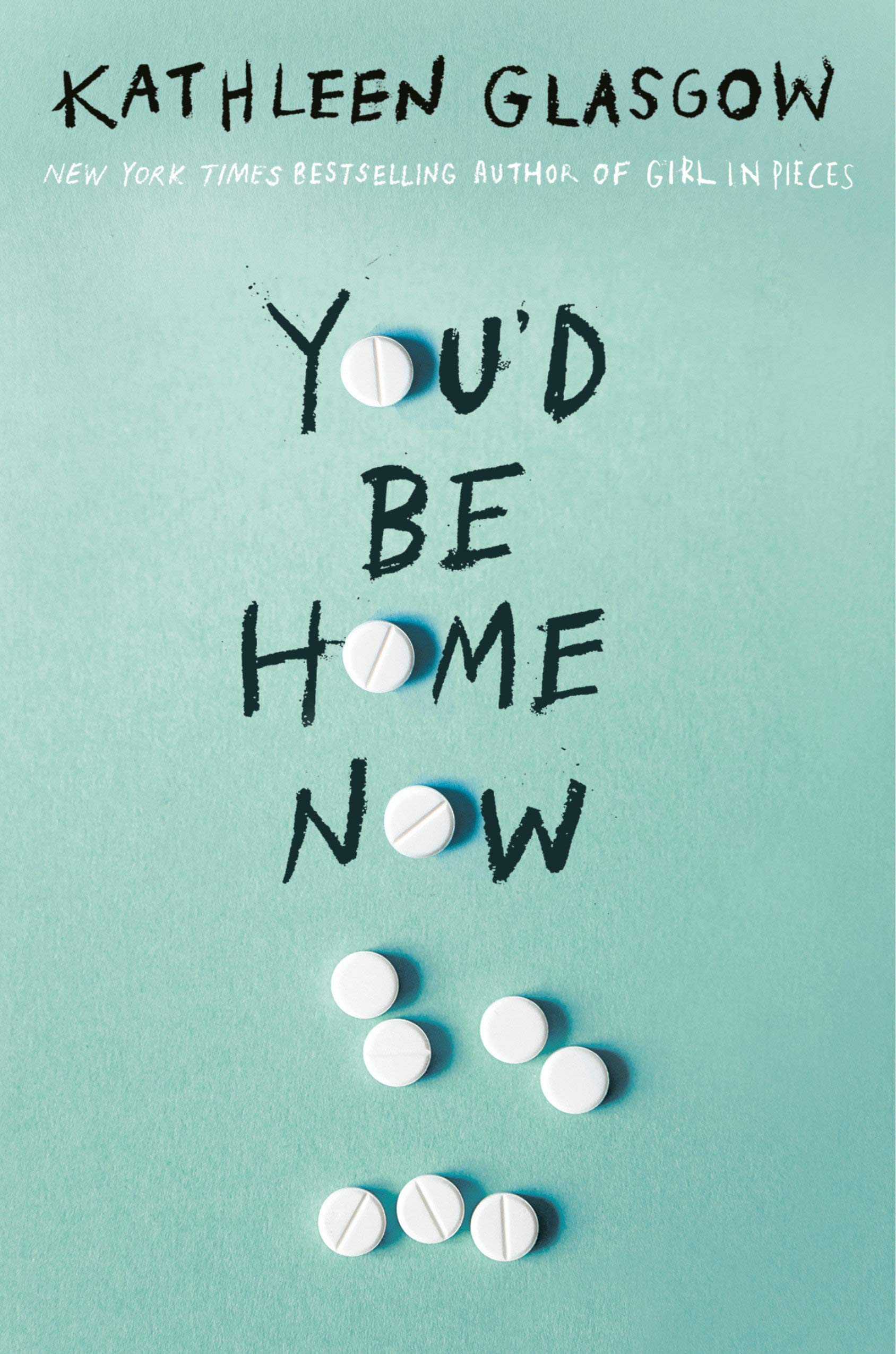
Books about addiction are usually predictable. You get the spiral, the rock bottom, and the shiny, polished recovery that feels a bit too much like a Hallmark movie. You’d Be Home Now isn't that book. Kathleen Glasgow doesn't do "shiny." If you’ve read Girl in Pieces, you already know she’s the queen of writing the kind of pain that feels itchy and uncomfortable. This story focuses on Emmy, the "good one" in a family that is rapidly coming apart at the seams after a tragic car accident.
It’s raw. Honestly, it’s kind of a lot to handle sometimes.
The Reality of the "Quiet Sister" in You'd Be Home Now
Everyone knows a Joey. He’s the brother who is charming, brilliant, and completely drowning in a fentanyl addiction. But this book isn't really Joey’s story, even though his struggle is the engine that drives the plot. It belongs to Emmy. Emmy is the girl who stays quiet, gets the grades, and tries to be invisible so she doesn't add to her parents' stress.
It’s a heavy burden. Being the "good kid" in a house overshadowed by addiction is a specific kind of trauma. You become a ghost in your own life. Glasgow nails this dynamic. She shows how the "perfect" family in a small, judgmental town like Mill Haven isn't actually perfect at all. They are just really good at hiding the bruises.
The accident at the start of the book—the one that kills a classmate and lands Joey in rehab—is the moment the mask slips. You see the fallout immediately. It’s not just about the drugs; it’s about the secrets.
Mill Haven and the Small Town Pressure Cooker
Small towns are the worst places to have a crisis. In You’d Be Home Now, Mill Haven is a character itself. It’s claustrophobic. Everyone knows everyone’s business, or they think they do. The town is divided between the "haves" and the "have-nots," and Emmy’s family is firmly in the "haves" category, which only makes the shame deeper.
Glasgow uses the setting to explore how wealth doesn't insulate you from tragedy. It just gives you better curtains to hide it behind. Emmy’s mother is obsessed with appearances. She wants Joey to "get better" so things can go back to normal. But "normal" was the problem in the first place.
Why Joey’s Journey Breaks the YA Mold
Most Young Adult novels treat rehab like a magic cure. You go in, you do the work, you come out "fixed."
That’s not how it works. Joey comes home, and the tension in the house is high enough to snap a wire. The rules are strict. No phone. No door privacy. Constant testing. It’s miserable for him, and it’s exhausting for Emmy, who becomes his de facto keeper.
One of the most honest things about You’d Be Home Now is how it depicts the resentment. Emmy loves her brother. She wants him alive. But she also hates him a little bit. She hates that he took away her summer. She hates that she has to watch him breathe while he sleeps just to make sure he hasn't relapsed.
The Fentanyl Crisis and Real-World Stakes
Glasgow didn't just pull this plot out of thin air. She has been very open in interviews, including conversations with Publishers Weekly, about her own history with substance abuse and the research she did into the current opioid epidemic.
Fentanyl is terrifying.
It’s not like the drug stories from twenty years ago. The stakes are higher because one mistake is usually the last one. The book captures that specific, modern terror. It mentions how easy it is for kids to get their hands on stuff that can kill them before they even realize what they’ve taken. It’s a grim reality, but Glasgow writes it with a lot of empathy. She doesn't judge the addicts; she judges the system that fails them.
The Impact of the "Good Child" Syndrome
Let's talk about Emmy’s arc. For most of the book, she is trying to find out who she is when she isn't "Joey’s sister" or "the girl in the accident."
She starts hanging out with people who actually see her. This is where the book gets some breathing room. Her relationship with Dexter is complicated. It’s not a standard YA romance. It’s messy. It’s based on shared secrets and the feeling of being an outsider.
- Emmy learns that her value isn't tied to how much she can fix other people.
- She realizes that her parents are flawed, grieving, and sometimes just wrong.
- She finds her voice, literally.
There’s a scene later in the book where she finally stops being the "good one" and starts being a human being. It’s cathartic. It’s also scary because being honest usually means hurting people you love.
What Most People Get Wrong About This Story
A lot of readers go into You’d Be Home Now expecting a thriller because of the accident. It’s not a thriller. It’s a character study. If you’re looking for a fast-paced "who dunnit," you’re going to be disappointed.
The "who dunnit" is life.
The real mystery is whether or not this family can survive the truth. Some people find the ending unsatisfying because it’s not tied up in a neat little bow. Joey doesn't suddenly become a straight-A student. The parents don't suddenly become enlightened.
It’s realistic. Recovery is a lifelong process. It’s a series of "todays."
Comparing Glasgow’s Works
If you’ve read Girl in Pieces or How to Make Friends with the Dark, you’ll notice a theme. Glasgow writes about girls who are trying to survive the unthinkable.
In Girl in Pieces, the struggle is internal—self-harm and the search for a place to belong. In You’d Be Home Now, the struggle is external and relational. It’s about the ripples of one person’s choices and how they wash over everyone else.
Emmy feels older than Charlie from Girl in Pieces, even if their ages are similar. She has a cynical edge that feels earned. She’s seen the underbelly of her town, and she can’t unsee it.
Actionable Insights for Readers and Families
If you are reading this because you relate to Emmy, or maybe you have a Joey in your life, there are things you can take away from this book that go beyond just "it was a good read."
Understand the "Glass Child" Phenomenon Emmy is a classic "glass child." These are siblings of children with high needs (disability, chronic illness, or addiction) who feel like people look right through them. If you’re in this position, acknowledge that your needs matter just as much as the person in crisis. You aren't "bad" for wanting a life of your own.
Recognize the Signs of Relapse and Pressure The book does a great job of showing the "dry drunk" or "dry addict" phase—where someone isn't using but they haven't changed their behavior. Watching for these signs isn't about being a narc; it’s about understanding the cycle.
Finding Resources Addiction isn't a moral failing. It’s a medical and psychological beast. For those struggling, or for families like Emmy’s, organizations like Al-Anon or Naranon offer support specifically for the family members, not just the user.
Final Thoughts on the Legacy of the Book
You’d Be Home Now is going to stay relevant for a long time. As long as we have a culture that prizes "perfection" over honesty, Emmy’s story will resonate. It’s a heavy book, sure. It’ll probably make you cry.
But it’s also hopeful in a quiet, gritty way.
It suggests that while you can't go back to the way things were, you can build something new from the wreckage. You just have to be willing to get your hands dirty.
If you haven't picked it up yet, do it. But maybe have some tissues nearby. And maybe call your siblings. Even the messy ones.
How to Move Forward After Reading
- Reflect on your own "Mill Haven." Identify the pressures in your own life to appear perfect and think about where you can start being more authentic.
- Educate yourself on harm reduction. The book touches on the harshness of "zero tolerance." Learning about how harm reduction actually saves lives can change your perspective on the opioid crisis.
- Support YA literature that goes deep. Authors like Kathleen Glasgow, Laurie Halse Anderson, and Courtney Summers are doing the heavy lifting of telling the truth to teens. Supporting these books ensures these vital conversations keep happening.