Movies usually play by the rules. Even the scary ones. You expect a ghost, a killer, or maybe a demon. But David Koepp’s You Should Have Left—based on the novella by Daniel Kehlmann—doesn’t care about your expectations. It’s a movie about a house that doesn't fit together. Literally.
If you’ve ever walked into a room and felt like the corners weren't quite right, you’ll get it. Kevin Bacon plays Theo Conroy, a man with a past that’s heavier than he’d like to admit. He takes his younger wife, Susanna (Amanda Seyfried), and their daughter to a remote, ultra-modern house in Wales. It's supposed to be a retreat. A place to fix a marriage that’s clearly fraying at the edges. Instead, the house starts measuring them.
The premise sounds simple, but the execution is where things get weird. The geometry of the building is physically impossible. You see Theo measuring a hallway and finding out the interior is larger than the exterior. That shouldn't happen. It’s a classic trope of "architectural horror," but Koepp handles it with a subtle, clinical chill that feels way more grounded than your average jump-scare fest.
The Architecture of Guilt in You Should Have Left
Most horror movies use shadows to hide monsters. In You Should Have Left, the light is the problem. The house is all glass, sharp angles, and cold stone. It looks like something out of an architectural digest magazine, which makes the subsequent warping of reality even more unsettling.
Theo is a guy who’s been acquitted of a crime—the death of his first wife—but the world hasn’t forgiven him. And honestly? He hasn't forgiven himself either. The house functions as a physical manifestation of his conscience. It’s a trap designed for people who are running from things they can't outrun.
- The stairs don't lead where they should.
- The shadows move a second too late.
- The doors appear where there were solid walls five minutes ago.
You’ve probably seen movies like The Shining where the Overlook Hotel has those impossible layouts. This is that, but condensed into a modern, minimalist nightmare. The house isn't haunted by spirits; it’s haunted by the people inside it. It’s a predatory structure. It selects you.
Why Kevin Bacon Was the Perfect Choice
Let's talk about the acting. Kevin Bacon is great at playing "simmering." He looks like a guy who’s trying really hard to be "fine" while everything underneath is screaming. Since You Should Have Left relies heavily on his psychological breakdown, his performance carries the weight of the film.
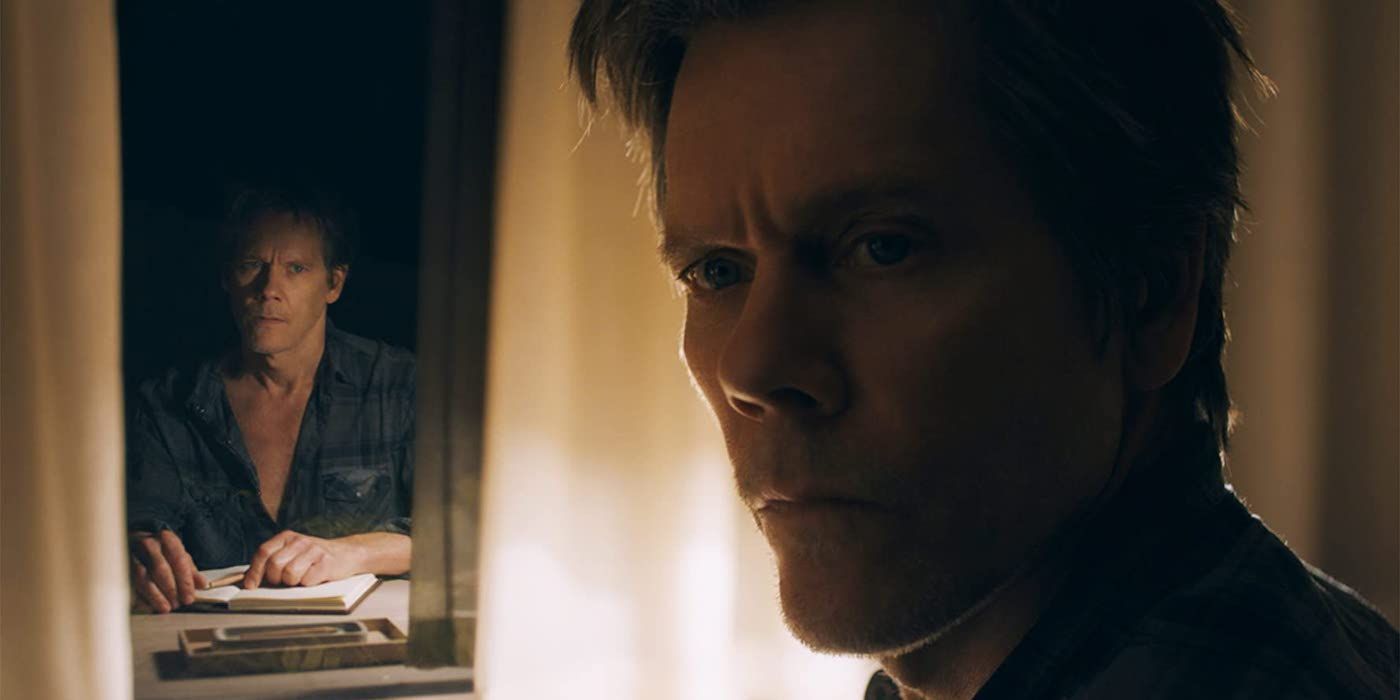
He’s older than Seyfried, and the movie doesn't shy away from that tension. The age gap isn't just a casting choice; it's a plot point. It feeds into Theo's insecurity and jealousy. When he looks into the mirror and sees something he doesn't like, it’s not just a ghost. It’s the realization that he’s out of place in his own life.
Amanda Seyfried plays Susanna with a mix of affection and exhaustion. You can tell she’s tired of carrying Theo's baggage. Their chemistry feels real because it’s strained. It’s not a "movie marriage." It’s a relationship where people keep secrets because the truth is too much work.
The Science of "Impossible Spaces"
There’s a term for what’s happening in this house: non-Euclidean geometry. Basically, it’s space that doesn't follow the standard rules of 3D reality. In the film, Theo discovers that the house is five feet longer on the inside than the outside.
It’s a tiny detail that creates massive "uncanny valley" vibes. Your brain knows something is wrong before your eyes can prove it. This is why You Should Have Left sticks with you. It taps into a primal fear of losing your bearings in a place that is supposed to be "safe."
Comparing the Novella to the Film
Daniel Kehlmann’s book is even more abstract. It’s written as a journal, and the descent into madness is slower, more linguistic. Koepp had to turn that internal dread into something visual. He mostly succeeds by focusing on the "glitches" in the environment.
Some critics felt the ending was a bit too literal compared to the book's ambiguity. In the novella, the boundaries of reality dissolve entirely. The movie tries to give it a more cinematic "payoff." Whether that works for you depends on how much you like your horror explained. Personally? I think the ambiguity of the house’s origin is more effective than any "curse" or "demon" could ever be. It’s just a place that is. It’s a cosmic hole in the map.
Common Misconceptions About the Ending
People often ask: "Is the house a metaphor or is it actually magic?" The answer is both.
In the world of You Should Have Left, the house acts as a cosmic filter. It catches the "refuse" of the world. Theo’s guilt is the hook that keeps him there. If he were a truly innocent man, the house might just be a weird, poorly designed Airbnb. But because he’s carrying a moral debt, the house collects.
It’s not a spoiler to say that the title is a warning he ignores. The movie plays with the idea of the "eternal return"—the concept that we are doomed to repeat our mistakes until we face them. Theo is stuck in a loop because he refuses to acknowledge what he did. The house just provides the walls for that loop.
How to Watch It for the Best Experience
Don't watch this on a tiny phone screen while you're commuting. You’ll miss the subtle shifts in the background. You Should Have Left is a movie about details. You need to see the way the shadows don't quite line up with the furniture.
- Turn off the lights. Seriously. The movie plays with darkness in a way that requires a dark room to appreciate.
- Pay attention to the sound design. There are low-frequency hums and whispers that you’ll miss if you’re using crappy TV speakers. Wear headphones if you can.
- Watch the corners. Most of the "scares" aren't jump-scares. They’re things that are just... off in the periphery of the frame.
The Lingering Impact of Architectural Horror
Why are we so obsessed with "bad houses"? From House of Leaves to The Haunting of Hill House, there’s something terrifying about the idea that our shelter could turn against us. It’s the ultimate betrayal of the domestic space.
You Should Have Left fits into this lineage by making the house feel like a character with its own agenda. It doesn't have a face, but it has a personality. It’s cold, demanding, and patient. It doesn't need to chase you because it knows you have nowhere else to go.
Actionable Insights for Horror Fans
If you enjoyed the psychological and spatial weirdness of this film, there are a few ways to dive deeper into the genre.
- Read the book: Daniel Kehlmann’s novella is a quick read (under 150 pages) and offers a much more cerebral experience than the film.
- Explore "Liminal Spaces": Look up the internet subculture of liminal spaces. It explains why empty hallways and weirdly lit rooms (like the ones in the movie) trigger such a strong "fight or flight" response in humans.
- Check out David Koepp’s other work: He wrote Jurassic Park and Panic Room. He knows how to build tension in confined spaces.
- Look for "The Backrooms": If the impossible geometry of the Conroy house fascinated you, the "Backrooms" creepypasta lore is basically a giant, digital version of that same nightmare.
You Should Have Left might not be the loudest horror movie of the decade, but it’s one of the most persistent. It stays in the back of your mind, making you double-check the measurements of your own bedroom before you turn out the lights. It’s a reminder that we don't just live in houses; we live in our histories. And sometimes, those histories have very sharp corners.
To fully grasp the film's intent, watch it a second time specifically focusing on the daughter's perspective. She sees things the adults miss because she hasn't learned to rationalize away the impossible yet. Her innocence acts as a foil to Theo's corruption, making the house's "judgment" feel even more inevitable.
Stay through the credits. Think about the layout of your own home. Is that hallway really as short as you remember?



