Fear is weird. Most of the time, we expect horror movies to be loud, bloody, and full of jump scares that make you spill your popcorn. But then you have a movie like You Should Have Left, the 2020 psychological thriller that feels more like a cold sweat than a scream. It stars Kevin Bacon and Amanda Seyfried, and honestly, it’s one of those films that people either totally vibe with or find deeply frustrating because it refuses to play by the "rules" of modern horror.
The premise seems simple enough. A middle-aged man with a dark past, his much younger wife, and their daughter rent a stunning, minimalist house in the Welsh countryside. It’s supposed to be a retreat. A way to reconnect. But the house is... off. The walls aren't the right length. The shadows move when they shouldn't. Before you know it, the geometry of the building starts making less sense than a fever dream. Read more on a connected subject: this related article.
The Architecture of Guilt
What makes You Should Have Left stand out is how it uses space. Director David Koepp, who also wrote the screenplay based on Daniel Kehlmann’s novella, understands that a house can be a character. This isn't your typical Victorian mansion with creaky floorboards and cobwebs. It’s a modern masterpiece of sharp angles and clean lines.
That’s what makes it scarier. Additional analysis by E! News explores related views on this issue.
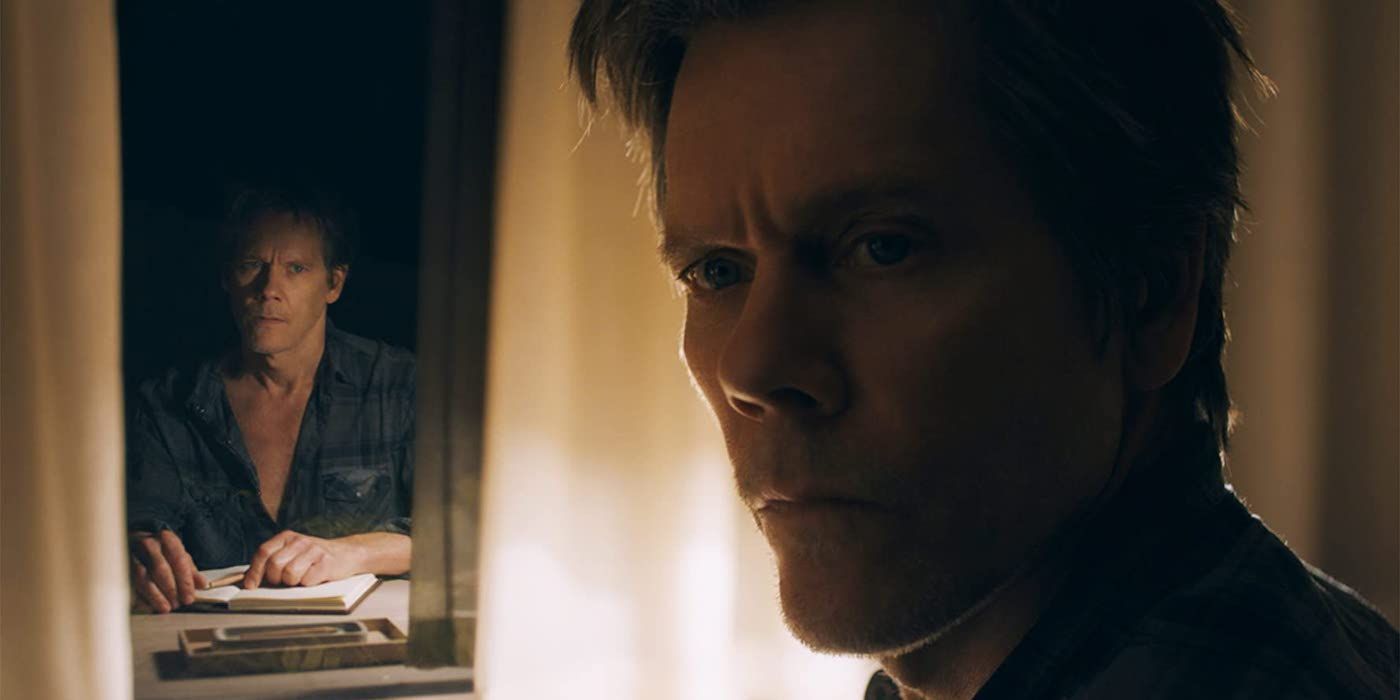
When Theo (Kevin Bacon) starts measuring the rooms, he discovers that the interior dimensions are larger than the exterior. It’s a classic trope—think House of Leaves—but here it serves a specific emotional purpose. The house is expanding because Theo’s guilt is expanding. He’s a man who was acquitted of murdering his first wife, but the world hasn't forgiven him, and neither has he.
The house acts as a physical manifestation of his conscience. It’s a maze he can’t escape because you can't outrun your own shadow. Most horror movies give you a monster to fight. In You Should Have Left, the monster is just a guy looking in a mirror and realizing he doesn't like what he sees.
Kevin Bacon and the "Bad Husband" Trope
Let’s talk about Kevin Bacon for a second. The guy is a legend, but he’s particularly good at playing characters who are slightly "unpeeled." In this film, he plays Theo with this simmering, low-level anxiety that feels incredibly real. He’s jealous of his wife, Susanna (Amanda Seyfried), who is an actress and much younger than him. He’s insecure. He spends half his time listening to meditation tapes that clearly aren't working.
The age gap between Bacon and Seyfried isn't just a casting choice; it’s a plot point. It fuels the paranoia. You can see the cracks in their marriage long before the house starts acting up.
Susanna isn't a villain, but she’s not a saint either. The movie handles their relationship with a surprising amount of nuance. Usually, in these "evil house" movies, the family is a unit against the supernatural. Here, the family is already falling apart. The house just speeds up the process. It’s a pressure cooker. Honestly, even if there weren't ghosts or shifting walls, these two probably would’ve ended up in divorce court anyway.
Why the Critics Were Split
If you look at Rotten Tomatoes, you'll see the movie has a bit of a mixed reputation. Critics were divided. Why? Probably because it’s a "slow burn."
Some people hate that term.
They think "slow burn" is just code for "boring." But You Should Have Left isn't trying to give you a thrill a minute. It’s trying to build a sense of dread. It wants you to feel as trapped as Theo does. The film leans heavily into the uncanny. There’s a scene where Theo finds a light switch that doesn't seem to do anything, or doors that lead to rooms that shouldn't exist. It’s subtle stuff.
It’s psychological.
It’s about the fact that sometimes, the place you go to escape your problems is the place where they finally catch up to you.
Some viewers felt the ending was too ambiguous or didn't provide enough "lore." We live in an era of cinematic universes where every ghost needs a 500-year backstory and a spin-off. You Should Have Left doesn't care about that. It doesn't explain why the house exists or who built it. It just is. It’s a trap for people who deserve to be trapped.
The Reality of the "Uncanny" House
The concept of "The Uncanny" (or Das Unheimliche) was famously explored by Sigmund Freud. It’s that feeling when something is familiar yet strangely "off." The house in the movie is the peak of this. It looks like a luxury rental you’d find on a high-end travel site. It’s beautiful. But the more time you spend in it, the more you realize the angles are wrong.
Mathematically, it shouldn't work.
There are real-world architectural concepts that mirror this. Think about Winchester Mystery House or certain "funhouses" designed to disorient the brain. When our eyes tell us a wall is ten feet long, but our footsteps tell us it’s twelve, our brain goes into a mild state of panic. The movie exploits this biological response brilliantly.
Actionable Takeaways for Horror Fans
If you're planning to watch You Should Have Left—or if you've seen it and want more like it—here is how to actually engage with the "liminal space" horror genre:
- Watch for the Background: This movie rewards people who pay attention to the edges of the frame. The house shifts in subtle ways that the characters don't always notice immediately.
- Explore Liminal Spaces: If the "wrongness" of the house fascinated you, look into the concept of "liminal spaces." These are transition areas (hallways, empty malls, parking garages) that feel eerie when they are devoid of people.
- Read the Source Material: Daniel Kehlmann’s novella is quite different from the movie but arguably even more unsettling. It’s written as a diary, which gives you a deeper look into the protagonist's crumbling mental state.
- Focus on the Metaphor: Stop looking for a literal ghost. Treat the house as a physical representation of the characters' secrets. It makes the viewing experience much more rewarding.
You Should Have Left might not be the scariest movie you'll ever see, but it’s one of the few that actually stays in your head. It makes you look at your own hallway a little differently when you get up for a glass of water in the middle of the night. It reminds us that the biggest scares don't come from monsters under the bed, but from the things we've done that we can't take back.
If you’re looking for a film that prioritizes atmosphere over gore and treats horror as a character study, this is it. Just don’t expect a happy ending. In a house built on guilt, there isn't an exit.