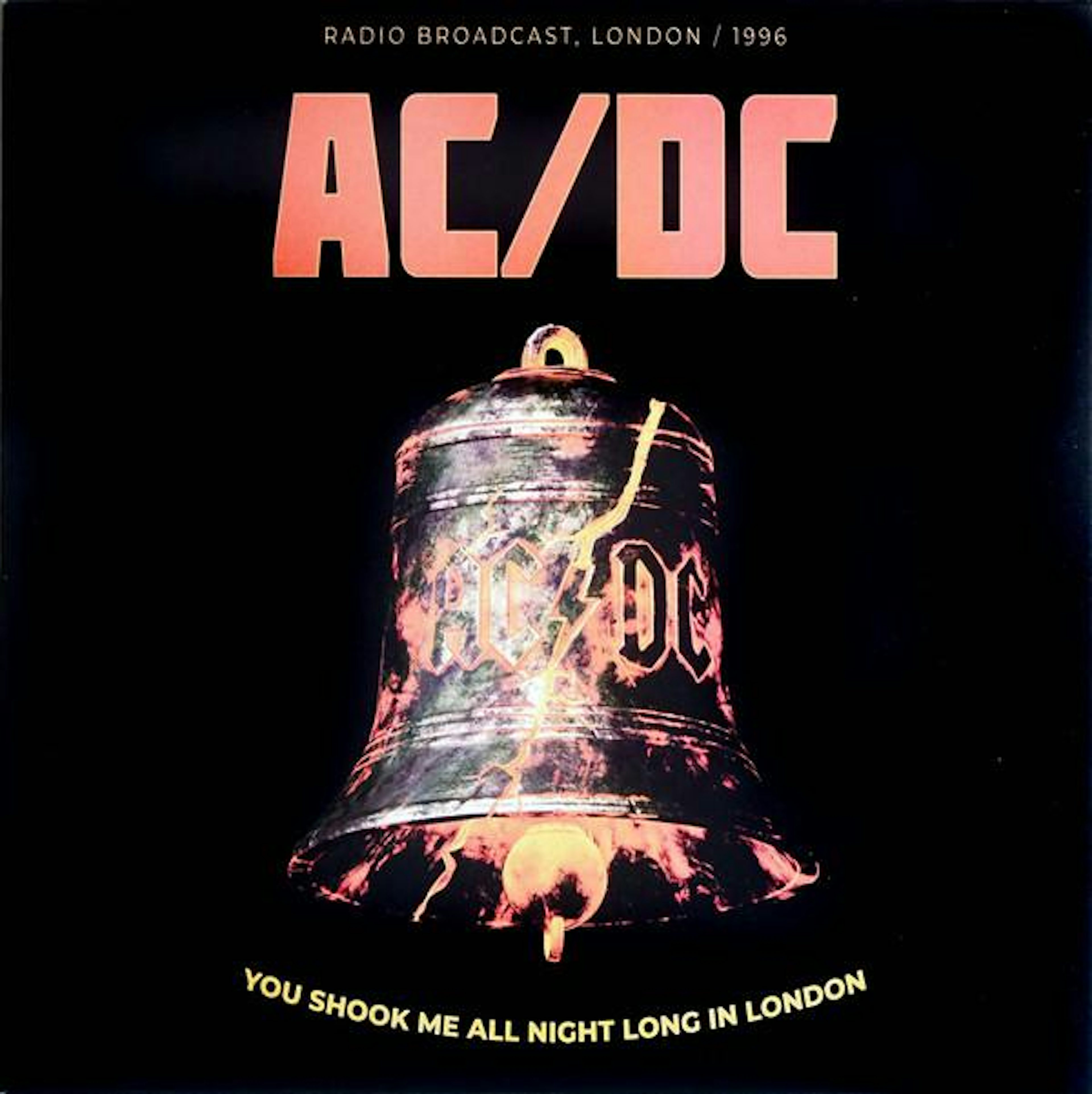
That opening riff. You know the one. It starts with a G chord that feels like a punch to the gut, followed by a slight pause that builds just enough tension to make you lean in before Angus Young starts wailing. You Shook Me All Night Long isn't just a song; it's a cultural phenomenon that somehow manages to feel brand new every time it hits the speakers at a dive bar, a wedding reception, or a sold-out stadium.
It's loud. It's unapologetic. It's AC/DC at the absolute peak of their powers.
Honestly, it’s kind of a miracle the song even exists. Think about where the band was in 1980. They had just lost Bon Scott, their charismatic frontman and the voice that defined their rise to international fame. Most bands would have folded. Instead, the Young brothers recruited Brian Johnson, headed to the Bahamas, and recorded Back in Black. The lead single from that album? You guessed it.
The Myth of the "Easy" Riff
People who don't play guitar think You Shook Me All Night Long is easy. It isn't. Not really. While the chords are basic—G, C, and D—the "swing" is what makes it work. If you play it too straight, it sounds like a generic country song. If you play it too heavy, you lose the groove. Malcolm Young, the unsung hero of the band, provided that rock-solid rhythmic foundation that allowed Angus to dance around the melody.
Angus Young’s solo in this track is often cited by guitarists like Slash and Joe Perry as a masterclass in phrasing. It’s melodic. You can actually sing the solo. Most metal shredders forget that a solo should be a song within a song, but Angus nailed it here. He uses a Gibson SG plugged straight into a Marshall stack—no pedals, no fluff, just raw electricity.
The recording process at Compass Point Studios wasn't all sunshine and tropical drinks, though. Producer "Mutt" Lange was a notorious perfectionist. He reportedly made Brian Johnson sing the lines over and over until his voice was raw, pushing for those high notes that define the chorus. Lange wanted a radio hit that didn't sacrifice the band’s "dirty" edge. He got it.
Brian Johnson’s Baptism by Fire
Imagine the pressure. You’re the new guy replacing a legend. You're standing in a studio in the middle of a hurricane—literally, a tropical storm hit during the sessions—trying to write lyrics that fit the AC/DC brand. Johnson has often told the story of how the lyrics for You Shook Me All Night Long came to him. He was inspired by the sights of the Bahamas and, let's be real, the band’s penchant for double entendres.
"She was a fast machine, she kept her motor clean." It’s classic rock poetry. It doesn't try to be Deep with a capital D. It’s about energy.
There have been rumors for decades that Bon Scott actually wrote the lyrics before he passed. Some fans point to the wordplay as being "too Bon-esque." However, the band and Scott’s estate have consistently denied this. Brian Johnson is the credited songwriter, and if you listen to his work in his previous band, Geordie, you can hear that same grit and lyrical style. The transition was seamless because Johnson understood the assignment: keep it fun, keep it loud, and don't overthink it.
Why it Outlasted the 80s
The 1980s were filled with hair metal bands that looked like they spent more on hairspray than instruments. AC/DC stood out because they looked like guys who just finished a shift at a car plant. You Shook Me All Night Long bridged the gap between the hard rock of the 70s and the commercial polish of the 80s.
It's a "clean" dirty song. It’s suggestive enough to be rebellious but catchy enough for Top 40 radio.
- The Tempo: At around 127 BPM, it's the perfect "walking" pace. It feels natural to the human heart rate during excitement.
- The Chorus: It's an anthem. You don't need to be a fan to know the words.
- The Production: Mutt Lange used a "dry" sound. There isn't much reverb, which makes it feel like the band is playing in your living room.
When you look at the charts, Back in Black has sold over 50 million copies. That makes it one of the best-selling albums in history, rivaling Michael Jackson's Thriller. A huge chunk of that success is fueled by the perennial popularity of this single.
The Gear Behind the Sound
If you’re a gear head trying to recreate that 1980 tone, you're looking for simplicity. Angus used his 1968 Gibson SG Standard. The secret sauce, however, was the Schaffer-Vega Diversity System. Originally a wireless unit, it had a built-in preamp that boosted the signal and added a specific compression that Angus loved. Even when he was wired in, he often used the Schaffer-Vega to get "that" sound.
Malcolm, on the other hand, was the king of the Gretsch Jet Firebird. He stripped out the neck and middle pickups, leaving just the bridge FilterTron. It’s a percussive, clanky sound that cuts through the mix like a chainsaw. Without Malcolm’s right hand, You Shook Me All Night Long would just be another pop-rock tune. He provided the "crack" in the snare-and-guitar interplay.
Cultural Impact and Misconceptions
One of the biggest misconceptions is that the song was an instant #1 hit. Actually, it peaked at number 35 on the Billboard Hot 100 in the US. It was a "slow burn." It gained its legendary status through MTV rotation and its constant presence in films. From Caddyshack to Iron Man, the song has become shorthand for "the party has started."
There's also the "Satanic Panic" of the 80s. While some groups tried to claim AC/DC stood for "Anti-Christ/Devil's Child," the band always laughed it off. They were about beer, women, and rock and roll. Nothing more, nothing less. You Shook Me All Night Long is the ultimate proof of that. It's devoid of darkness; it's pure, unadulterated joy.
Breaking Down the Structure
The song follows a standard verse-chorus-verse-chorus-solo-chorus structure. It’s predictable in the best way.
The verses use a sparse arrangement. The bass and drums keep a steady "four on the floor" feel while the guitars leave plenty of space. This makes the chorus feel massive when it finally hits. When Brian screams "ALL NIGHT LONG," the guitars open up into full power chords. It’s a dynamic shift that triggers a dopamine hit in the brain.
Interestingly, the song doesn't have a bridge. It doesn't need one. A bridge would just get in the way of the momentum. Instead, it uses the solo to transition back into the final celebratory choruses. It’s lean songwriting. No fat. No filler.
How to Appreciate the Track Today
If you want to really "hear" the song again for the first time, put on a pair of high-quality headphones and listen to the original 1980 vinyl press or a high-fidelity digital remaster. Listen to the panning. Angus is usually in the left ear, Malcolm is in the right. You can hear the pick hitting the strings. You can hear the slight strain in Brian’s voice.
It’s a reminder that great music doesn't need a thousand tracks or AI-generated vocal tuning. It just needs three chords and the truth.
Practical Steps for Fans and Musicians
If you’re looking to dive deeper into the world of AC/DC or want to master this specific sound, here are some actionable moves.
- Watch the 1981 "Let There Be Rock" Film: It captures the raw energy of the band right as they were transitioning into the Brian Johnson era. It shows the sheer physicality required to play this music.
- Learn the "Malcolm" Way: If you're a guitarist, stop practicing solos for a minute. Focus on your downstrokes. Malcolm Young rarely used upstrokes on his rhythms. That downward force is what gives the song its "thump."
- Check Out the Covers: Listen to the bluegrass cover by Hayseed Dixie or the live version by Shania Twain. It sounds crazy, but hearing the song in different genres proves how strong the underlying melody actually is.
- Explore the "Back in Black" Documentary: Look for behind-the-scenes footage of the Compass Point sessions. Seeing the environment—the humid, cramped studio—adds a lot of context to the "sweaty" feel of the record.
You Shook Me All Night Long remains the gold standard for hard rock. It’s a song that shouldn't have worked—a new singer, a grieving band, a perfectionist producer—but it became the definitive anthem of an era. It’s proof that sometimes, the simplest things are the most enduring. Keep the volume at eleven. That's the only way to listen to it.