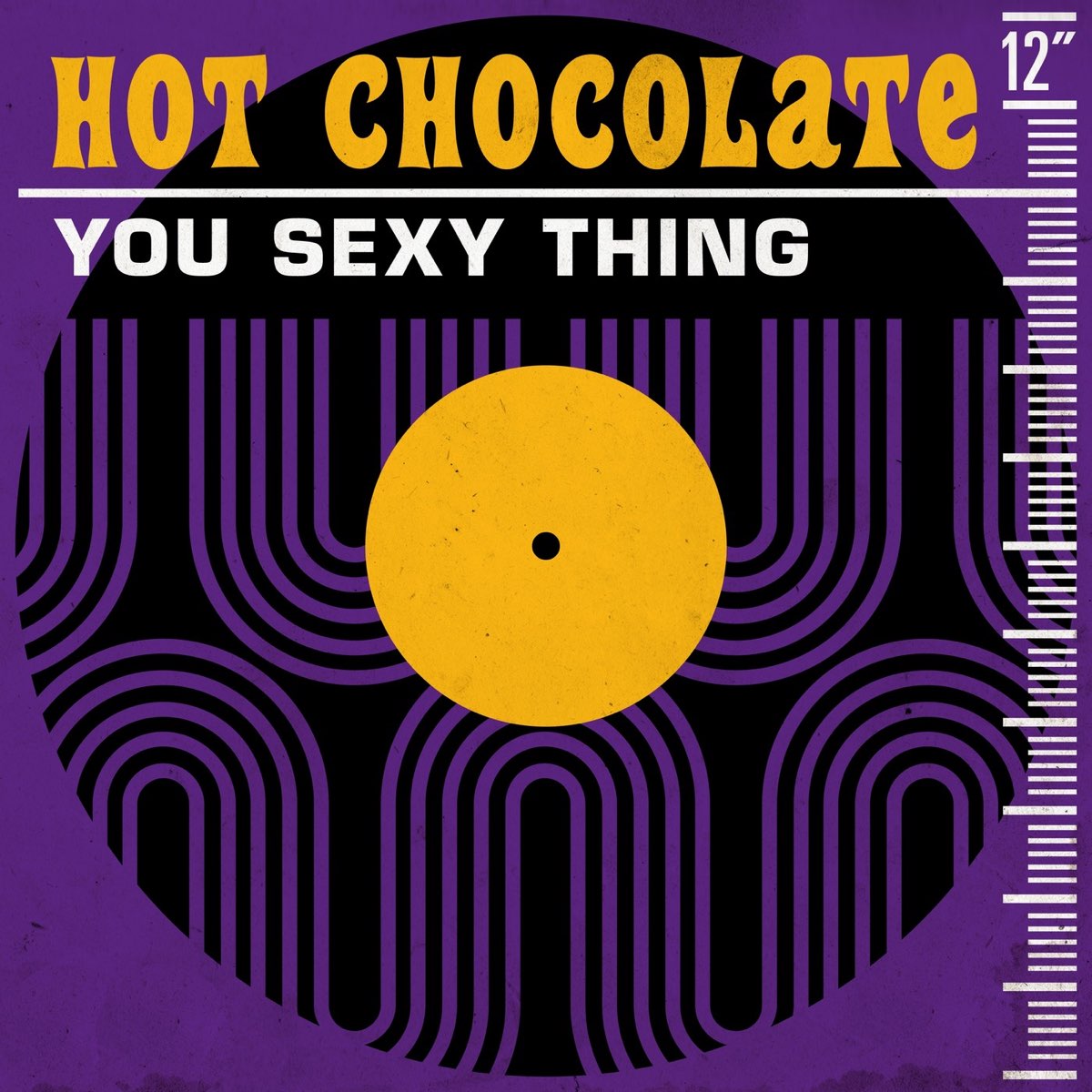
You know the sound. It’s that chugging, funky guitar riff followed by the most recognizable opening line in the history of British soul. I believe in miracles. Errol Brown’s voice drifts in like a cloud of silk, and suddenly, you’re not just listening to a song; you’re living in 1975. Or maybe 1997. Or perhaps a random Tuesday in 2026. That’s the thing about the song You Sexy Thing—it refuses to age.
Most tracks from the disco era feel like museum pieces. They’re stuck in a vacuum of polyester and platform shoes. But Hot Chocolate did something different. They didn't just chase a trend. They accidentally stumbled onto a formula for eternal cool. It’s a track that has survived the rise of punk, the synth-pop explosion, the grit of grunge, and the digital saturation of the streaming age.
Honestly, it’s kinda weird how much we take it for granted. You hear it at weddings. You hear it in grocery stores. It’s the go-to audio shorthand for "something attractive is happening" in movies. But if you actually sit down and listen—really listen—to the production, you realize it’s a bit of a weirdo track. It’s sparse. It’s minimal. It’s nothing like the wall-of-sound production common in the mid-seventies.
The Weird History of You Sexy Thing
Most people assume this was a smash hit the second it left the studio. Nope. Not even close.
The song actually started its life as a B-side. Can you imagine? It was tucked away on the back of a single called "A Child's Prayer." At the time, Mickie Most—the legendary producer who worked with everyone from The Animals to Suzi Quatro—didn't see it as the lead. It took a remix and some convincing to flip the script. When the reworked version of You Sexy Thing finally dropped in October 1975, it didn't just climb the charts; it parked there.
It hit number two in the UK. It smashed the top ten in the US. It became the only song to enter the UK Top ten in the 1970s, 1980s, and 1990s.
Think about that for a second. That kind of longevity is basically unheard of. We're talking about a record that resonated with Boomers, Gen X, and Millennials for entirely different reasons. For the original crowd, it was a sexy club anthem. For the 90s kids, it was the "Full Monty song." It’s a shapeshifter.
Errol Brown and the Power of Restraint
Errol Brown was the heart of Hot Chocolate. Born in Jamaica and moving to the UK at twelve, he brought a specific kind of understated charisma to the mic. He wasn't a screamer. He didn't do the James Brown gymnastics or the high-pitched Bee Gees falsetto.
He was smooth.
The lyrics are actually quite sweet, almost vulnerable. It’s a song about gratitude. "Where did you come from, baby?" isn't a pickup line here; it's a genuine expression of shock that someone so incredible would choose to be with him. That sincerity is what keeps it from feeling creepy or dated. Most "sexy" songs from that era feel a bit predatory by modern standards. You Sexy Thing feels like a hug. A funky, rhythmic hug.
That Riff: Why the Production Works
If you strip away the vocals, the track is surprisingly empty. You’ve got that iconic percussion—the "chug-a-lug" feel—and a guitar line that basically repeats the same pattern forever.
It’s hypnotic.
The producer, Mickie Most, was known for a "no-nonsense" approach. He wanted hits. He understood that a hook isn't just a melody; it's a physical feeling. In the case of You Sexy Thing, the hook is the space between the notes. There’s a lot of room to breathe. This is why it remixes so well. You can drop a heavy house beat under it or strip it down to an acoustic guitar, and the DNA remains intact.
- The Tempo: It sits right around 105-106 BPM. That’s the "walking pace" sweet spot. It’s fast enough to dance to but slow enough to swagger to.
- The Congas: Most disco used a standard kit. Hot Chocolate leaned into the percussion, giving it a slightly more organic, soulful edge.
- The "Hey!": That shout in the background? It’s pure energy. It’s the sound of a studio session where people were actually having a good time.
The Full Monty Effect
You can't talk about this song without mentioning a bunch of guys from Sheffield taking their clothes off.
When The Full Monty came out in 1997, it gave the song a massive second life. It was no longer just a vintage soul track. It became a comedic anthem for the everyman. It was used to bridge the gap between "sexy" and "hilarious." Suddenly, everyone from toddlers to grandmothers knew the lyrics again.
This is where the song entered the "Google Discover" hall of fame, so to speak. It became a cultural meme before memes were a thing. It’s the ultimate "reveal" song. If a character in a movie is looking in a mirror and feeling themselves, there’s a 50% chance this song is playing.
Is that a good thing?
Honestly, it’s a double-edged sword. On one hand, it kept the royalties flowing for Errol Brown and the band. On the other, it sort of masked the fact that Hot Chocolate was a seriously talented, multi-racial British soul band that tackled heavy topics like racism and poverty in their other tracks. Songs like "Brother Louie" (later covered by Stories) had way more bite. But You Sexy Thing is the one that paid the bills.
Technical Accuracy and Legacy
Let’s get the facts straight because the internet loves to mix up disco history.
- Release Date: October 29, 1975.
- Writer: Errol Brown and Tony Wilson.
- Chart Peak: No. 3 on the Billboard Hot 100.
- Label: RAK (UK), Big Tree (US).
The song has been covered by everyone. Tom Jones did a version (obviously). Stereophonics gave it a go. Even some indie bands have tried to ironize it, but the original always wins. Why? Because you can't fake that specific pocket of groove.
There's a common misconception that Hot Chocolate was a "one-hit wonder." That’s objectively false. They had over 25 hits in the UK. They were massive. It’s just that this specific song was so big it eclipsed everything else. It became the sun that the rest of their discography orbited.
How to Actually Use This Track Today
If you’re a DJ, a content creator, or just someone putting together a playlist, there’s a "right" way to handle this song. Because it’s been used in so many commercials and comedies, it can feel "cheesy" if you play it at the wrong moment.
Don't play it as a joke.
If you play it at a party, play it late. Wait until people are actually relaxed. It works best when people stop thinking about the movie references and start feeling the bassline. It’s a mid-tempo masterpiece that bridges the gap between the cocktail hour and the "everyone is sweaty on the dancefloor" phase.
Actionable Insights for Music Fans
If you actually want to appreciate what Hot Chocolate was doing, don't just stop at the greatest hits.
- Listen to the 1987 remix: It’s punchier and shows how the song survived the synth-pop era.
- Check out "Emma" and "So You Win Again": These tracks show Errol Brown’s range. "Emma" is a heartbreaking story song that is the polar opposite of the upbeat "You Sexy Thing."
- Study the Bass: If you’re a musician, try to play that bassline. It’s deceptively simple but requires a specific "behind the beat" feel that is incredibly hard to master.
Hot Chocolate wasn't just a disco band. They were a tight, professional soul outfit that understood the power of a simple idea. You Sexy Thing works because it doesn't try too hard. It’s confident. It’s a three-and-a-half-minute reminder that sometimes, the simplest melodies are the ones that last for fifty years.
If you’re building a classic soul or disco vinyl collection, an original 7-inch pressing of this on the RAK label is a must-have. It sounds warmer. It sounds real. It sounds like a miracle.
Start by digging into the Cicero Park album if you want to see the darker, more experimental side of the band before they became the kings of the pop-soul ballad. You might be surprised at how much grit was actually under that polished surface.



