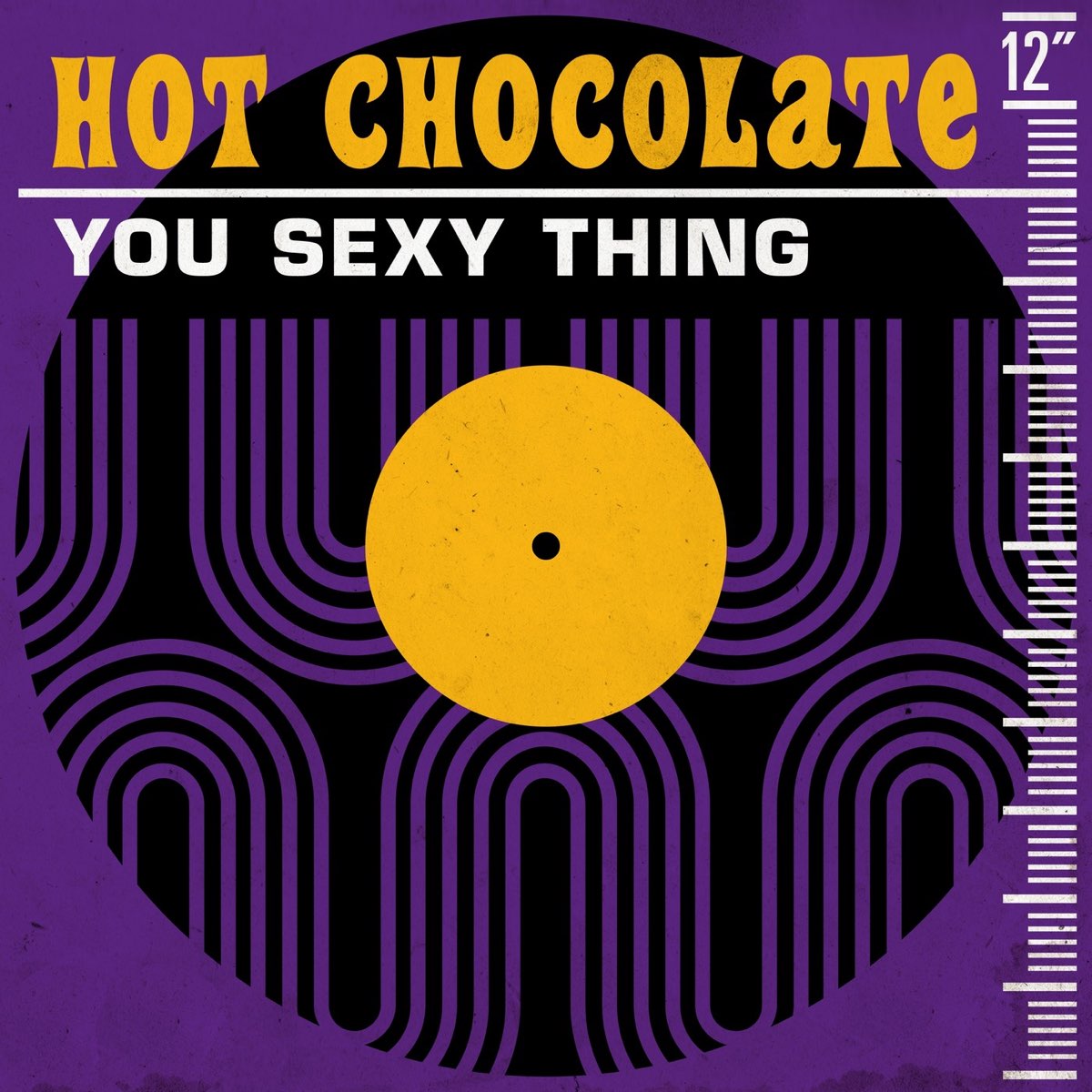
It starts with that riff. A gritty, distorted, four-note guitar line that sounds more like a barroom brawl than a disco dance floor. Then the percussion kicks in—a cowbell that somehow manages to be both cheesy and impossibly cool. You know exactly what is happening. Everyone in the room knows. Whether you are at a wedding in 2026 or a London club in 1975, You Sexy Thing by Hot Chocolate has a psychological grip on the public consciousness that few songs ever achieve.
It is a miracle of a track. Honestly, it shouldn't work as well as it does. It is a love song, but it’s heavy. It’s a dance track, but it’s surprisingly slow. Errol Brown’s vocals don't scream for attention; they purr.
Most people think of it as a relic of the disco era. That is a mistake. While the mid-70s produced a literal mountain of polyester-clad hits, most have faded into the background noise of history. This one stayed. It didn't just stay; it became a shorthand for confidence, irony, and cinematic transformation. If a character in a movie is feeling themselves, or if a director wants to poke fun at someone thinking they look good, this is the song they play.
The Weird History of a "B-Side" Masterpiece
Errol Brown didn't think he had a world-shaking hit on his hands at first. Not really. In fact, an early version of You Sexy Thing was tucked away as a B-side for the single "Blue Night" in 1974. That version was a bit more stripped back, lacking the polished "omph" that producer Mickie Most would eventually help bring to the 1975 re-recording.
Most was a legend for a reason. He saw the potential in that simple, repetitive hook. He understood that the magic wasn't in the complexity of the arrangement but in the spaces between the notes. The 1975 version—the one we all know—was recorded at the famous Château d'Hérouville in France and later at Odyssey Studios in London.
Think about the landscape of 1975 for a second. The Bee Gees hadn't even released Saturday Night Fever yet. Disco was still finding its commercial legs, often leaning into lush strings and high-pitched vocals. Hot Chocolate went the other way. They kept it grounded. Brown’s voice is a warm baritone, and the lyrics are surprisingly vulnerable. He isn't just saying someone is attractive; he is expressing genuine disbelief that this person belongs to him. "I believe in miracles / Where you came from, you sexy thing." It’s a line about gratitude, not just lust.
Why 1997 Changed Everything
Songs have many lives. For Hot Chocolate, the second life of You Sexy Thing was arguably bigger than the first. In 1997, a small British film called The Full Monty hit theaters.
There is a specific scene. Dave, played by Mark Addy, is struggling with his body image. He's in his kitchen, wrapped in cling film, trying to lose weight so he can join the strip act. He starts to move. He starts to dance. The song begins. It was a moment of pure, vulnerable comedic genius that resonated globally.
Suddenly, the song wasn't just a 70s throwback. It was a "meme" before memes existed. It reached number 6 on the UK charts over twenty years after its initial release. That is almost unheard of in the music industry. It proved that the track had a timeless quality that could bridge generations. You had kids in the 90s buying the single because of a movie about unemployed steelworkers, while their parents were dusting off the original vinyl.
The song’s resurgence wasn't limited to the UK. It found its way into Legally Blonde, Rat Race, and countless commercials for everything from Burger King to Dyson vacuums. It became the universal audio cue for "the reveal."
The Secret Sauce: It’s All About the Cowbell
Musically, the track is a masterclass in restraint. Tony Connor, the drummer, keeps a steady, almost metronomic beat. But it’s the percussion—that aforementioned cowbell and the congas—that gives it the "tribal" funk feel.
Then there is the guitar. Harvey Hinsley used a fuzz box to get that distinctive, growling tone. If you take that guitar line out, the song becomes a standard pop ballad. With it? It has an edge. It feels slightly dangerous, which is the perfect counterpoint to Brown’s smooth, soulful delivery.
Errol Brown: The Man Behind the Voice
We have to talk about Errol Brown. He was born in Jamaica and moved to the UK when he was twelve. He wasn't your typical disco frontman. He was bald, often wore impeccably tailored suits, and carried himself with a quiet dignity.
He wrote or co-wrote almost all of Hot Chocolate's hits, including "Every 1’s a Winner" and "It Started with a Kiss." He was a songwriter first. He understood the "hook." He once mentioned in an interview with the Guardian that he wanted to write songs that people could sing along to after hearing them just once. He succeeded.
Brown was awarded an MBE in 2003 for services to popular music. When he passed away in 2015, the tributes didn't just mention the hits. They mentioned the fact that he was one of the first Black British artists to achieve sustained, massive success across multiple decades. He broke barriers without ever making it feel like a struggle; he just made great music that everyone, regardless of race or background, wanted to dance to.
Misconceptions and Trivia
People often confuse Hot Chocolate with American funk bands like KC and the Sunshine Band or Kool & the Gang. They weren't. They were a quintessentially British band. They were actually discovered after they recorded a reggae version of John Lennon’s "Give Peace a Chance." Lennon liked it so much he gave them permission to release it on the Apple Records label.
Another weird fact? The song has been covered by everyone from Tom Jones to Stereophonics. Even the industrial metal band KMFDM did a version. Yet, none of them capture the specific "cool" of the original. They usually lean too hard into the kitsch or too hard into the rock. The original sits perfectly in the middle.
The Cultural Longevity of the "Sexy" Hook
Why do we still care? Honestly, it’s because the song is incredibly inclusive.
Usually, "sexy" songs are about the person singing being the hottest person in the room. This song is the opposite. It is an ode to the partner. It’s a song for the underdog. When you hear it, you don't feel intimidated; you feel celebrated. That is a very difficult emotion to capture in a pop song without sounding sappy.
In the 2020s, with the rise of body positivity and the rejection of rigid beauty standards, the song has found a third life on social media platforms. It is the go-to track for "glow-up" videos. It’s used by people of all shapes, sizes, and genders to celebrate themselves.
The production also holds up remarkably well. While many 70s tracks sound "thin" on modern speakers, the bass in You Sexy Thing is thick and warm. It sounds great in a car. It sounds great in a club.
How to Use This Energy in Your Own Life
If there is a lesson to be learned from the enduring success of this track, it is about the power of a signature "vibe." Hot Chocolate didn't try to be something they weren't. They found a groove that felt authentic—a mix of soul, rock, and pop—and they leaned into it.
Embrace the "Underdog" Confidence The song teaches us that confidence doesn't have to be loud or aggressive. It can be appreciative and joyful.
Timing is Everything The song failed to make a huge splash as a B-side. A year later, with a few tweaks and the right marketing, it became a global phenomenon. If your first attempt at something doesn't land, don't scrap the idea. Look at the "production." Maybe it just needs a little more cowbell.
Don't Fear the Kitsch We live in an era of intense irony. Sometimes, leaning into something unabashedly fun and slightly over-the-top is the most "cool" thing you can do.
The Definitive Impact
Hot Chocolate remains the only group to have a hit in the UK charts in every year of the 1970s. That is a staggering statistic. While they had many hits, You Sexy Thing is the crown jewel. It is a song that defies the "disco sucks" movement of the late 70s because it was never just disco. It was a well-crafted piece of soul-pop that touched on something universal.
The next time you hear that opening riff, don't just roll your eyes because you've heard it a thousand times at weddings. Listen to the layers. Listen to the way the guitar cuts through. Listen to Errol Brown’s perfect phrasing. It’s a masterpiece of British songwriting that earned its place in the rafters of music history.
Actionable Takeaways for Music Lovers and Creators
- Study the "Hook": If you're a creator, analyze why those first four notes are so recognizable. It's about simplicity and tone, not speed or complexity.
- Diversify Your Influence: Hot Chocolate succeeded because they blended Jamaican roots with British pop sensibilities. Mix your influences to create something unique.
- Check Out the Deep Cuts: Don't stop at the hits. Tracks like "Emma" show a much darker, more storytelling-focused side of the band that proves they weren't just a "party" act.
- Keep it Simple: The most enduring songs often have the simplest lyrics. "I believe in miracles" is a sentiment anyone can understand and get behind.
The song is a reminder that a good idea, executed with a bit of soul and a lot of heart, never really goes out of style. It just waits for the next generation to rediscover it.