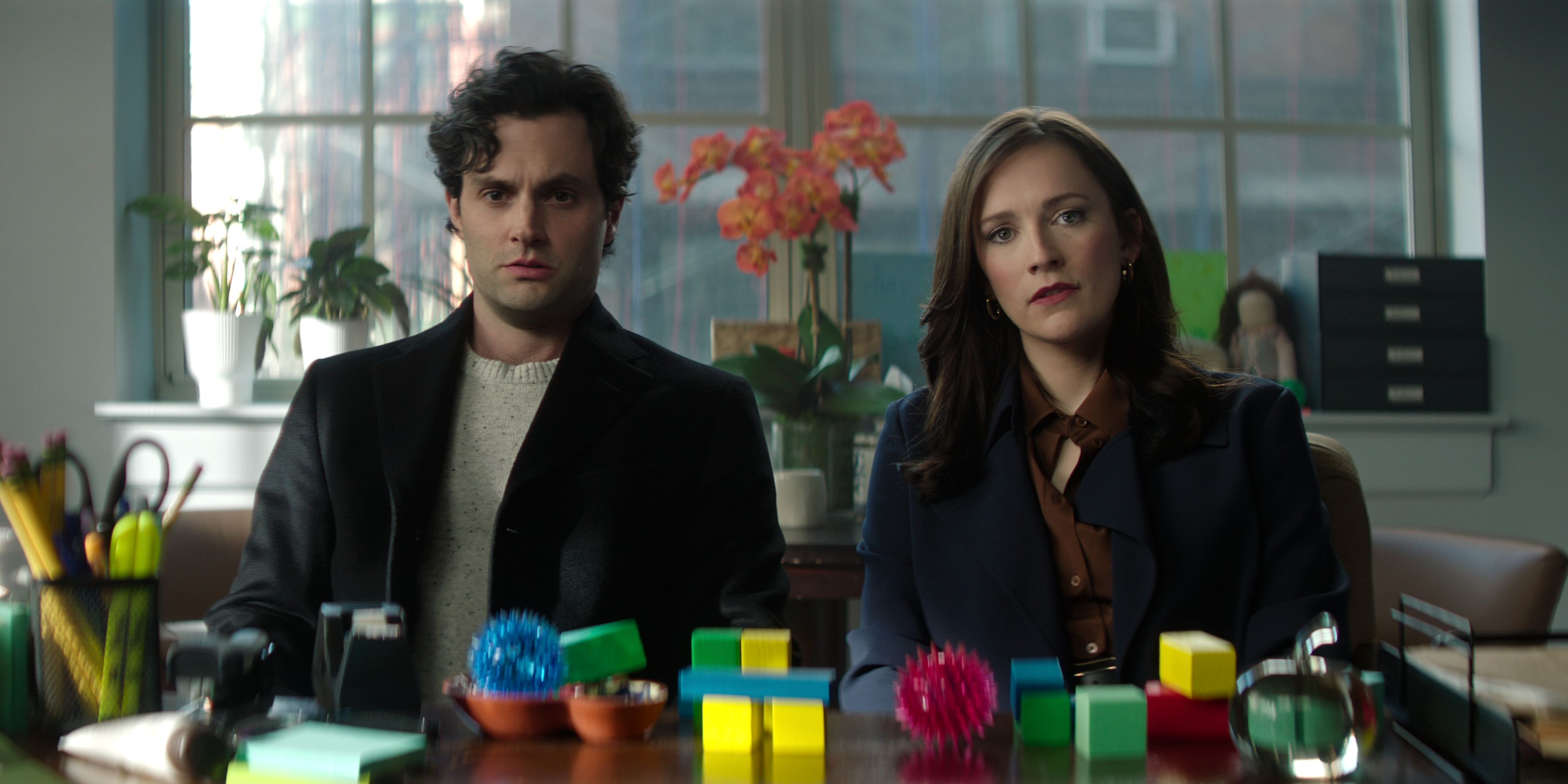
Joe Goldberg is back in New York City, and honestly, it feels like a fever dream. After the bloodbath in London and that chillingly clean-shaven rebrand at the end of season four, seeing him walk the streets of Manhattan in You season 5 episode 2 is jarring. It’s a homecoming, sure. But it’s not the romanticized version of the city we saw in the pilot. This version of New York is colder, sharper, and far more dangerous for a man who thinks he’s untouchable because he has Kate Lockwood’s billions backing him up.
He’s not the underdog anymore. He’s the elite.
That shift in power dynamics is exactly what makes this specific episode so uncomfortable to watch. Penn Badgley has always played Joe with this sort of "accidental" charm, but in You season 5 episode 2, that mask is slipping. You can see the irritation in his eyes when things don't go his way immediately. Money has made him lazy. It's made him arrogant. And in the world of high-stakes NYC power players, arrogance is usually a death sentence.
The Lockwood Influence and the New Cage
Kate isn’t Love Quinn. She’s not impulsive or fueled by a desperate need for Joe’s approval. In this episode, we see her navigating her new role as the head of the Lockwood empire, and Joe is essentially her "plus one." It’s a fascinating reversal. Joe used to be the one pulling the strings from the shadows, stalking his prey and curate their lives. Now, he’s the one being curated. Kate’s PR team is literally scrubbing his past from the internet, but as the episode suggests, you can't scrub the blood off the floorboards of a basement in Brooklyn quite as easily.
The tension in their apartment—if you can even call that palatial fortress an apartment—is thick. Joe is trying to play the supportive husband, but he's bored. Joe Goldberg is a hunter. When he doesn't have a "you" to focus on, he starts to rot from the inside out. This episode introduces a new person of interest, but the way Joe approaches it feels different. It’s less about "saving" someone and more about reclaiming his own identity. He's trying to prove to himself that he hasn't been domesticated by a penthouse and a private chef.
Why the Pace of Season 5 Episode 2 Feels So Different
If you’ve been following the series since the Lifetime days, you’ll notice the rhythm has changed. The show used to rely heavily on the "creep-of-the-week" vibe. Now, it's a psychological thriller about a man who has everything to lose. In You season 5 episode 2, the stakes aren't just about getting caught by the police; they're about being exposed to the very people who now sign his checks.
The episode spends a significant amount of time on Joe’s inner monologue, which has become increasingly detached from reality. He’s justifying his past actions with a level of narcissism that eclipses even his previous seasons. He truly believes he’s a "reformed" man, even as he stalks through the West Village. It’s a brilliant bit of writing that highlights the cognitive dissonance of a serial killer. He looks at a bookstore and feels nostalgia, not for the books, but for the version of himself that was still "innocent" enough to hide bodies in a basement.
Old Faces and New Threats
There’s a lot of chatter about who might return to haunt Joe this season. While the showrunners have been tight-lipped, this episode drops several breadcrumbs. We know that Joe’s past is his biggest enemy. Characters like Paco, Ellie, or even the ghosts of the London crew are always lingering in the back of the viewer's mind. In You season 5 episode 2, the threat feels more internal. Joe is hallucinating—or maybe he isn't. The line between his reality and his guilt is starting to blur.
- The Lockwood PR Machine: They are the unsung villains here. By trying to protect Joe, they are actually making him a bigger target for investigative journalists and amateur sleuths.
- The Return to the Library: Seeing Joe in a research environment again is a callback to his roots, but the technology has changed. He's struggling with the fact that he can't just be a ghost anymore.
- Kate’s Autonomy: She isn't letting Joe into her inner circle of business. This exclusion is driving him crazy, leading to the erratic behavior we see toward the end of the episode.
The cinematography in this episode deserves a shoutout. New York is shot with a high-contrast, almost clinical blue tint. Gone are the warm, amber tones of the Mooney’s bookstore days. It reflects Joe’s current state: cold, calculated, and isolated despite being surrounded by millions of people.
What Most People Get Wrong About Joe's "Redemption"
There’s a segment of the fanbase that still wants to see Joe get a "happy ending" or find some sort of peace. You season 5 episode 2 goes out of its way to shut that down. This isn't a redemption arc. It’s a deconstruction. The episode shows us that no matter how much money you have or how many times you change your name, the core of the person remains the same.
Joe tries to do a "good deed" in this episode. It fails spectacularly. Not because the world is cruel, but because Joe's version of "good" is fundamentally broken. He doesn't understand boundaries. He doesn't understand consent. He only understands possession. When he tries to help a young writer he meets, he immediately oversteps, proving that he hasn't learned a single thing from his time in Madre Linda or London. He is a predator who thinks he’s a patron.
The NYC Setting as a Character
The show's return to New York isn't just fan service. It’s a structural necessity. Joe started here, and he has to end here. But the NYC of season 5 is different. It’s the city of the 1%, the city of gala benefits and closed-door deals. This isn't the city of subway rides and dive bars. By placing Joe in the upper echelons of society, the writers are highlighting how easy it is for monsters to hide when they’re wearing a tuxedo.
The episode features a sequence in a high-end art gallery that perfectly encapsulates this. Joe is surrounded by people who are just as vapid and self-serving as he is, but they don't have his body count. Or do they? The Lockwood family has its own skeletons, and Joe is starting to realize he might have joined a pack of wolves that are even more dangerous than he is.
Key Takeaways from the Episode
Honestly, if you're looking for the "old Joe," he's there, but he's buried under layers of expensive wool coats and corporate jargon. The episode is a slow burn that prioritizes psychological tension over immediate violence. It’s building toward something inevitable.
- Joe is losing control of his narrative. For the first time, he isn't the one telling the story; the Lockwood family's lawyers are.
- Kate is the real power player. Joe is realizing that being the husband of a billionaire is a full-time job that requires a level of submission he’s not used to.
- The "You" is changing. His obsession in this episode is less about a person and more about his own legacy. He’s obsessed with the idea of being "clean."
Practical Steps for Following the Season
If you want to keep up with the nuances of Joe's final chapter, keep a close eye on the background details. The showrunners love to hide Easter eggs. Check the names on the books Joe handles. Look at the headlines on the newspapers in the background. Everything is a hint toward the series finale.
Pay attention to the recurring themes of "erasure." Whether it's digital footprints or physical evidence, the theme of trying to delete the past is central to this episode. It’s a fool's errand, and we’re all just waiting to see which ghost finally catches up to him.
Watch the reflections. Throughout the episode, Joe is constantly seen in mirrors, windows, and polished surfaces. It’s a visual cue for his fractured identity. He doesn't know who he is anymore, and neither do we. That’s the most terrifying thing about this season so far. He’s not a bookstore clerk or a suburban dad or a professor. He’s just a man with a lot of secrets and the money to keep them buried—for now.
Keep an eye on the side characters introduced in the gallery scene. One of them knows more than they are letting on. The tension isn't just coming from Joe's internal monologue anymore; it's coming from the world closing in on him. If you're binging the season, take a moment after this episode to really look at how much Joe has changed since the pilot. The evolution is subtle, but it's there, and it's not a good change. It’s a hardening. He’s become the very thing he used to despise: an elitist who thinks he's above the law. Under the surface, he's still the guy in the glass cage. Now, the cage is just bigger and made of gold.



