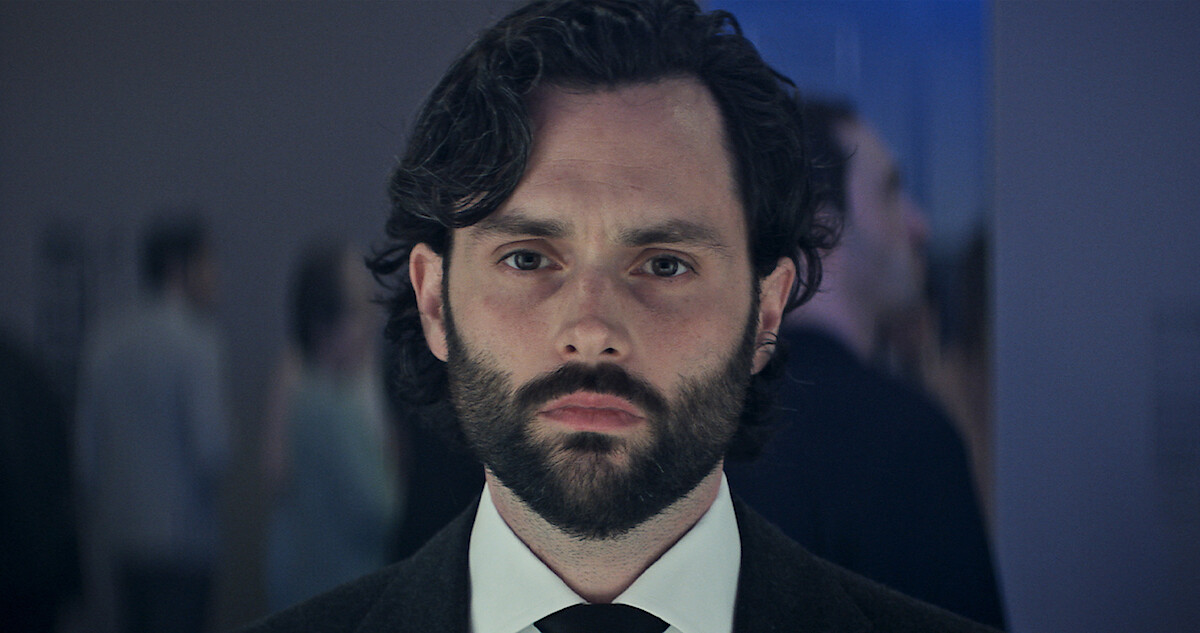
Joe Goldberg is a liar. We’ve known this since he was stalking Guinevere Beck through the streets of New York, yet somehow, You Season 4 Episode 9 managed to gaslight the entire audience into believing Joe had actually changed. It’s titled "She’s Not There." Fitting. Because the man we thought we were watching for the first eight episodes of the season—the "redemption arc" Joe who was desperately trying to stop a "Eat the Rich" killer—was a complete fabrication of his own fractured psyche.
He's a mess. Honestly, by the time we hit the penultimate episode of the London cycle, the show shifts from a whodunnit into a psychological horror film. It’s jarring. It’s brilliant. It’s probably the most honest the show has ever been about its protagonist's inherent toxicity.
The Rhys Montrose Reveal and the Death of the Redemption Arc
For weeks, we watched Joe (disguised as Jonathan Moore) trade barbs with Rhys Montrose. Rhys was the perfect foil: a man of the people who hated the elite as much as Joe did. But You Season 4 Episode 9 pulls the rug out. Rhys isn't a secret assassin or a rival stalker. Well, the real Rhys is a politician who doesn't even know Joe exists. The Rhys Joe has been talking to?
That’s just Joe.
It’s a dissociative break. This isn't just a clever writing trick; it’s a narrative necessity. If Joe were to ever truly "evolve," the show would die. The creators, Sera Gamble and Greg Berlanti, understood that Joe’s survival depends on his ability to rationalize his violence. In Season 4, his brain simply couldn't handle the guilt of his past—Love, Marienne, Beck—so it split. He created a "dark" version of himself (the Rhys hallucination) to carry the burden of the murders while "Jonathan" played the hero.
It’s dark stuff. Really dark.
The pacing in this episode is frantic. We jump between Joe’s realization in his flat and the terrifying reality of Marienne’s situation. You see, while Joe thought he let Marienne go back to Paris to be with her daughter, he actually had her locked in a glass cage in an abandoned building the whole time. He just forgot. He literally "forgot" he was kidnapping a woman because he wanted to believe he was a good person.
Marienne’s Perspective Changes Everything
Tati Gabrielle deserves an Emmy for this. For most of the season, she was a ghost. In You Season 4 Episode 9, we finally see what her life has been like while Joe was off playing Sherlock Holmes with London’s elite.
It’s grueling.
She’s starving. She’s losing track of time. She’s terrified. The contrast between Joe’s posh life at Darcy College and the cold, gray reality of that basement cage is the show’s sharpest critique of Joe’s delusion. He thinks he’s in a rom-com; she knows she’s in a snuff film. This episode forces the viewer to reckon with their own complicity in "rooting" for Joe. You can't root for him anymore. Not after seeing Marienne realize that the man who claims to love her is the same man who is essentially letting her rot in a box.
The dialogue here is sharp, biting, and lacks the usual Joe-snark. When "Rhys" (the hallucination) talks to Joe, it’s like Joe is finally being honest with himself. The hallucination mocks him. He calls out Joe’s hypocrisy. It’s the internal monologue finally becoming external, and Penn Badgley plays the duality with a terrifying twitchiness.
Why the "Fight Club" Twist Isn't a Cheap Trick
Some critics hated this. They called it a cliché. "Oh, the protagonist has a split personality? How original." But that misses the point of why You Season 4 Episode 9 is so vital to the series' DNA.
Most "split personality" tropes are used to excuse the hero. "It wasn't me, it was my alter ego!" But in You, the twist is used to condemn him. The episode proves that Joe Goldberg is so far gone that he has to break his own mind to live with himself. There is no "Good Joe." There is only Joe and the lies he tells to keep breathing.
The episode also does a lot of heavy lifting to tie up the loose ends of the season's previous murders. Malcolm, Simon, Gemma—all killed by Joe. Not Rhys. Joe. Every time we thought he was being a "good guy" trying to solve a crime, he was actually cleaning up his own mess. The sheer audacity of the writing here is impressive because it retroactively changes every scene in the first eight episodes.
You’ll want to rewatch it immediately. You'll see the moments where Joe is talking to thin air. You'll see the moments where the "real" Rhys Montrose is in the background of a scene, completely oblivious to Joe’s existence. It’s meticulous.
The Role of Kate and the Power of Wealth
While Joe is losing his mind, his relationship with Kate (Charlotte Ritchie) takes a turn. Kate is the daughter of a billionaire, a man who "owns" things and people. In this episode, Joe realizes that his obsession with Kate isn't just about love—it’s about the protection her world offers.
Kate’s father, Tom Lockwood (played by Greg Kinnear), represents the ultimate version of what Joe is. Lockwood is a man who kills and destroys lives but does it through corporate law and hired muscle instead of glass cages and knives. The connection Joe feels to this world is the ultimate trap. By the end of the episode, Joe isn't just a killer; he’s a killer who has found a way to be "above the law" by aligning with the 0.01%.
It’s a cynical ending to the London chapter. It suggests that Joe doesn't need to be redeemed if he’s rich enough.
How to Process the Episode’s Ending
By the time the credits roll on You Season 4 Episode 9, you’re left with a sense of dread. There is no happy ending for Marienne. There is no justice for the people Joe killed. There is only the reality that Joe has accepted his shadow self.
He’s not fighting "Rhys" anymore. He’s becoming him.
The episode ends on a cliffhanger that leads directly into the finale, but the emotional climax happens right here. This is the moment Joe Goldberg stops being a protagonist and becomes a full-blown villain again. He’s no longer the "lovable" stalker with a heart of gold. He’s a monster who has finally looked in the mirror and liked what he saw.
Critical Takeaways for Fans
- Rewatch the early episodes: Look for the "Rhys" interactions. Notice how no one else ever acknowledges Rhys when Joe is talking to him.
- Focus on the cage: Pay attention to the physical state of the cage. It’s dirtier and more industrial than the ones in NY or LA, reflecting Joe’s deteriorating mental state.
- The Marienne Factor: Consider how Marienne’s "death" (or lack thereof) serves as the final test for Joe’s soul.
- The Kate Connection: Observe how Kate’s trauma mirrors Joe’s, but her reaction—trying to be better—contrasts with Joe’s descent.
If you’re looking to dive deeper into the lore of the show, check out Caroline Kepnes' books. They differ significantly from the show, especially regarding Joe’s inner monologue, but they provide the foundation for the psychological complexity seen in this episode.
Stop looking for a hero. He’s not there.
Actionable Next Steps
- Analyze the Visual Cues: Go back to the scene in the library in Episode 1 and Episode 2. Notice the lighting changes when "Rhys" enters the room compared to when Joe is alone.
- Compare to Season 1: Contrast Joe’s treatment of Beck in the cage with his treatment of Marienne. You’ll see that while he claimed to "care" for Beck’s comfort, he has completely abandoned any pretense of care for Marienne.
- Read the Showrunner Interviews: Search for Sera Gamble's discussions on "The Rhys Reveal" to understand the writers' intent regarding Joe’s mental health diagnosis.