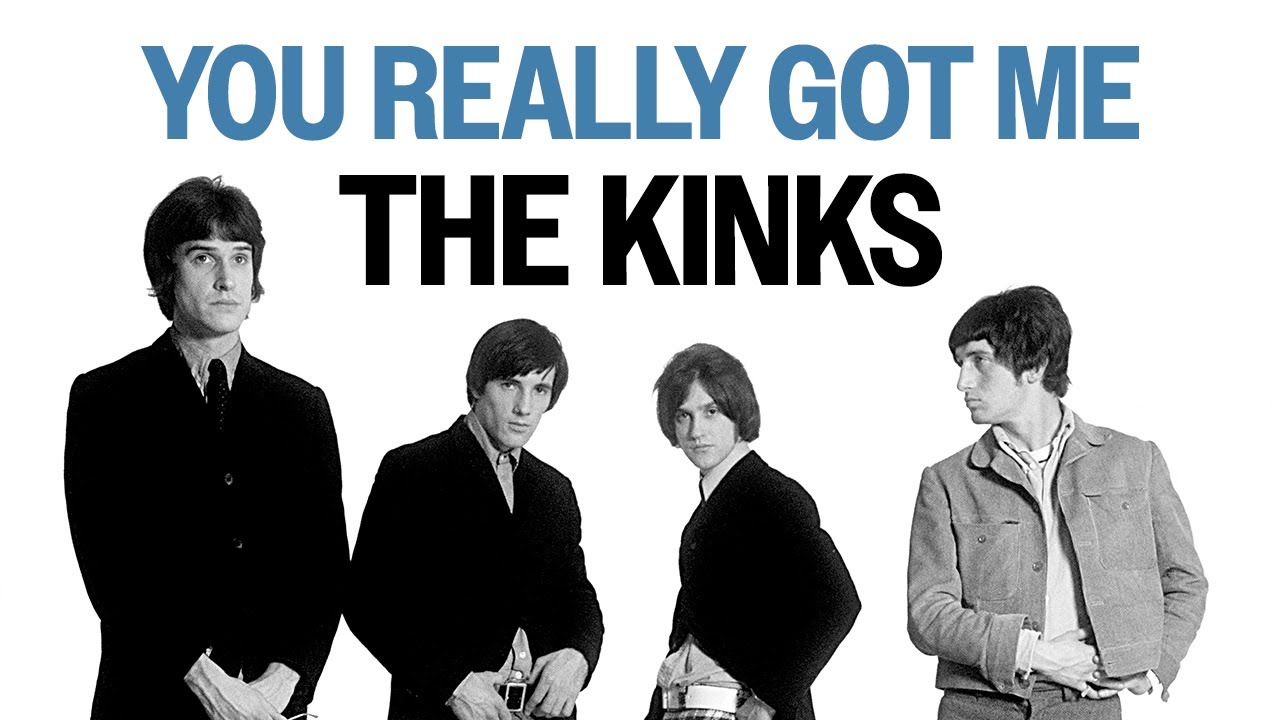
It started with a knitting needle. Or maybe a razor blade, depending on which Davies brother you ask on a particular day. Ray and Dave Davies were just kids in Muswell Hill, North London, trying to find a sound that didn't exist yet. They found it by mutilating their equipment. When Dave Davies shoved a needle into the speaker cone of his little Elpico amplifier—affectionately nicknamed "the green hornet"—he wasn't trying to invent heavy metal. He was just frustrated. He wanted a sound that growled back at him. What he got was the jagged, distorted riff of You Really Got Me, a song that basically acted as the "Big Bang" for hard rock.
Most people think the 1960s were all about the Beatles’ harmonies or the Stones’ bluesy swagger. But the Kinks were the true disruptors. Before this track dropped in 1964, "distortion" was a mistake. It was something engineers tried to fix. After this? It was the whole point.
The Sound of a Broken Amp
You've probably heard the rumors about Jimmy Page playing the lead guitar on this track. It's one of those rock myths that refuses to die. Even though Page was a prolific session musician at the time and did play on some Kinks sessions, both Ray Davies and producer Shel Talmy have spent decades clarifying that it was Dave, then only 17, who shredded that solo. It sounds frantic because it was.
The distortion wasn't a pedal. Fuzz boxes weren't really a commercial thing in 1964. That raw, "fuzzed-out" tone came from physical damage. By slicing the speaker paper, the vibrations became fuzzy and buzzy. When they plugged that tiny, dying Elpico into a larger Vox AC30, the sound became monstrous. It was a DIY hack that changed the trajectory of music history. Honestly, it's kind of hilarious that one of the most influential sounds in history was born from a teenager's boredom and a sharp object.
Why the First Two Versions Failed
The version of You Really Got Me we all know wasn't the first attempt. Not even close. The Kinks actually recorded it twice before they got it right. The first version was slow, bluesy, and sort of limp. Pye Records, their label, wanted a hit. They didn't care about "artistic vision." They wanted something that sounded like what was already on the radio.
Ray Davies knew the slow version sucked. He famously fought the label, insisting they re-record it with more energy and that specific "dirty" sound. He even threatened to stop performing if they didn't let him do it his way. That kind of leverage is rare for a new band, but Ray was stubborn.
The final take was captured at IBC Studios in London. It was captured fast. They didn't have the luxury of endless tracks or digital editing. It was a live-to-tape moment where the energy finally matched the aggression of the riff. The power chords weren't even full chords in the traditional sense; they were "fifths," stripped down to be as loud and percussive as possible.
The Van Halen Effect
Fast forward to 1978. A young band from Pasadena named Van Halen chooses You Really Got Me as their debut single. Purists at the time were annoyed. Why cover a perfect song?
But Eddie Van Halen did something incredible. He took Dave Davies' garage-rock aggression and filtered it through a "brown sound" lens. He added the "Eruption" style tapping and a level of technical precision that the original lacked. It's one of the few covers in history that manages to be just as iconic as the original without erasing it. It introduced the Kinks to a generation of kids who thought rock started and ended with Led Zeppelin.
Interestingly, Ray Davies reportedly liked the Van Halen version because it kept the royalties flowing, but Dave was always a bit more skeptical. He felt it was a bit too "polished." That's the Davies brothers for you—always a bit of friction, even when they’re winning.
The Social Context of 1964
You have to realize how polite British pop was before this. You had the Searchers and the Dave Clark Five. Everything was very "mop-top" and clean. Then these four guys from a working-class London suburb show up with long, messy hair and a song that sounds like a circular saw.
It wasn't just a love song. It was a demand. "You really got me going / You got me so I don't know what I'm doing." It’s visceral. It’s teenage hormones put through a meat grinder. The Kinks weren't the "nice" band. They were banned from touring the U.S. for four years in the mid-60s because of their onstage fights and general unruliness. That edge is baked into the DNA of the track.
The Technical Breakdown (Sorta)
If you're a guitar player, you know the riff is simple. G to F, then A to G. It’s basic. But the way it’s played—the syncopation—is what makes it stick. It’s not a straight rhythm. It has this little "hitch" in it.
- The Riff: Two-note power chords.
- The Solo: Pure chaos. Dave Davies has admitted he didn't really know what he was doing; he was just trying to keep up with the volume.
- The Drums: Bobby Graham, a session drummer, actually played on the hit version, not the Kinks' regular drummer Mick Avory. This was a common practice back then to ensure the beat was rock-solid for radio.
- The Vocals: Ray’s voice sounds like it’s breaking. He’s pushing his range.
The recording is actually in mono. If you listen to it on high-end headphones today, you realize how "small" the production actually is, yet it feels massive. That’s the trick of great songwriting. You don't need 100 layers of digital processing if the core idea is a lightning bolt.
Legacy and What It Means for You
The influence of You Really Got Me is everywhere. Pete Townshend of The Who openly admitted that "I Can't Explain" was a direct attempt to rip off the Kinks' sound. Every punk band in the 70s used the Davies brothers' blueprint: keep it short, keep it loud, and don't worry if the guitar sounds "broken."
If you’re a creator today—whether you’re making music, writing, or building a business—there’s a lesson here. Perfection is boring. The Kinks had a "perfect" version of this song that the label loved, and it was forgettable. It was only when they embraced the "flaw"—the literal holes in the speaker—that they created something immortal.
How to Appreciate the Song Today
- Listen to the Mono Version: Forget the stereo remasters. Find the original mono mix. It’s punchier and hits harder in the chest.
- Watch the 1964 Live Clips: Look at the audience's faces. They aren't just watching a band; they look slightly terrified. That’s the power of the riff in a world that hadn't heard it yet.
- Compare Back-to-Back: Play the Kinks version, then immediately play the Van Halen version. It’s a masterclass in how a song’s "soul" can stay the same even when the "skin" changes completely.
Don't just take my word for it. Go back and listen to that opening riff. It still feels like a punch in the mouth sixty years later. That’s not just nostalgia. That’s good engineering, a bit of luck, and a very sharp knitting needle.
Next Steps for Music History Buffs: If you want to understand the full scope of the British Invasion beyond the usual suspects, look into the Kinks' follow-up, "All Day and All of the Night." It uses a similar structure but pushes the aggression even further. Also, check out the 2010 biography Kink by Dave Davies for his firsthand account of the amp-slicing incident—it clears up a lot of the myths surrounding their early studio sessions.