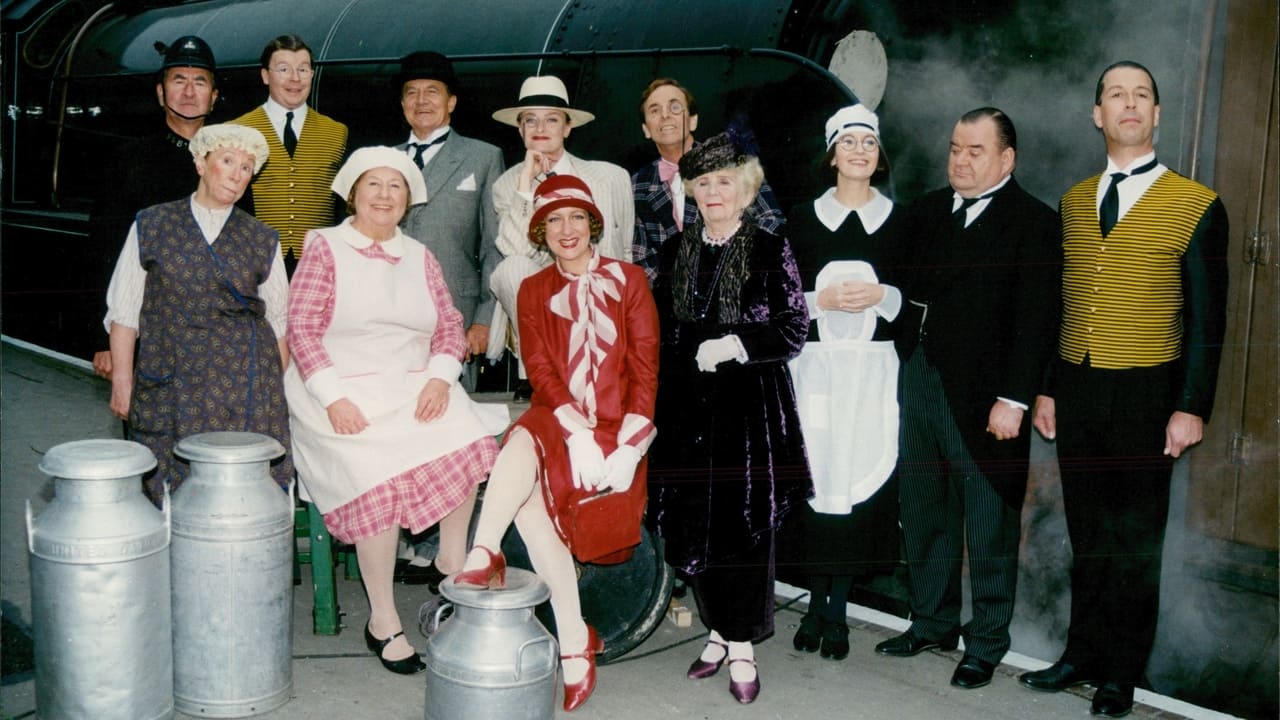
Nineteen eighty-eight was a strange time for British television. While most sitcoms were busy trying to be the next Cheers or sticking to the safe, cozy confines of the living room, David Croft and Jimmy Perry—the geniuses behind Dad's Army—decided to do something much more ambitious. They created You Rang, M'Lord?, a massive, fifty-minute-per-episode beast that took the "upstairs-downstairs" trope and turned it into a biting, cynical, and surprisingly expensive-looking comedy.
Most people today remember the classics like Fawlty Towers or Blackadder. But You Rang, M'Lord? exists in this weird, wonderful liminal space. It’s a period piece. It’s a farce. It’s a political commentary on the 1920s class system that feels oddly relevant when you look at the wealth gaps of the 2020s. Honestly, it’s just brilliant.
The Secret Sauce of David Croft and Jimmy Perry
If you grew up in the UK or spent any time watching PBS, you know the Croft and Perry brand. They specialized in "ensemble" comedy. They didn’t just write for one star; they built entire ecosystems. In You Rang, M'Lord?, the ecosystem is the Meldrum household.
What makes this show stand out from their other hits like It Ain't Half Hot Mum or Hi-de-Hi! is the scale. Most sitcoms back then were thirty minutes. This was nearly an hour. That extra twenty minutes changed everything. It allowed for plot density. It meant characters could actually have "arcs" instead of just repeating the same catchphrase every week (though, let's be real, there were definitely catchphrases).
The show followed the aftermath of World War I. The pilot sets the tone perfectly: two soldiers, Alf Stokes and James Twelvetrees, find a wounded officer on the battlefield. Alf, being the cynical opportunist he is, realizes that saving an officer is a ticket to a better life. Flash forward to 1927, and they both find themselves working in the same aristocratic London house.
Why Alf Stokes is the Ultimate Anti-Hero
Paul Shane was a force of nature. As Alf Stokes, he brought a level of greasy, lovable corruption to the screen that was pretty rare for the time. Alf isn't a "good" guy. He's a schemer. He’s a crook. He’s basically trying to embezzle as much as possible from Lord Meldrum while wearing a butler’s uniform.
Contrast him with Jeffrey Holland’s James Twelvetrees. James is the "ideal" servant. He’s stiff, he’s loyal, and he genuinely believes in the hierarchy of the British class system. The tension between these two—the man who wants to burn the system down (after robbing it) and the man who wants to uphold it—is where the show gets its soul.
It’s hilarious. But it’s also kind of sad.
You see James constantly being overlooked or mistreated by the people he respects, while Alf gets away with murder because he knows how to manipulate the upper class. It’s a cynical view of social mobility. If you want to get ahead, you can’t be the "perfect" worker. You have to be a bit of a bastard.
The Lord Meldrum Problem
Donald Hewlett played Lord George Meldrum, and he was the quintessential "clueless aristocrat." He’s not necessarily a villain, but his privilege makes him totally blind to the reality of the people living in his basement.
The show dives deep into the hypocrisy of the era. Lord Meldrum is a pillar of the community, yet he’s having a flagrant affair with Lady Agatha Shawcross. His brother, the Honorable Teddy (played by the legendary Michael Knowles), is obsessed with "serving girls" and has a recurring gag of trying to lure them into the pantry.
By today’s standards, some of Teddy’s behavior is... well, it’s uncomfortable. But that’s sort of the point. Croft and Perry weren't trying to make the upper class look glamorous. They were showing them as eccentric, dysfunctional, and often predatory.
The Women of the House
We have to talk about Cissy and Poppy. Cissy Meldrum (Catherine Rabett) was way ahead of her time. She wore trousers, she was a socialist, and she was clearly written as a lesbian character during a time when television usually relegated such roles to cruel caricatures. She’s one of the most likable people in the house because she actually sees the servants as human beings.
Then there’s Poppy (Susie Brann). She’s the spoiled daughter who flirts with James just to see him squirm. It’s a cruel game of power. It highlights the fact that no matter how much James "bettered" himself through education and poise, to Poppy, he was still just a toy.
Production Values That Broke the Bank
One reason You Rang, M'Lord? feels different from other 80s sitcoms is that it actually looks like a movie. They used a single-camera setup for many scenes and filmed on location a lot more than was standard for the BBC at the time.
The costumes? Incredible. The sets? Lavish.
They even had a live orchestra for the theme tune, which was a 1920s-style music hall number sung by Bob Hunter and Paul Shane himself. It set the mood perfectly. You weren't just watching a show; you were being transported to a specific, dusty, gin-soaked era of London history.
The Comedy of Cruelty and Class
British comedy has always been obsessed with class, but You Rang, M'Lord? took it to a dark place. Think about Mrs. Lipton, the cook. Ivy, the scullery maid, is Alf’s daughter, but they have to keep it a secret. Mrs. Lipton (Thelma Ruby) is obsessed with her status in the kitchen and her unrequited love for Alf.
There’s a scene where Mrs. Lipton finds out Alf has been lying to her, and it’s genuinely heartbreaking. The show wasn't afraid to let a joke land with a thud of real emotion.
That’s why it has such a cult following. It’s not "gag-gag-gag" like a modern sitcom. It’s a slow burn. It builds world-weary characters and then lets them suffer the consequences of their station in life.
Why it Never Quite Conquered America
Shows like Downton Abbey became massive hits in the States because they romanticized the estate life. Americans love the idea of the "noble servant" and the "benevolent master."
You Rang, M'Lord? is the antithesis of that. It’s too gritty. It’s too honest about the fact that the servants generally hated the masters, and the masters generally didn’t know the servants' last names. It’s a very "British" type of humor—self-deprecating and deeply aware of the invisible walls built between people.
Finding the Show Today
If you want to watch it now, it’s a bit of a scavenger hunt depending on where you live. In the UK, it pops up on BBC iPlayer or BritBox. It’s well worth the effort. There are 26 episodes in total, spread across four series. Because the episodes are so long, it feels more like watching a series of short films.
Actionable Takeaways for the Classic TV Fan
If you’re planning a rewatch or diving in for the first time, keep these things in mind to truly appreciate what Croft and Perry were doing:
- Watch the background. The "business" of the servants in the background of the upstairs scenes is incredibly choreographed. It shows the invisible labor that kept these houses running.
- Track Cissy Meldrum’s politics. Her character provides a fascinating look at the rise of socialism in the 1920s and how it was perceived by the landed gentry.
- Listen to the dialogue density. Unlike modern comedies that rely on "witty banter," this show relies on "character voice." Every character has a specific rhythm to their speech that defines their social standing.
- Pay attention to the food. The show uses the kitchen as a central hub. The disparity between what is sent upstairs and what the servants eat is a constant, subtle reminder of the class divide.
Don't go into this expecting a light-hearted romp. It’s funny, yes, but it’s a comedy with teeth. It’s about the death of an era and the desperate scramble of people trying to find their place in a world that was rapidly changing after the Great War.
Basically, it's one of the most underrated pieces of television history. Go watch it. Now.