It is 2026, and yet, go into any CVS, doctor's office, or wedding reception, and you’ll hear those opening piano chords. You know the ones. They feel like a warm blanket or a heavy sigh. Then that voice kicks in—velvety, massive, and unmistakable.
You Raise Me Up Josh Groban isn't just a song anymore. It is basically a cultural landmark. Honestly, it’s kind of wild to think about how a track originally written by a Norwegian-Irish duo called Secret Garden ended up becoming the signature anthem for a kid from Los Angeles who wasn't even the first person to record it.
The Weird, Winding History of a Modern Hymn
Most people think Josh Groban wrote this. He didn't.
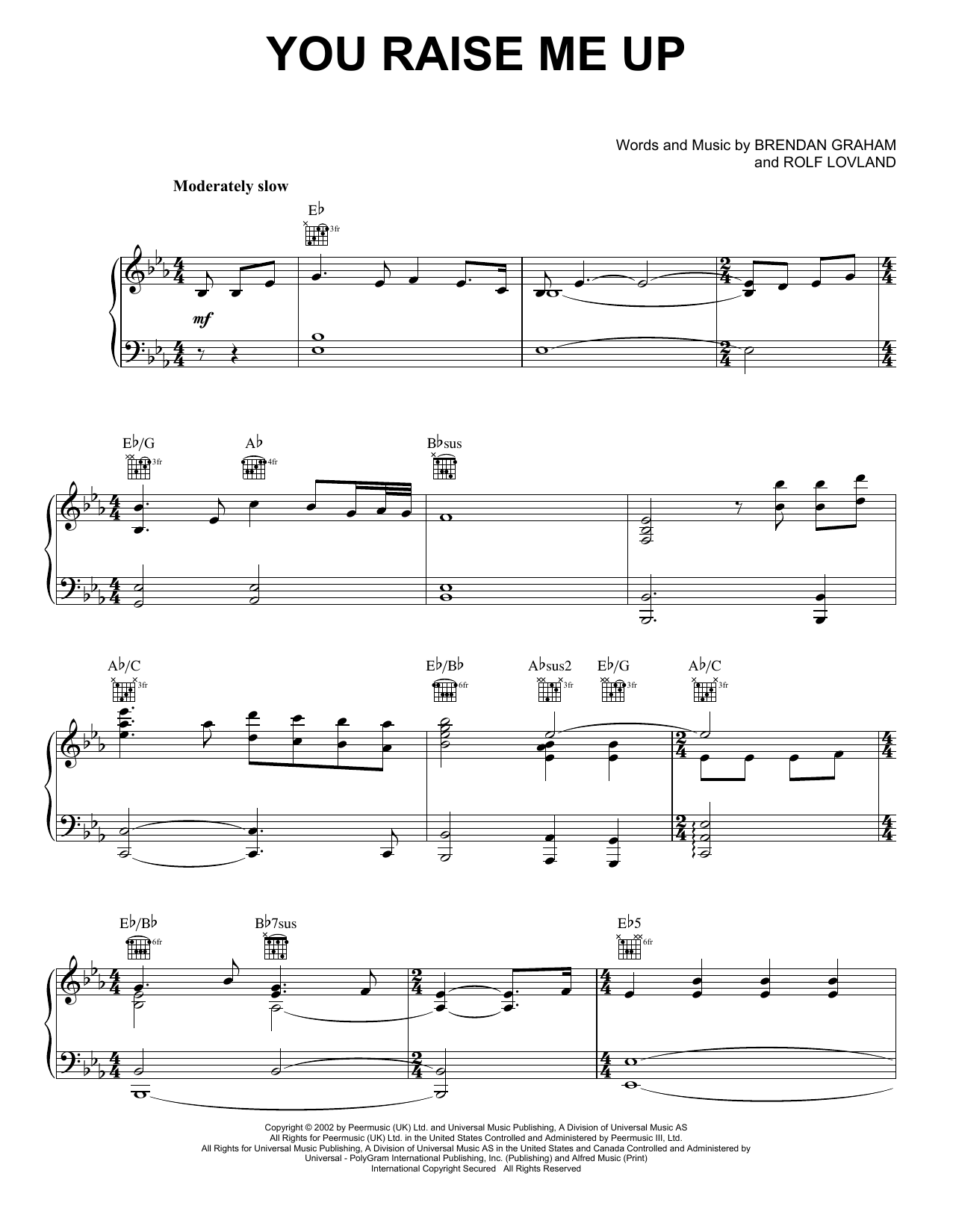
Rolf Løvland and Brendan Graham are the brains behind the operation. Løvland, the Norwegian half of Secret Garden, actually wrote the melody as an instrumental piece titled "Silent Story." He played it at his mother’s funeral. You can feel that weight in the music. It’s got this Celtic, almost ancient DNA that makes it feel like it’s existed for centuries instead of just since 2002.
When Josh Groban got his hands on it for his 2003 album Closer, everything changed. David Foster, the legendary producer, saw the potential. He knew that Groban’s "operatic pop" style was the perfect vehicle for a song that needed to soar.
The recording didn't just sit on a shelf. It exploded.
By 2004, the song was everywhere. We’re talking over 500,000 spins on American radio in a single year. It hit number one on the Billboard Adult Contemporary chart and stayed there for six weeks. It was Josh's first real foray into the Hot 100, peaking at number 73. For a ballad that sounds more like a prayer than a pop hit, those numbers are pretty staggering.
Why does it keep coming back?
The lyrics are vague. That’s the secret sauce.
When Groban sings, "You raise me up, so I can stand on mountains," the "You" can be anyone. To some, it’s clearly God. To others, it’s a parent, a spouse, or a mentor. This ambiguity is exactly why it’s played at both funerals and graduations. It fits into the gaps of the human experience.
Key Milestones for You Raise Me Up Josh Groban
- Super Bowl XXXVIII: Groban performed the song in 2004 as a tribute to the crew of the Space Shuttle Columbia.
- Oprah’s 50th Birthday: A surprise performance for the Queen of Media gave the song a massive international boost.
- 2005 Grammy Nomination: It earned a nod for Best Male Pop Vocal Performance.
- The 20th Anniversary: In late 2023, a special edition of Closer was released featuring a previously unreleased two-verse version of the track.
The David Foster Influence
You can't talk about this song without mentioning David Foster. He has this knack for finding "career songs." He’s the guy who worked with Whitney Houston and Celine Dion, so he knows a power ballad when he sees one.
Foster pushed Groban to lean into the climax. The key change? It’s massive. It’s designed to give you chills. Some critics call it "musical manipulation," but if it works, it works. Groban himself has admitted in interviews that he was a bit nervous about the track initially because he wanted to make sure he wasn't just doing a "copy-paste" of the original Secret Garden version.
He didn't. He made it a stadium-sized event.
More Than Just a Cover
By the time 2026 rolled around, over 1,400 versions of this song existed in 50 different languages. Westlife had a massive hit with it in the UK. Celtic Woman made it a staple of their tours. But Josh Groban’s version remains the gold standard for many.
Why? It’s the restraint in the beginning versus the explosion at the end.
He starts almost in a whisper. "When I am down and, oh my soul, so weary." It’s intimate. By the time the choir joins in for the final chorus, it feels like the roof is coming off the building. That dynamic range is what separates a good singer from a global superstar.
The Impact on Josh’s Career
Before this song, Josh Groban was the "young guy with the big voice" who filled in for Andrea Bocelli at a Grammy rehearsal. After You Raise Me Up Josh Groban, he was a household name.
The album Closer went 6x Platinum in the US. It defined his brand. Even as he moved into Broadway—starring in Natasha, Pierre & The Great Comet of 1812 and Sweeney Todd—this song remained the anchor of his setlist. He’s performed it with the African Children’s Choir and on Idol Gives Back.
It’s the song that refuses to die because people won’t let it.
Common Misconceptions and Trivia
- It’s not a religious song (strictly speaking). While it’s often sung in churches, the songwriters have stated it’s about the general human spirit.
- Josh wasn't the first choice. Brian Kennedy sang the original version for Secret Garden.
- The "Irish" connection. While Løvland is Norwegian, the lyricist Brendan Graham is Irish, and the song’s melody is heavily inspired by the traditional Irish tune "Londonderry Air" (better known as "Danny Boy").
How to Truly Appreciate the Performance
If you really want to understand the hype, don't just listen to the studio version. Go find the live footage from his 2004 Live at the Greek concert. You can see the sweat. You can see the effort. There’s no Auto-Tune hiding anything there. It’s just raw, technical skill meeting a very emotional piece of writing.
Sometimes, we get cynical about "corporate" or "safe" music. But every once in a while, a song comes along that is so earnest it bypasses our defenses. That is what happened here. It’s a song about being at your lowest and finding a way out.
That never goes out of style.
Next Steps for the Listener
To get the full experience of the song's evolution, compare the original 2003 radio edit with the 20th Anniversary Extended Version found on the Closer deluxe reissue. Notice how the second verse changes the pacing and provides a more narrative feel to the lyrics. You can also look up the live performance from the 2007 "Idol Gives Back" special to hear how the addition of the African Children's Choir adds a completely different layer of power to the arrangement.